


617
By Tracy Moses
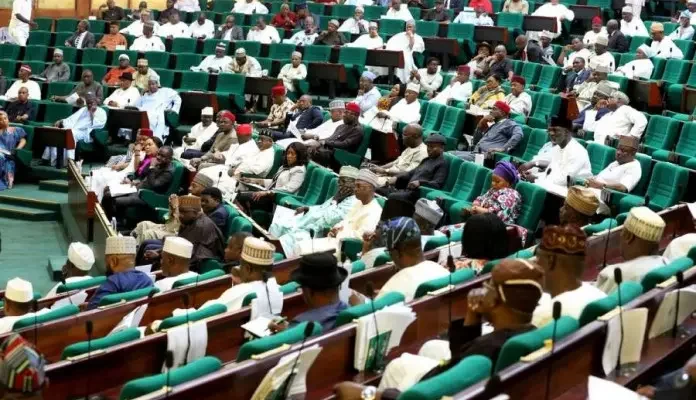
The House of Representatives has approved a comprehensive set of resolutions aimed at bolstering national security, following an extensive three-day debate on the escalating insecurity across Nigeria. The discussions, which took place from Tuesday, 25 to Thursday, 27 November 2025, brought together Principal Officers, Zonal and Regional Caucus Leaders, Chairpersons of key committees including Defence, National Security and Intelligence, Police Affairs, Interior, Emergency Preparedness, Human Rights, Women Affairs, and Youth Development, as well as all Honourable Members.
The debates drew on evidence from constituency-level testimonies, committee reports, expert briefings, and field assessments conducted in the states most affected by insecurity.
In its preamble, the House commended President Bola Ahmed Tinubu for the decisive measures he has taken to strengthen security. These include the recruitment of 20,000 additional police personnel, expanded enlistment into the Armed Forces, the temporary use of NYSC camps for security training, redeployment of VIP-attached officers to critical duties, and increased forest guard deployments by the Department of State Services (DSS). The House also acknowledged the enhanced federal support for state-level security outfits and praised the President for postponing participation at the G20 Summit to focus on domestic security challenges.
Among the resolutions adopted, the House emphasized fiscal measures to ensure predictable and timely funding for security operations, treating all security expenditures as a ‘First Line Charge.’ It also called for the expansion of secure e-banking infrastructure nationwide to curb cash-based crime financing while ensuring financial inclusion for vulnerable populations, alongside integrating digital payment monitoring into national security operations.
The House further endorsed a range of institutional and operational reforms, including a review of the military’s ‘super-camp’ strategy and the consideration of forward operating bases for sustained local security. Plans were outlined for the establishment or expansion of Army formations, Police divisions, and Civil Defence units in high-risk areas, along with stronger protection for schools, places of worship, markets, and other vulnerable sites. Modernisation of the national security framework through reforms in training, ICT, command structure, procurement, and welfare standards was prioritized, as was the reactivation and upgrading of public CCTV networks linked to a national surveillance grid. The House also urged an expedited process for establishing State Police through constitutional amendments and recommended reducing VIP protection deployments to redirect personnel to critical operations.
Strengthening intelligence, surveillance, and technology was another key focus. The resolutions call for enhanced community-level intelligence gathering integrated into national systems, the deployment of modern technologies such as drones, biometric systems, sensors, and AI-enabled predictive analytics for border and internal security, as well as the establishment of a Joint Intelligence Fusion Centre and an expanded Multi-Agency Anti-Kidnap Fusion Cell. A regulatory framework was proposed to combat fake news, harmful content, and malicious AI-generated materials, alongside the implementation of national tracking systems for arms and security equipment to prevent misuse.
On human capital and welfare, the House directed immediate recruitment into the Armed Forces, Police, and other security agencies, with clear timelines to be reported to the National Assembly. Improved welfare packages for security personnel, including housing, insurance, medical care, and compensation, were emphasized, along with the integration of retiring officers with specialized skills into auxiliary units. Legislative regulation of private security companies and the establishment of a National Fallen Heroes Support Fund for families of deceased security personnel were also recommended.
Legal and judicial reforms formed another pillar of the resolutions. The House called for the prosecution and sanction of financiers of terrorism, banditry, and kidnapping, the creation of a special court for such offences, and tougher penalties for arms trafficking and illegal weapons possession. Additionally, the House proposed the establishment of a Truth, Justice, and Reconciliation Commission to address extremist and communal violence and the enactment of a National Drone (UAS) Operations and Oversight Act.
Recognizing the socio-economic roots of insecurity, the House stressed the need for job creation, vocational training, agricultural support, and anti-poverty initiatives. It also advocated the formal integration of community policing, vigilantes, traditional institutions, and religious leaders into national security structures. Measures to support victims, including the establishment of a National Victims Support and Recovery Fund, were approved, along with a prohibition on ransom payments and informal amnesty negotiations, emphasizing lawful criminal justice procedures.
The resolutions also highlight regional and international cooperation, recommending deeper engagement with ECOWAS, the African Union, and neighbouring countries for joint patrols and intelligence sharing. Strengthened bilateral cooperation with the United States on intelligence, surveillance, counter-terrorism training, and disruption of criminal financial networks was encouraged, along with the inclusion of parliamentary delegations in security-related engagements to ensure policy coherence and legislative oversight.
The House underscored the importance of oversight, investigations, and accountability. It called for a review of previous security summit reports, investigations into the withdrawal of security personnel prior to attacks, independent audits of all security funds including the Police Trust Fund, and the adoption of financial-tracking frameworks to trace insurgent financing.
Emergency and humanitarian response measures were also approved, including rapid deployment of emergency relief, trauma care, and stabilization programs. The House recommended formalizing local hunters, vigilantes, and ranger units within national security structures, and the creation of a Religious Protection Council under the National Security Adviser to monitor attacks and promote interfaith dialogue.
To enhance strategic coordination, the House resolved to establish a Joint National Security Operations Taskforce under unified command, continue weapons mop-up operations, and institutionalize a national early-warning system.
The House directed that all adopted resolutions be transmitted to the Executive, relevant security agencies, State Governments, and other stakeholders for urgent implementation. It also called for the concurrence of the Senate to ensure these measures become a unified policy of the National Assembly.