


783
By Tracy Moses
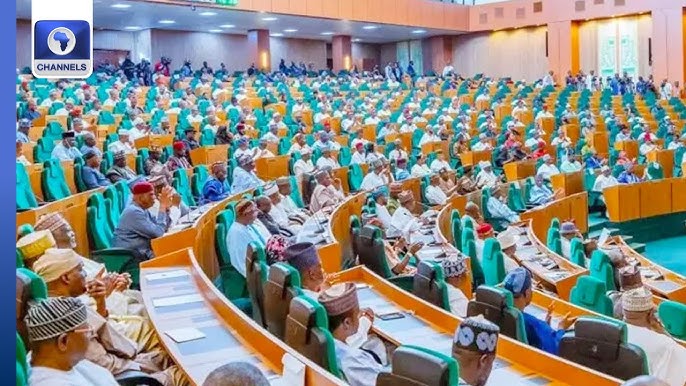
The House of Representatives on Monday moved to calm concerns among Nigeria’s financial regulators, assuring the Central Bank of Nigeria (CBN) and the Securities and Exchange Commission (SEC) that the proposed Nigeria Fintech Regulatory Commission will not erode their statutory powers as deliberations continue on a bill aimed at restructuring oversight of the country’s rapidly expanding digital finance industry.
The assurance was given at a public hearing organised by the House Joint Committee on Banking and Technology to consider legislation seeking to establish the Nigeria Fintech Regulatory Commission.
Speaker of the House, Tajudeen Abbas, said although fintech has emerged as a major force in driving financial inclusion and technological innovation, the proposed commission is not designed to supplant or compete with existing regulatory bodies.
He explained that the envisaged agency would operate as a complementary institution, respecting and deferring to the primary mandates of established regulators as defined by extant laws.
Abbas observed that Nigeria’s digital finance space, spanning digital payments, blockchain solutions, digital assets, crowdfunding platforms and other technology-driven services, has grown significantly in recent years, generating employment opportunities and attracting substantial investment inflows. However, he noted that regulatory frameworks have not evolved at the same pace, resulting in overlaps, compliance complexities and uncertainty within the ecosystem.
According to him, the absence of a harmonised framework has led to duplications and inconsistencies in regulatory processes. He stressed that the proposed commission is intended to streamline supervision, eliminate overlapping responsibilities and remove bottlenecks that hinder innovation, rather than create an additional layer of bureaucracy.
The Speaker further stated that the public hearing was convened to obtain input from regulators, industry operators, investors and consumer advocacy groups to properly define the scope, authority and limitations of the proposed body, while ensuring coherence with existing laws.
He underscored the importance of avoiding regulatory duplication, insisting that the new structure must not introduce multiple licensing regimes or conflicting compliance requirements.
Sponsor of the bill, Hon. Fuad Laguda, noted that the proposed commission would function as a single regulatory interface for fintech firms, replacing the current arrangement under which operators engage multiple agencies, including the CBN, SEC and the National Information Technology Development Agency.
Laguda argued that the present multi-agency framework increases operational costs and creates uncertainty for stakeholders, warning that fragmentation could weaken investor confidence. A unified system, he said, would enhance ease of doing business, strengthen consumer protection and boost investor trust.
He referenced industry statistics showing that Nigeria’s fintech sector has recorded remarkable growth in recent years, attracting significant foreign and local funding while increasing the number of registered operators nationwide.
Participants at the hearing generally supported the proposed legislation but emphasised the need for precise definitions of the commission’s jurisdiction to prevent regulatory clashes and dual licensing obligations.
The Acting National Chairman of the Association of Mobile Money and Bank Agents in Nigeria (AMMBAN), Obioha Otto, praised existing regulators for their efforts, noting that continuous technological advancements necessitate corresponding updates in the legal and regulatory framework.
In the same vein, Chief Compliance Officer of Hydrogen Payment Services Company Limited, Mojisola Ologe, described the bill as a positive step toward formally recognising fintech as a critical sector of the economy.
However, she urged lawmakers to clearly outline the commission’s powers and include strong non-derogation provisions to guard against regulatory conflicts.
Ologe cautioned that without clearly defined boundaries, operators could face overlapping compliance demands and rising costs. She also called for alignment with the Nigeria Data Protection Act 2023 and proposed the creation of a Fintech Regulatory Appeals Tribunal to further enhance investor confidence.
If enacted, the bill will establish the Nigeria Fintech Regulatory Commission as an independent statutory agency tasked with licensing, supervising and regulating fintech operators and emerging financial technologies, in collaboration with existing financial authorities.
Lawmakers indicated that consideration of the bill will proceed after reviewing memoranda and recommendations submitted by stakeholders.