


1.2K
By Lizzy Chirkpi
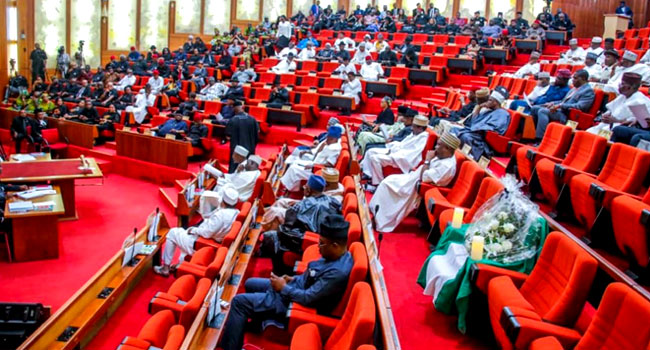
The Nigerian Senate on Tuesday passed the Electoral Act 2022 (Repeal and Re-Enactment) Bill 2026 after a stormy session that exposed sharp divisions over electronic transmission of election results and the 2027 election timetable.
Proceedings became tense during clause-by-clause consideration when Senator Enyinnaya Abaribe demanded a formal division on Clause 60, which governs the electronic transmission of polling unit results.
Abaribe opposed the proviso allowing manual transmission in cases of network failure, warning that it could reopen avenues for electoral manipulation.
Senate President Godswill Akpabio initially ruled that the issue had already been concluded, a decision that drew loud objections from opposition lawmakers.
Backing the ruling, Deputy Senate President Barau Jibrin cited Senate Standing Orders, insisting that reopening a settled clause was “out of order,” a move that triggered fresh uproar, including a brief confrontation involving Senator Sunday Karimi.
However, Senate Leader Opeyemi Bamidele countered that all earlier decisions had been nullified by the motion to rescind the bill.
“Once the Senate agreed to rescind its earlier action, all previous decisions on the clauses ceased to exist,” Bamidele said, adding that Abaribe’s demand for division was valid.
When voting was eventually taken, 55 senators backed the retention of the clause permitting manual transmission of results where electronic systems fail, while 15 opposed it, effectively endorsing a hybrid results transmission framework.
Some of the key amendments in the Bill includes: “Clause 28 on election notice timelines, Clause 60 on electronic and manual result transmission, provisions on party primaries, candidate substitution rules, result collation procedures, dispute resolution timelines, and several technical sections affected by cross-referencing errors, serial numbering problems, and internal inconsistencies.”
Senators said the changes were aimed at closing legal loopholes that could fuel post-election court battles.
Bamidele explained that the amendments followed the release of the 2027 election timetable by the Independent National Electoral Commission, which fixed the general elections for February 2027.
He warned that the earlier version of the law particularly Clause 28 could push the polls into the Ramadan fasting period, with serious implications for participation and logistics.
“If we allow the law to stand as earlier passed, the elections could fall within the Ramadan period, which may affect turnout, security planning, logistics and the overall credibility of the process,” he said.
Since its passage in 2022, Nigeria’s Electoral Act has remained one of the most debated political reforms in the country’s democratic history. It introduced electronic transmission of results, tighter timelines for party primaries, and stricter penalties for electoral offences reforms widely credited with improving transparency but also blamed by politicians for operational bottlenecks and litigation.