


By Lizzy Chirkpi
Protests have entered a second day in parts of Syria following the government’s decision to raise fuel prices by up to 40 per cent, triggering widespread anger over rising living costs in the war-ravaged country.
The demonstrations began on Sunday, September 13, after the Syrian government announced new prices for diesel, petrol and household gas.
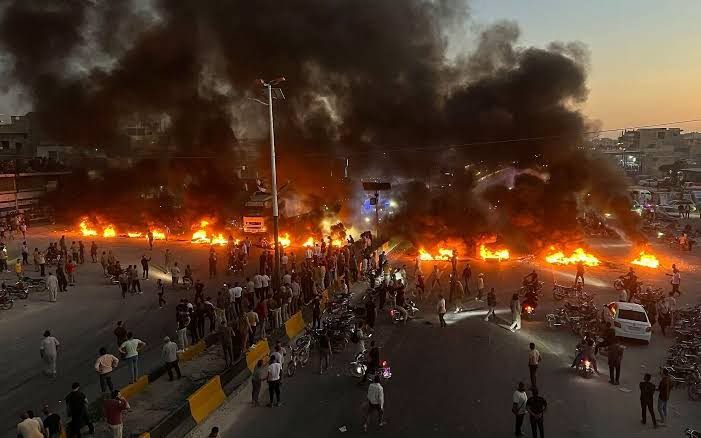
By Monday, protesters had continued to block roads, burn tyres and disrupt oil tanker routes in several parts of the country.
The price of diesel was increased by 40 per cent, from 125 to 175 Syrian pounds per litre, while petrol prices rose by as much as 28 per cent.
The protests are reportedly the largest in Syria since the fall of former President Bashar al-Assad in December 2024. Demonstrations have been reported in several provinces, with protesters also blocking the major highway linking Damascus, the capital, with Aleppo.
In some areas, demonstrators obstructed crude oil tanker convoys, while protesters called for action against government officials over worsening economic conditions and the rising cost of living.
The protests have raised particular concern in a country where about 90 per cent of the population lives below the poverty line, according to Reuters.
The Syrian Energy Ministry said the price increases were temporary, attributing them to rising international procurement costs, transportation and insurance expenses, as well as maintenance work at the Baniyas refinery.
The ministry said the refinery’s shutdown, expected to last about two months, had increased Syria’s dependence on imported refined petroleum products.
Local reports said residents in areas including Al-Hasakah, Deir ez-Zor and Raqqa took to the streets to protest the impact of higher fuel costs on transportation, the prices of goods and household heating as winter approaches.
The demonstrations come as Syria’s transitional government struggles to revive an economy devastated by years of war, international sanctions and extensive infrastructure damage.
Meanwhile, in Nigeria, petrol prices have also risen to between ₦1,450 and ₦1,500 per litre in some locations, even as the Dangote Refinery was listed on the Nigerian Exchange Group (NGX) on Monday, September 14, 2026.