


1.4K
By Tracy Moses
The Speaker of the House of Representatives, Rt. Hon. Tajudeen Abbas, on Thursday underscored the pressing need for Nigeria to update its occupational health and safety legislation to safeguard millions of workers exposed daily to avoidable risks in factories, farms, construction sites, hospitals, and other workplaces.
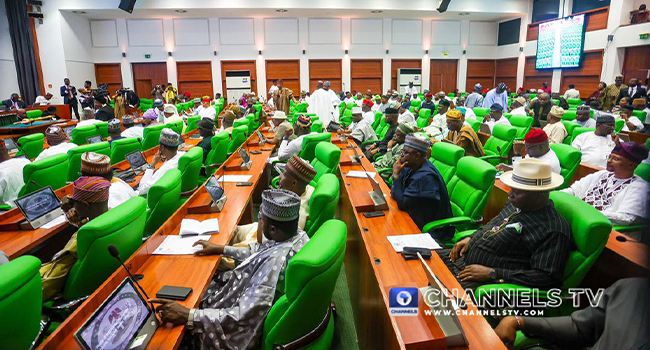
Abbas made the remarks while inaugurating a public hearing on the Occupational Health and Safety Bill, 2025, organized jointly by the House Committees on Safety Standards and Regulation and Labour, Employment and Productivity. The Speaker was represented at the event by Hon. Olumide Osoba, Chairman of the House Committee on Justice.
He noted that many Nigerian workers continue to suffer injuries, illnesses, and deaths that could have been prevented through stronger regulations and effective enforcement.
“Workers across sectors are still exposed to hazards that threaten their safety, dignity, and productivity. Most of these incidents are preventable,” Abbas said.
The Speaker highlighted common dangers in critical industries, including collapsing scaffolds, unsafe structures, exposure to toxic chemicals, poorly maintained machinery, and risks associated with offshore operations, particularly in construction, manufacturing, agriculture, and the oil and gas sector.
He stressed that Nigeria’s current regulatory framework has fallen behind modern technological and safety standards. “Outdated laws, weak enforcement, and limited institutional capacity have hampered workplace safety. This Bill seeks to close these gaps and establish a comprehensive national safety framework,” he added.
Abbas also emphasized that the proposed law would protect workers in the informal sector, healthcare, transport, and artisanal trades, groups that remain largely unprotected despite representing a significant portion of the workforce.
According to the Speaker, improving workplace safety would enhance productivity, reduce medical costs, minimize operational disruptions, and boost investor confidence, contributing positively to national development and Nigeria’s standing in the global economy.
He commended the Committee on Safety Standards and Regulations for its dedication and encouraged stakeholders to provide practical input to improve the Bill.
“This hearing reflects our commitment to creating effective legislation by incorporating the insights of industry experts, trade unions, regulators, and professionals,” Abbas said.
Rt. Hon. David Idris Zacharias, Chairman of the Committee on Safety Standards and Regulations, described the Bill as a historic step toward modernizing decades-old workplace safety laws in Nigeria.
“This legislation is more than a formality; it marks a turning point for occupational safety in the country,” Zacharias said. “Following years of advocacy by safety professionals, labour groups, and industry leaders, the Bill is now open for public review.”
He praised the Committees and Deputy Speaker Rt. Hon. Benjamin Okezie Kalu, who sponsored the Bill, for their efforts in advancing the legislation.
The Bill seeks to repeal the outdated Factories Act of 2004 and replace it with a modern, science-based framework aligned with international best practices and relevant International Labour Organisation conventions.
Zacharias highlighted that millions of Nigerian workers are still exposed to chemical hazards, unsafe machinery, building collapses, infectious diseases, transport accidents, and ergonomic strain without sufficient protection. The Bill aims to tackle these issues by strengthening preventive measures, clarifying employer responsibilities, and extending coverage to vulnerable workers, especially those in the informal sector.
He explained that all major economic sectors stand to gain. In manufacturing, better hazard control and emergency planning will reduce injuries and downtime. Construction will benefit from stricter scaffolding, fall prevention, and supervision rules. Oil and gas operations will see stronger oversight and emergency protocols. Agriculture will gain safer pesticide handling and machinery training, while healthcare workers will benefit from improved biosafety and infection control.
For the first time, traders, drivers, mechanics, and artisans in the informal economy will be covered under a unified national safety framework.
Zacharias also noted that the Bill addresses systemic issues, such as fragmented regulations, low employer awareness, worker fear of retaliation, weak penalties, inadequate data collection, and limited inspector capacity. It proposes clear duties for employers and employees, stronger enforcement powers, mandatory reporting, stiffer penalties, and a nationwide safety information management system.
“A safe workforce is a productive workforce. No Nigerian should risk life or livelihood simply by going to work,” he said, urging labour unions, employers, civil society, safety experts, and regulators to actively participate in refining the Bill to ensure its effectiveness.
Chief Superintendent of Fire Sarki Abdul-Rahman, representing the Federal Fire Service, welcomed the Bill’s objectives but recommended clarifications to prevent conflicts with existing fire safety regulations. He stressed that fire safety provisions should remain consistent with the Fire Service Act, National Building Code, and Fire Code, and requested a review of penalties to ensure they are proportional to the harm caused.