


827
By Tracy Moses
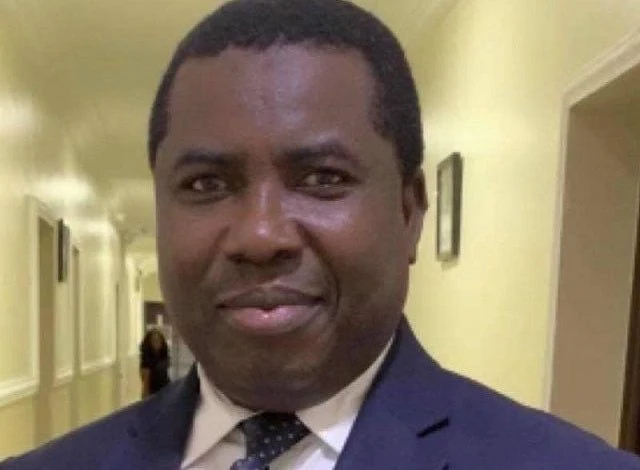
The Chairman of the Independent National Electoral Commission (INEC), Joash Amupitan, SAN, has warned that Nigeria cannot claim credibility in its elections if the national voters’ register remains filled with the names of people who are deceased, have moved, or are otherwise ineligible.
He called on civil society organisations, community leaders, the media, and all citizens to actively support the Commission as it opens the crucial Claims and Objections window for the first phase of the Continuous Voter Registration (CVR) exercise on December 15.
In a statement signed by INEC’s Spokesperson and Head of Public Affairs on Thursday, Amupitan made the appeal on Thursday, 11th December 2025, during the Nigeria Civil Society Situation Room’s Stakeholders’ Forum on Elections in Abuja. He delivered a comprehensive address on the state of Nigeria’s democracy, the challenges of election management, and the critical roles of citizens, CSOs, political actors, and security agencies in safeguarding electoral integrity.
Barely two months into his tenure, Amupitan said his presence at the forum, held on a day originally slated for INEC’s weekly meeting, was a duty to the nation. He described the upcoming Claims and Objections exercise as decisive for strengthening the integrity of Nigeria’s voters’ register, noting:
“This is a task the Commission cannot accomplish alone.”
The INEC Chairman expressed concern that many Nigerians do not review the public display of the provisional register, allowing errors, duplications, and names of deceased persons to go unreported. Citing his findings during preparations for the Anambra governorship election, he noted:
“I discovered that a prominent leader who died during the 2020 lockdown still appeared on the register. Such lapses erode public trust in the electoral process and damage the credibility of our democracy.”
Amupitan urged citizens to take the exercise seriously, stressing:
“If we cannot clean up our register, we cannot claim credibility. INEC cannot do it alone.”
Phase 1 of the CVR, which ran from August 18 to December 10, recorded a nationwide total of 2,685,725 registrations—1,576,137 completed online and 1,109,588 through physical capture. Prof. Amupitan praised the growing political awareness reflected in these numbers, highlighting leading states including Osun, Kano, Sokoto, Imo, Borno, and Lagos.
To further enhance inclusivity and access, Phase 2 of the registration exercise will commence on January 5, 2026, with registration centres relocated closer to communities and hard-to-reach areas. Prof. Amupitan explained:
“Our field assessments show that distance and poor accessibility hindered turnout in many locations. Moving registration centres closer to communities is critical to ensure more Nigerians can participate.”
“Amupitan also outlined preparations for the FCT Area Council election scheduled for February 21, 2026, describing it as one of INEC’s most sensitive assignments because the Commission is solely responsible for local government-level elections in the FCT. He said:
“All information and timelines are already available on the Commission’s platforms. Discussions on logistics and security will continue to ensure a credible and transparent election.”
His address spanned security concerns, democratic culture, technology, voter turnout, legal frameworks, and political accountability. While acknowledging insecurity as a continuing threat, he stressed:
“We must confront emerging risks with calm and collaborative strategies, not panic. Security challenges are real, but they cannot dictate our national response.”
Reflecting on Nigeria’s democratic growth, Prof. Amupitan lamented the persistent characterization of the nation’s democracy as “nascent” despite over two decades of uninterrupted civilian rule. He emphasized:
“Democracy is a cultural system, not an imported ideology. Nigeria must adapt democratic values to its social realities, rather than blindly copying foreign models.”
On electoral integrity, he highlighted technology, including the Bimodal Voter Accreditation System (BVAS) and the INEC Result Viewing (IReV) portal, noting:
“BVAS has shut the door to over-voting and manual manipulation, while IReV has opened results collation to public scrutiny in real time. But technology is not a silver bullet; network limitations in polling units remain a challenge.”
Addressing voter apathy, Amupitan cited the recent Anambra governorship election:
“By extending PVC collection for five days, including weekends, we achieved a 98.8% PVC collection rate and doubled voter turnout. This demonstrates the impact of strategic, data-driven interventions.”
He also warned about the threat of vote buying:
“Political actors openly admitted to vote-trading during pre-election engagements in Anambra. We have involved law enforcement agencies to investigate these cases. Credible elections require collaboration, not suspicion, among all stakeholders.”
Concluding, Amupitan returned to his central message:
“The Claims and Objections period starting December 15 is critical for citizens to strengthen the foundation of future elections. We must all join hands. INEC is doing its part, but democracy cannot thrive if the people themselves do not protect and purify the process. Let us seize this opportunity to clean our register, strengthen our elections, and continue the journey toward the democracy we all desire.”