


1.2K
By Tracy Moses
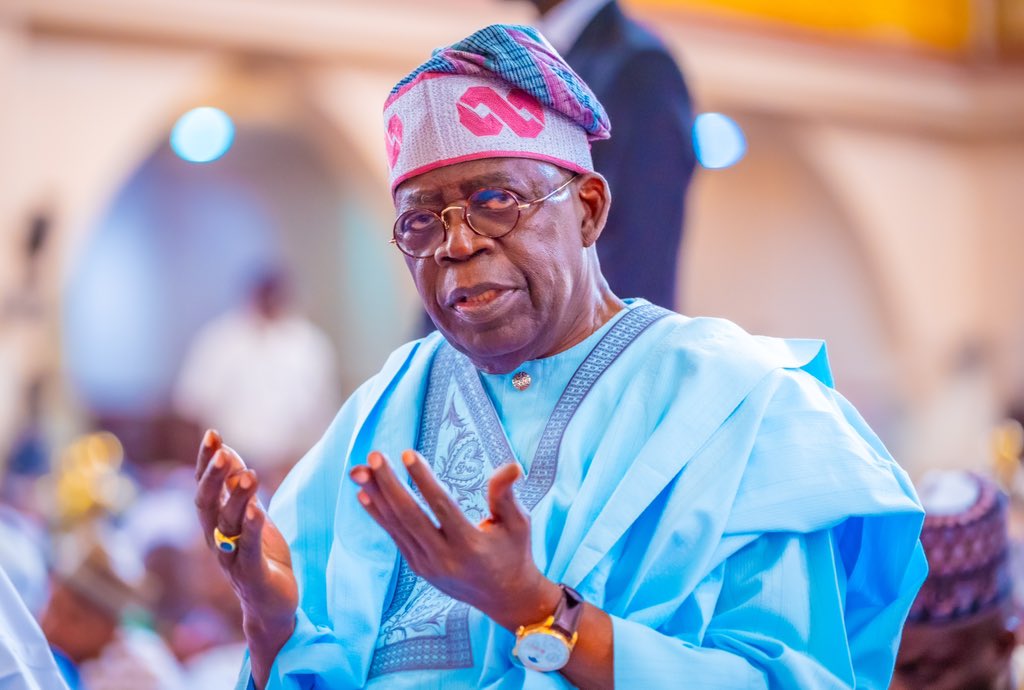
President Bola Tinubu on Friday presented the 2026 Appropriation Bill to a joint sitting of the National Assembly, describing it as a “Budget of Consolidation, Renewed Resilience and Shared Prosperity.”
The budget projects total revenue of ₦34,330,000,000,000 and total expenditure of ₦58,180,000,000,000, including ₦15,520,000,000,000 for debt servicing. Capital expenditure is projected at ₦26,080,000,000,000, while the budget deficit stands at ₦23,850,000,000,000, representing 4.28 per cent of GDP.
Addressing lawmakers, President Tinubu said the 2026 budget represents a defining moment in Nigeria’s journey of reform and transformation.
“Over the last two and a half years, my government has methodically confronted long-standing structural weaknesses, stabilised our economy, rebuilt confidence, and laid a durable foundation for a more resilient, inclusive, and dynamic Nigeria,” he said.
Acknowledging the challenges faced by Nigerians during the reform process, Tinubu reassured Nigerians that their sacrifices were not in vain.
“The path of reform is seldom smooth, but it is the surest route to lasting stability and shared prosperity,” he added.
He highlighted progress in key economic indicators, noting that the economy grew by 3.98 per cent in the third quarter of 2025, up from 3.86 per cent in the same period of 2024. Inflation, he said, has moderated for eight consecutive months, dropping to 14.45 per cent in November 2025, while oil production, non-oil revenues, and foreign reserves have all recorded significant improvements.
“These outcomes are not accidental; they are the result of difficult policy choices,” the President said, emphasising that the 2026 budget is designed to consolidate gains, strengthen resilience, and transition Nigeria from survival to sustainable growth.
The budget is anchored on four main objectives: consolidating macroeconomic stability, improving the business and investment environment, promoting job-rich growth, and strengthening human capital development while protecting the vulnerable. It prioritises security, education, health, and infrastructure, with allocations of ₦5,410,000,000,000 for defence and security, ₦3,560,000,000,000 for infrastructure, ₦3,520,000,000,000 for education, and ₦2,480,000,000,000 for healthcare.
On security, the President announced a new national counterterrorism doctrine targeting bandits, militias, armed gangs, violent cults, and foreign-linked mercenaries. In education and health, funding will increase through the Nigerian Education Loan Fund and six per cent of the budget net of liabilities, supported by international partners, including the United States.
Infrastructure and economic productivity, Tinubu said, will focus on transport, energy, port modernisation, and agricultural reforms aimed at improving food security and creating jobs. He highlighted mechanised agriculture through seven regional hubs, targeting one million hectares, job creation, and increased export value.
The President also emphasised procurement reforms and the “Nigeria First Policy” to encourage domestic production, promote local businesses, and foster self-sufficiency and sustainable growth.
“Distinguished Members, the most significant budget is not the one we announce; it is the one we deliver,” Tinubu said, pledging improved revenue mobilisation, more efficient spending, and stronger accountability.
Following the President’s presentation, Speaker of the House of Representatives, Rt. Hon. Tajudeen Abbas, highlighted the importance of new tax laws, which he said would broaden the tax base, enhance equity, and strengthen non-oil revenues. According to him, the reforms ensure that the 2026 Budget is anchored on sustainable and responsible financing.
The Speaker praised the President’s insistence on “one budget, one fiscal framework” and the elimination of fragmented fiscal authorities, describing it as a critical step towards discipline, clarity, and respect for due process. He assured that the National Assembly would consider the 2026 Appropriation Bill with urgency, diligence, and patriotism, ensuring that every naira allocated delivers value to Nigerians.
On security, Abbas noted that properly funded and transparently implemented expenditure is an investment in national development, underscoring the National Assembly’s commitment to translating security allocations into tangible improvements across the country.
He also reflected on the lessons of 2025, describing the year as one of adjustment and learning, with improved macroeconomic indicators such as foreign exchange reserves, remittance inflows, and export receipts signalling restored confidence in Nigeria’s economy.
Abbas expressed appreciation to President Tinubu, the Senate President, distinguished Senators, and members of the House for their leadership, dedication, and patriotism, assuring Nigerians that the legislature would play its part in ensuring effective implementation of the budget.
He said the 2026 Appropriation Bill reflects renewed fiscal discipline, restored confidence, and a stronger foundation for shared prosperity and national development.