

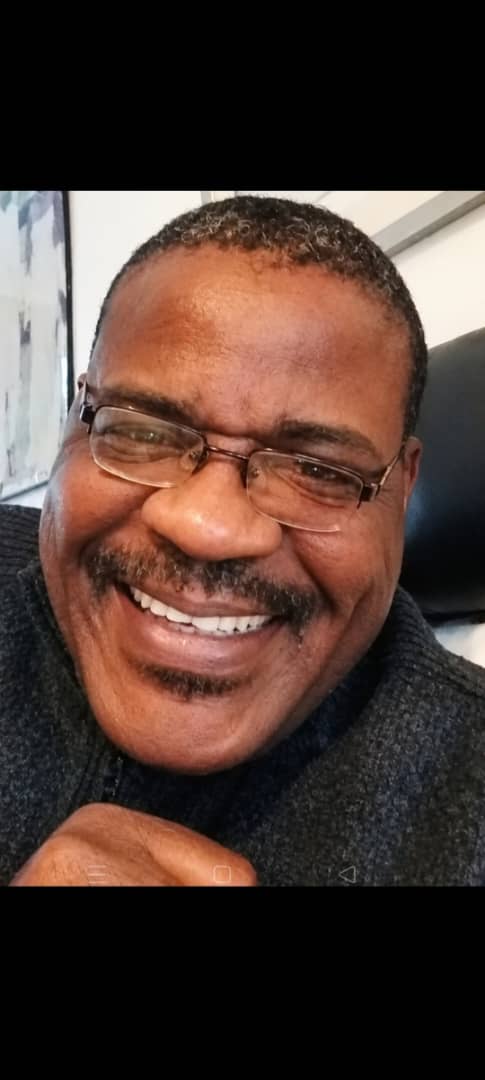

By Abdul Mahmud
11 June 1996 remains one of those dates that memory refuses to surrender. It was a bright day in court in Ijebu-Ode. I had just finished arguing a consolidated application on behalf of prisoners at Ijebu-Ode Prison before the late Justice Osidipe and was about to get into my car when two plain-clothes officers approached me.
They introduced themselves as officers of the Directorate of Military Intelligence, DMI, and announced that I was under arrest on the strength of a warrant purportedly issued by a Magistrate in Abuja. I challenged the warrant immediately. There was no stamp evidencing its registration within the Ijebu-Ode jurisdiction. My objection was ignored. I was shoved into their vehicle and driven to the office of the Civil Liberties Organisation, CLO, where I worked as a Staff Attorney.
They searched the office and found nothing. When I asked what offence I had committed, the allegations sounded almost surreal. I was told that I knew the killers of Kudirat Abiola and had participated in her murder. I was also accused of being “Professor Mahmood” on Radio Kudirat. Kudirat had been assassinated just a week earlier, on 4 June 1996, in the midst of the brutal repression that followed the annulment of the 12 June 1993 presidential election.
From the CLO office, they took me to my house. Their vehicle ran out of petrol on the way and stopped at a filling station. The interruption gave me a narrow opportunity. I quietly asked a petrol attendant to get to my house and alert my siblings, who lived with me, to remove the anti-government leaflets issued by the Democratic Alternative for the June 12 protests scheduled for the following day. By the time the officers arrived, there was nothing to find. They took me to Sappers Military Barracks at Ilese.
The Commanding Officer refused to detain me while the DMI officers awaited further instructions from Abuja. They later drove to Abeokuta and handed me over to the SSS. At the SSS, I was stripped down to my boxers, despite their knowing that I was a lawyer, and thrown into a dark cell occupied by a young man who had been arrested months earlier for vandalising oil pipelines around Mosimi area of the State. He had pus-filled rashes across his body and an overpowering smell.
For three hellish days, I endured the darkness and the stench.
On the fourth day, I was taken to the office of the State Director, who initially pretended not to know why I had been detained. We argued for nearly an hour over the question of bail. I insisted on being released on my own recognisance.
Eventually, he asked me to provide the address of someone in Abeokuta before those who had brought me returned to take me away. I gave him the name of Babatunde Fashanu, then Chairman of CLO in Ogun State.who would later become a Senior Advocate of Nigeria, SAN.
The learned silk eventually arrived, took me on bail and dropped me at the motor park, from where I took a taxi back to Ijebu-Ode.
I arrived in the early dusk, thinking perhaps that the ordeal had ended. Near my house, I encountered some young boys from the neighbourhood.
“Barrister lawyer, sojas dey your house. Dem plenty. Dey say dem come arrest you,” they told me. Their warning saved me from another arrest. I disappeared that evening into the home of a local chief whom I had represented in court the previous year and for whom I had secured a spectacular legal victory over a trumped-up charge of rape. From there, I arranged for a few belongings to be removed from my house. Later that night, my host arranged a bus that took me into Lagos, where I remained underground for six months.
Those details matter because the history of resistance to military dictatorship is sometimes told too comfortably from the distance of the present. Democracy did not arrive in Nigeria because soldiers suddenly developed a taste for constitutional government. Men and women confronted the dictatorship at considerable personal cost. Some lost their liberty. Some lost their livelihoods. Some went into hiding. Some were killed. Families were subjected to constant harassment, intimidation and fear. Lawyers defended prisoners knowing that the same state could turn its machinery against them.
Journalists wrote under threat. Activists organised despite the possibility of arrest. My generation did not imagine democracy as an abstract constitutional arrangement. It understood its price because we had encountered the state without the protection of law.
Three decades later, one is entitled to ask what became of the country for which those sacrifices were made. Politicians who inherited the democratic space have treated public office as a route to private accumulation and political survival.
Institutions have been weakened, public trust squandered and the economy subjected to the consequences of years of irresponsible governance. The democratic promise for which an earlier generation risked its freedom has too often been reduced to the periodic ritual of elections. Perhaps, the most painful irony is the manner in which national honours are now distributed. People who stood on the sidelines during the halcyon years of the struggle are sometimes celebrated as though they carried its burdens.
Politicians award honours to themselves, to friends and, in some cases, to their girlfriends, while those who actually confronted military rule are left to watch the spectacle with disbelief.
Yesterday, I learnt on Facebook that Captain Mbachu, the officer who led my arrest on 11 June 1996, is still alive. I remember him, the warrant of arrest, the handcuffs and the journey from Ijebu-Ode to Abeokuta. More importantly, I remember what the encounter represented: the frightening power of a dictatorship that believed it could arrest a citizen without accountability because the citizen had chosen to resist its madness.
The struggle was never about replacing military rulers with despicable politicians. We fought for a country in which power would be constrained by law, citizens could speak without fear, and public honour would mean something more than the favour of whoever happens to occupy office. We won the freedom they inherited, but somewhere along the way, the country for which that freedom was secured was allowed to decay.
Those who came after the struggle have enjoyed the privilege of governing without bearing the memory of the sacrifices and suffering through which democracy was born, and too many have squandered that inheritance by weakening the very nation for which others paid so dearly.
What was won at such cost should never have become a licence for its destruction.
Captain Mbachu, wherever life has taken you, history has a long memory. You will meet your comeuppance. As for the rest of us, we must continue to insist that the freedom we fought for was not a gift to be squandered by those who came after us.