


By Lizzy Chirkpi
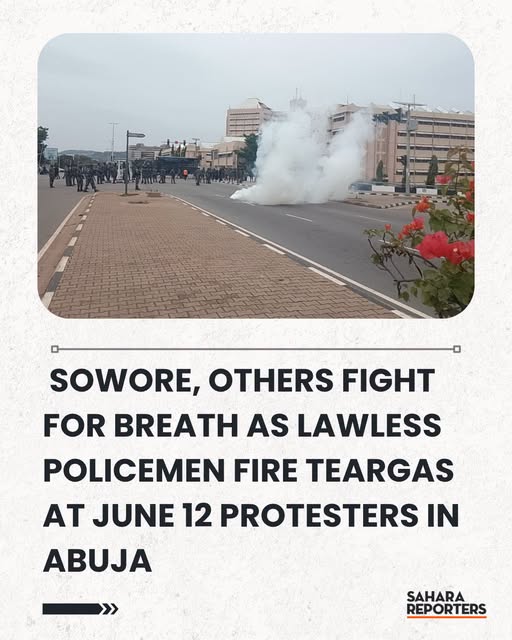
Armed police officers on Tuesday fired teargas at Nigerians gathered at the Lekki Toll Gate in Lagos to mark the sixth anniversary of the #EndSARS protests, disrupting a memorial ceremony organised to honour victims of the 2020 demonstrations.
The incident forced activists, journalists and political figures to flee as teargas filled the area, bringing the planned wreath-laying ceremony to an abrupt halt.
Among those caught up in the police operation were Gbadebo Rhodes-Vivour, the African Democratic Congress (ADC) governorship candidate in Lagos State, and Funso Doherty of the Nigeria Democratic Congress (NDC).
The memorial was organised by the Enough is Enough (EiE) movement to remember Nigerians who lost their lives during the protests against police brutality and alleged abuses by the now-disbanded Special Anti-Robbery Squad (SARS).
Reports indicated that police officers had assembled at the toll gate before the commemoration began before deploying teargas to disperse the gathering.
The incident sparked confusion as participants scrambled for safety, preventing the planned remembrance activities from proceeding.
Sowore Demands Prosecution of Lekki Shooting Suspects
Reacting to the incident, former presidential candidate of the African Action Congress (AAC), Omoyele Sowore, condemned the police action and renewed his demand for the arrest and prosecution of those responsible for the October 20, 2020, shootings at the Lekki Toll Gate.
In a post on his official X account marking the anniversary, Sowore questioned why the victims and their families were still waiting for justice six years after the incident.
“Where are the killers? Who ordered the shootings at LekkiTollGate? Who has been prosecuted?” he wrote.
The publisher of Sahara Reporters also condemned the use of teargas against participants at Tuesday’s memorial, describing it as an attack on peaceful protesters.
“I strongly condemn the @police tear-gassing of peaceful protesters at the #EndSARSMemorial, particularly @ADC guber candidate, Gbadebo Rhodes-Vivour @GRVLagos and Funsho Doherty @funsodoherty of the NDC Party,” he wrote.
“Six years after the #LekkiMassacre, the Nigerian authorities are still responding to demands for justice with tear gas and repression!”
Sowore further accused the authorities of continuing to suppress peaceful commemorations of the protests, alleging that the conduct of the security agencies reflected the failure to address the events of October 20, 2020.
He named President Bola Tinubu, Lagos State Governor Babajide Sanwo-Olu, the Nigerian Army and the police among those he accused of bearing responsibility for the circumstances surrounding the incident.
“This act in itself will not delay their day of judgment,” Sowore added, using the hashtags #REVOLUTIONNOW and #EndSARSMemorial.
Six Years After #EndSARS
Tuesday’s confrontation came exactly six years after the events at the Lekki Toll Gate on October 20, 2020, which became one of the defining moments of the #EndSARS movement.
The protests began as a nationwide campaign against alleged police brutality, extortion, torture and extrajudicial killings, particularly those attributed to SARS.
Thousands of young Nigerians took to the streets across the country, demanding the disbandment of the police unit and comprehensive reforms of the Nigeria Police Force.
The demonstrations attracted international attention following the shooting of protesters at the Lekki Toll Gate on October 20, 2020. The circumstances surrounding the shootings, the number of casualties and the question of accountability have remained subjects of controversy.
A Lagos State judicial panel of inquiry subsequently investigated the incident and documented evidence relating to shootings, injuries and deaths. The panel’s findings, however, became the subject of a dispute with the state government, particularly over its conclusions concerning the events at the toll gate.
SARS was disbanded in October 2020 following the nationwide protests, but demands for accountability, compensation for victims and their families, and far-reaching police reforms have persisted.
The Lekki Toll Gate has since remained a focal point for anniversary commemorations, with activists and other Nigerians returning to the site to remember victims and demand justice.
Tuesday’s disruption has renewed attention on the unresolved questions surrounding the 2020 shootings and the handling of peaceful protests by security agencies.