


By Lizzy Chirkpi
Nigeria has confirmed an imported case of Ebola virus disease in Abuja after a woman who recently travelled from Uganda tested positive for the virus, prompting an emergency public health response.
The Federal Government announced the confirmation on Tuesday, October 20, 2026, saying 44 people who may have been exposed to the patient had been identified as authorities intensified efforts to prevent further transmission.
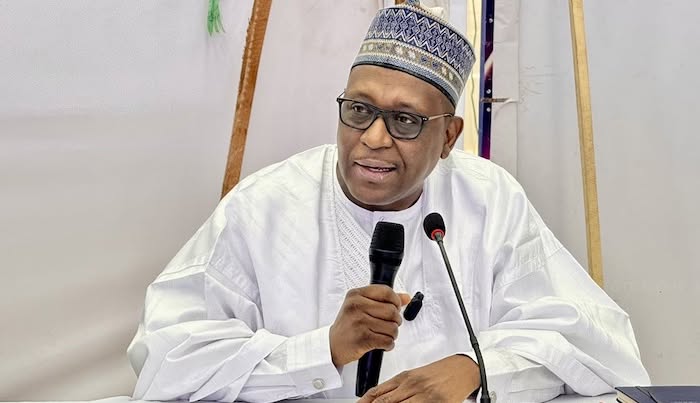
The Coordinating Minister of Health and Social Welfare, Professor Muhammad Ali Pate, said laboratory tests confirmed the infection, adding that the patient was receiving treatment in isolation at a private hospital in the Federal Capital Territory.
“Today, we are confirming that there has been one imported case of Ebola virus disease in the Federal Capital Territory. A laboratory confirmation was received today,” Pate said.
According to the minister, the woman had travelled to Nigeria from Uganda, in East Africa, before developing symptoms on October 7.
The woman reportedly sought medical attention at a private hospital in Abuja on October 11, four days after the symptoms began. Her condition subsequently worsened, prompting further investigations that led to the confirmation of Ebola infection on October 20.
Media reports have identified the hospital as Nizamiye Hospital in the Life Camp area of Abuja, although the Federal Government has only described it as a private health facility.
The government has not disclosed the patient’s identity, the exact date she arrived in Nigeria or the airline she used for her journey from Uganda.
As of the time of filing this report, the airline involved had not been publicly identified, and it was unclear whether it had been formally notified of the case.
The government, however, has appealed to passengers who may have travelled with the woman to cooperate with public health officials as contact-tracing efforts continue.
Pate said the 44 contacts identified so far included healthcare workers, patients, caregivers and travel-related contacts who might have been exposed to the virus.
“Contact tracing has been conducted, and it’s underway as we speak, with 44 contacts already identified presently,” the minister said.
He urged anyone contacted by public health teams, including passengers who may have travelled with the patient, to provide the necessary information and comply with official instructions.
The minister said the Federal Ministry of Health and Social Welfare, the Nigeria Centre for Disease Control and Prevention (NCDC), FCT health authorities and international health partners were coordinating efforts to contain the infection.
He added that the private hospital where the woman received treatment was being supported to strengthen its infection prevention and control measures.
Pate said the patient was stable and receiving medical care, while authorities worked to identify and monitor everyone who might have been exposed.
“The patient is stable, and we’re doing everything possible to ensure that we contain this through tracing all the contacts that this individual may have had,” he said.
The Federal Government has directed public and private healthcare facilities nationwide to remain vigilant, promptly isolate suspected cases and report them to the appropriate public health authorities.
The development comes amid warnings by the NCDC that the Ebola outbreak affecting parts of Central and East Africa posed a risk of international transmission.
On October 6, the agency announced heightened surveillance after Kenya confirmed an imported case of Ebola disease caused by the Bundibugyo virus, linked to the outbreak in the Democratic Republic of the Congo.
The agency had previously warned that international travel, population movement and the possibility of Ebola symptoms being mistaken for common illnesses made heightened surveillance and preparedness essential.
The Abuja case has renewed concerns about the risk of imported infections spreading before they are detected, particularly when travellers develop symptoms after arriving in another country.
Ebola virus disease is a severe illness caused by viruses in the genus Orthoebolavirus. The Bundibugyo virus associated with the current regional outbreak is one of the viruses that can cause the disease.
The infection can spread through direct contact with the blood or other bodily fluids of an infected person who is showing symptoms, as well as through contaminated materials. It does not ordinarily spread simply through sharing the same space.
Symptoms may include fever, weakness, severe headache, muscle pain, vomiting and diarrhoea. Some patients may experience bleeding, although it does not occur in every case.
The incubation period — the time between exposure and the onset of symptoms — ranges from two to 21 days. Identifying and monitoring potentially exposed individuals is therefore critical to preventing further transmission.
Being identified as a contact does not mean a person is infected. However, such individuals must be assessed and monitored by public health authorities in line with established protocols.
Nigeria has previous experience managing an imported Ebola case. In July 2014, an infected traveller from Liberia introduced the virus into Lagos, triggering an emergency response involving federal and state health authorities and international partners.
The outbreak resulted in 20 confirmed cases and one probable case, with eight deaths among the confirmed and probable cases, according to the United States Centers for Disease Control and Prevention.
Health officials contained the outbreak through isolation, laboratory testing, contact tracing, monitoring of exposed individuals and coordinated emergency operations. Nigeria was declared free of Ebola transmission in October 2014.
The Federal Government says it is drawing on lessons from the 2014 outbreak to manage the current case and prevent wider transmission.
Pate has urged Nigerians to remain calm, practise regular hand hygiene and avoid contact with the bodily fluids of anyone suspected of having the infection.
He also cautioned against stigmatising people who may have been exposed to the virus and urged the public to avoid spreading unverified information.