


By Tracy Moses
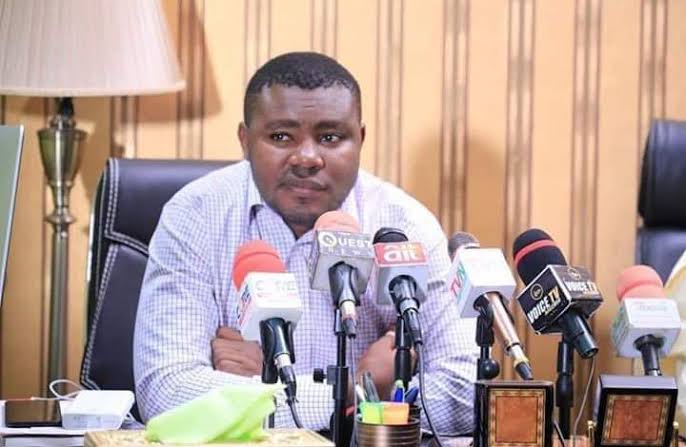
The Deputy Spokesman of the House of Representatives, Philip Agbese, has faulted the Federal Government over delays in paying contractors who executed constituency projects, insisting that contractors should not be left to bear the financial burden of projects undertaken on behalf of government.
Agbese, who spoke to journalists on Wednesday, said the executive had failed to honour its commitment to pay contractors who deployed their resources to execute projects captured in the national budget through lawmakers.
“The executive have not done well on their promise to pay contractors who have used their resources to execute constituency projects for the lawmakers. It is wrong and no need to sugar coat it,” he said.
He said the leadership of the National Assembly was engaging the executive through parliamentary diplomacy to resolve the payment crisis and ensure that contractors were paid.
“But our leaders are using parliamentary diplomacy to engage the executive to do the needful,” he said.
Agbese’s comments come amid growing concerns among lawmakers over delays in the implementation of constituency projects and the wider challenge of budget execution.
A bipartisan group of lawmakers under the aegis of the Save Democracy Group had recently called for the suspension of the National Assembly’s recess, citing pressing national challenges, including insecurity, poor budget implementation, alleged constitutional breaches, opaque public expenditure and the non-payment of contractors handling constituency projects.
The group, comprising lawmakers from different political parties and regions, raised the concerns in a statement issued in Abuja on August 5, 2026, in which it described the state of Nigeria’s democracy as “nosediving.”
While acknowledging the concerns expressed by his colleagues, Agbese questioned the timing of the demand for the National Assembly to suspend its recess, particularly with the 2027 general elections approaching.
“One cannot say the highly respected lawmakers are wrong but the timing is suspicious,” he said.
He cautioned lawmakers against allowing the legislature to become a platform for advancing the interests of political actors outside Parliament ahead of the elections.
“The 2027 elections are just by the corner and one must be careful not to be seen to be running errands for highly vested political interests outside the parliament,” he said.
The deputy spokesman, however, stressed the importance of maintaining a functional relationship between the executive and legislature, saying President Bola Ahmed Tinubu’s experience as a former parliamentarian should give him an appreciation of the need for cooperation between both arms of government.
“He is not just an experienced parliamentarian who has served the country in that regards, Mr. President understands the essence of good and harmonious working relationship with the parliament,” he said.
State Police Bill
Agbese also rejected the perception that the 10th House of Representatives merely endorses initiatives originating from the executive.
He said lawmakers had been working on legislation aimed at addressing longstanding national challenges and cited the proposed establishment of state police as an example.
According to him, the National Assembly had been considering state police legislation before the executive introduced its own bill on the matter.
“The idea is that contrary to the insinuation being created in some quarters that we pass every bill and motion from the executive, I want to clear the air that we are working ahead of the executive on bills that have positive impact on the generality of people,” he said.
On the proposed state police, Agbese said the initiative remained that of the National Assembly, while the executive’s decision to introduce its own bill provided an opportunity for both arms of government to harmonise their positions before the proposal is transmitted to the State Houses of Assembly.
“We have been on the state police bills for sometimes now. The initiative remains solely that of the Parliament,” he said.
“What the executive have done so far by introducing an executive bill is to come in at the right time for both arms of government to have a refined document at the centre before sending the same proposal to the State Houses of Assembly. It is just to ensure that we don’t waste taxpayers’ resources unnecessarily by going back and forth,” he added.
Insecurity
On insecurity, Agbese said Nigeria was beginning to record positive developments despite persistent security challenges.
He cited recent rescue operations in Oriire, Oyo State, Kwara State and other parts of the country as evidence of progress by the security agencies.
“We are beginning to record positive gains despite the numerous challenges that we are being faced with as a country,” he said.
Agbese commended the Chief of Defence Staff, Lt. Gen. Olufemi Oluyede, and other service chiefs for what he described as strategic approaches to coordinating the nation’s armed forces.
He also commended the Federal Government for measures aimed at improving the welfare of military personnel, including increases in personnel salaries and the renovation of military barracks.
According to him, resolutions reached with security chiefs during the House’s sectoral debates were already beginning to yield results, stressing the need for sustained engagement between the legislature and security establishment.
House Quorum
Agbese also dismissed allegations that the leadership of the House routinely takes critical decisions without the required quorum, describing the claim as inaccurate.
“Some persons said the leadership of the House doesn’t allow quorum before taking critical decisions. That is not true,” he said.
He maintained that the House operates a transparent legislative process that meets international standards and provides established mechanisms for resolving disagreements among lawmakers.
“We run a transparent legislative process that is of international standard,” he said.
The deputy spokesman urged lawmakers to channel disagreements through established parliamentary procedures rather than confrontation.
“I doubt if the parliamentarians who want to fight have any boxing experience. We can’t allow that,” he said.