


By Godswill Michael
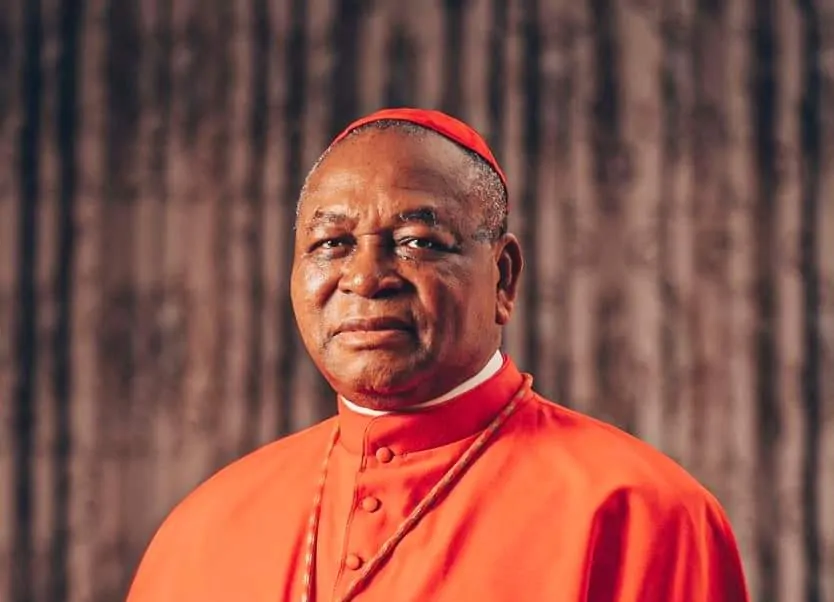
John Cardinal Onaiyekan, Archbishop Emeritus of Abuja, has called for a review of the process of appointing the chairman and commissioners of the Independent National Electoral Commission (INEC), saying the electoral body cannot be truly independent when its leadership depends on political office holders.
He also called for reforms to allow Nigerian voters to challenge election results at tribunals, arguing that citizens whose votes are at stake should have a direct legal avenue to seek redress.
Onaiyekan made the calls on Thursday while delivering the keynote address at the 2026 All Nigeria Editors Conference (ANEC) in Enugu, organised by the Nigerian Guild of Editors.
The conference, themed, “The Ballot, the Media and the Task of Keeping Democracy Alive,” has as its sub-theme, “When Lies Look Real: Detecting and Debunking AI Disinformation Before, During and After Elections.”
Onaiyekan said the government’s control of INEC creates a conflict of interest because the government in power also participates in elections as a political contestant.
“Then the state institution, INEC, that is supposed to conduct the elections has its own issues and problems, mainly because it is set up by government and controlled by the government, which itself, during elections, is no longer only government, but also a contestant in the electoral struggles,” he said.
He added that the commission’s independence remained questionable because of its relationship with the government.
“The INEC is supposed to be independent by definition, Independent National Electoral Commission. But it is doubtful how independent it is or can be,” he said.
According to him, political pressure becomes more difficult for the commission to resist when those exerting it are themselves in government and participating in elections.
“INEC is often under pressure from politicians who try to force it to play in their favour. But when the politicians are themselves the government in power, it becomes very problematic for INEC to be truly independent and transparent,” he said.
The Cardinal therefore called for a new formula for appointing the INEC chairman and commissioners, arguing that they should not be dependent on political office holders who are themselves contestants in elections.
“We need to review the method of appointment of the INEC, the Chairman and the commissioners. They should not depend on Mr. President and the governors, who are themselves contestants in elections,” he said.
He also faulted the role of the legislature in the appointment process, saying its approval of executive nominations had become largely routine rather than an effective check on executive power.
“The approval of the legislature, which is supposed to provide checks and balance, has become mere routine,” he said.
Onaiyekan urged Nigeria to draw lessons from countries that have developed mechanisms to insulate electoral commissions from the government in power.
He also called for broader electoral reforms, particularly to give voters the right to challenge disputed election results.
“Our laws should make provision for the citizen as citizen and as electors to challenge results of the election at tribunals,” he said.
“As at now, only candidates have locus standi to challenge election results. But we who cast the votes and whose votes are at stake have no room to complain. This must change,” he added.
He said voters should be allowed to present cases where they believe the votes they cast were not properly counted, while candidates would retain their existing right to challenge election outcomes.
The Cardinal further proposed the establishment of special election tribunals to handle electoral disputes exclusively and conclude cases within a defined period.
He said election petitions should be resolved before elected candidates are sworn into office, arguing that prolonged litigation after inauguration gives incumbents access to state resources while defending their electoral victories.
Other reforms proposed by Onaiyekan included allowing independent candidates to contest elections, introducing a minimum 50 per cent threshold for presidential elections with a runoff where necessary, and imposing stricter rules on lawmakers who defect from the political parties on whose platforms they were elected.
He said the reforms should be considered by the National Assembly that will emerge from the 2027 general elections.
The immediate past President of the Nigerian Bar Association, Mazi Afam Osigwe, SAN, also criticised what he described as the increasing role of the judiciary in determining electoral outcomes.
Osigwe said legal technicalities and difficulties in proving breaches of electoral laws had shifted too much power from voters to the courts.
“A judge once presented a paper called ‘The Judicialisation of the Electoral Process.’ He argued that because of the difficulty of proving non-compliance with the Electoral Act, the courts have gradually and increasingly usurped the role of the voters. I couldn’t agree more,” he said.
He said the development had contributed to voter apathy, with some Nigerians believing that events after voting could determine the final outcome.
“They believe that between polling units and collation centres, especially at night, miracles happen before daybreak. So why vote?” he asked.
Osigwe also accused politicians of exploiting voter frustration through inducements and intimidation, including distributing items such as salt and rice and recruiting thugs during elections.
He criticised the conduct of some state electoral commissions, saying, “Sometimes you’ll be waiting for ballot papers, and results are already announced.”
On the use of the Bimodal Voter Accreditation System (BVAS) and the INEC Result Viewing Portal (IREV) in election litigation, Osigwe said evidentiary requirements had created additional difficulties for petitioners.
“The court held that the BVAS machine itself is the primary evidence, not the printout. So you must physically carry the BVAS from every polling unit to court within strict time limits,” he said.
He also criticised the practice of taking electoral disputes to court after elections and alleged that some judges had been caught taking bribes.
“We gained independence 64 years ago. We keep making excuses, and we only end up making many lawyers wealthy and corrupt judges richer,” Osigwe said.
The Obi of Onitsha and chairman of the conference, Igwe Nnaemeka Alfred Achebe, challenged editors to protect voters from disinformation, particularly as advances in artificial intelligence make fabricated content increasingly difficult to detect.
Achebe said democracy required constant protection rather than passive acceptance.
“Democracy is not a monument we erect and then walk away from. It is more like a fire lit to keep the house warm. It must be tended, fed, protected from wind and rain, or it dies quietly in the night while everyone believes it still burns,” he said.
He described the ballot as the voice of citizens and the media as the mirror through which voters understand issues before making electoral choices.
“The ballot is the citizen’s voice. The media is the mirror by which that citizen sees the world clearly enough to know what to say with that voice,” Achebe said.
He warned that artificial intelligence could produce convincing fake voices, videos and images capable of misleading voters before, during and after elections.
Achebe urged editors to verify information before publication, understand how AI-generated disinformation works and debunk falsehoods regardless of which political camp benefits from them.
“True journalistic integrity in this era will require you to correct falsehoods regardless of who benefits from them, before, during, and yes, after elections,” he said.
The traditional ruler charged journalists to remain a check on political actors and institutions, even when other safeguards fail.
“Even if politicians, electoral body, institutions, and other things fail, you must be the ultimate last man standing in the task of defending democracy,” Achebe said.