


By Tracy Moses
The House of Representatives Special Committee on Crude Oil Theft has proposed sweeping legal reforms, including the establishment of a special court to prosecute crude oil thieves and other economic saboteurs, as lawmakers intensify efforts to tackle one of Nigeria’s biggest threats to oil production and national revenue.
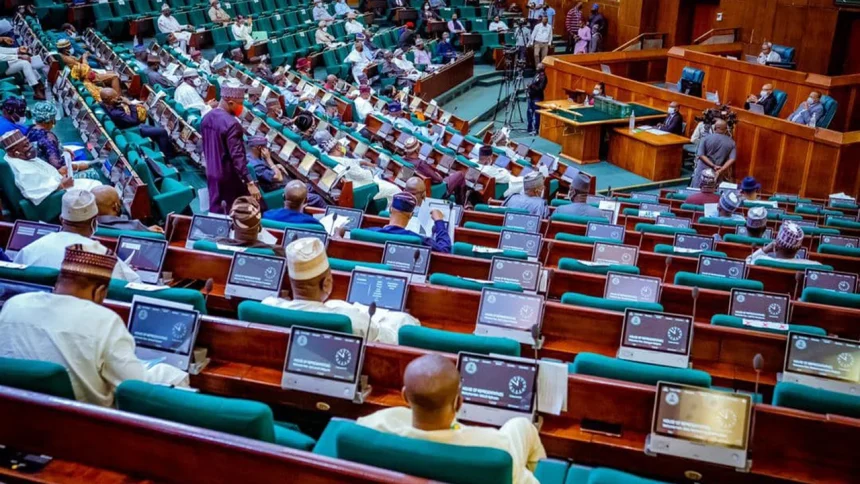
The recommendations emerged from a stakeholders’ meeting held on Thursday in Abuja, where members of the committee met with security agencies and officials from the Office of the National Security Adviser (ONSA) to review the country’s legal and institutional response to crude oil theft, pipeline vandalism and related offences.
Chairman of the committee, Hon. Alhassan Ado Doguwa, said discussions with stakeholders revealed broad consensus on the need to overhaul existing laws, many of which he noted are outdated and inadequate for addressing the sophistication of modern crude oil theft.
“We have been able to achieve some very remarkable progress in the course of our interface. We all agreed to work on the same page to address the existing legal frameworks and some of the bottlenecks affecting them,” Doguwa said.
He explained that while the Petroleum Industry Act (PIA) provides the regulatory framework for the oil and gas sector, it does not adequately address the criminal justice issues associated with crude oil theft.
“The global oil and gas economy is now in an advanced stage. Virtually all oil-producing countries are making progress because they have provided effective legal instruments to address their challenges. For this reason, we believe Nigeria should also review some of its laws.
“Some may ask what happens to the PIA. This has got nothing to do with the PIA. The PIA merely addresses the fundamentals and basic principles of doing business within the global oil economy. None of its commitments or provisions will be affected.
“However, we still have old legislations, some dating back to the military era, including military decrees and orders, which are still being applied at various levels. The courts have no option but to rely on those laws.
“Unless we provide new measures, new laws and a new legal framework, the courts will continue to rely on these obsolete legislations in handling serious criminality within Nigeria’s oil and gas sector,” he added.
Nigeria continues to lose billions of naira annually to crude oil theft, illegal refining and pipeline vandalism, activities that have significantly undermined production, reduced government revenue, discouraged investment and threatened energy security. Although successive administrations have introduced military operations, surveillance contracts and inter-agency collaborations to tackle the menace, stakeholders maintain that weak prosecution and light penalties have prevented meaningful deterrence.
Doguwa said the National Assembly would work closely with the Office of the National Security Adviser and other stakeholders to strengthen the country’s legal framework.
“I want to assure Nigerians that the National Assembly, especially the House of Representatives through this committee, will partner with the Office of the National Security Adviser to effectively combat crude oil theft and every other criminal activity within the oil and gas environment.
“We must not forget that our daily crude oil production target in the budget remains below expectations. Until we address this problem, our production projections may continue to fall short,” he said.
The lawmaker also criticised the absence of the Nigerian Upstream Petroleum Regulatory Commission (NUPRC) from the meeting, describing the agency’s failure to attend or send representatives as disappointing given its central role in regulating the upstream petroleum sector.
“It was rather unfortunate that some of the critical regulatory agencies in the oil and gas sector, particularly the NUPRC, neither attended nor sent representatives.
“We frown at that action and have directed the Clerk of the Committee to write to them, requiring them to appear before the committee because they are key stakeholders in the fight against this serious problem bedevilling our country.”
As part of the proposed reforms, Doguwa renewed the committee’s call for the establishment of a specialised court to ensure the speedy trial of crude oil theft cases.
“We have also recommended in previous bills before the House the possibility of establishing a special court for these kinds of crimes because the crimes themselves are special.
“If we allow these criminal cases to go through the conventional court system, considering the delays involved, many of them will remain unresolved while the criminals escape appropriate punishment,” he noted.
Also speaking, the Director of Energy Security at the Office of the National Security Adviser, Goodluck Ilajufi, who represented the National Security Adviser, Mallam Nuhu Ribadu, appealed to lawmakers to strengthen existing penalties for offenders, arguing that current punishments fail to reflect the gravity of the crimes.
“Through our work, we have reached a point where the kind of support we require can only come from the National Assembly.
“If we are asking investors to commit billions of dollars to our economy, they must be confident that adequate security exists.
“Specifically, we seek your support in strengthening the punishment regime for thieves, vandals and other criminal elements.
“My experience in the field is that after enormous state resources are spent arresting and prosecuting these criminals, the punishment they eventually receive is almost meaningless.
“A judge may sentence someone to five years imprisonment with an option of a N100,000 fine, or even six months imprisonment. That makes a mockery of the entire process,” he said.
He urged lawmakers to amend relevant provisions of the Miscellaneous Offences Act, particularly those relating to tampering with petroleum infrastructure and the adulteration of petroleum products, to create stronger deterrents.
The Assistant Commandant General (Operations) of the Nigeria Security and Civil Defence Corps (NSCDC), David Idowu, also endorsed the proposal for a special court, saying it would ensure faster prosecution and tougher sanctions for convicted offenders.
“I also want to appeal, if it has not already been included in the proposed amendments, for the establishment of special courts to try crude oil theft offenders.
“I remember when I served as a State Commandant. A lawyer returned from court one Monday in tears because the punishment handed down did not reflect the gravity of the offence.
“If there is a special court to try these offenders, including the shadow actors behind these crimes, they will receive appropriate punishment,” he said.
A member of the committee, Hon. Cyril Hart, called for stricter oversight of oil block operators, arguing that licence holders who fail to develop oil assets within the stipulated timeframe should also be regarded as economic saboteurs because of the revenue losses such failures impose on the country.
Representatives of the Nigerian Army, Nigerian Navy, Nigerian Air Force, Nigeria Police Force and the Nigeria Security and Civil Defence Corps attended the meeting, with participants agreeing that stronger legislation, more effective prosecution and closer inter-agency collaboration are essential to curbing crude oil theft and safeguarding Nigeria’s oil and gas industry.