


467
By Tracy Moses
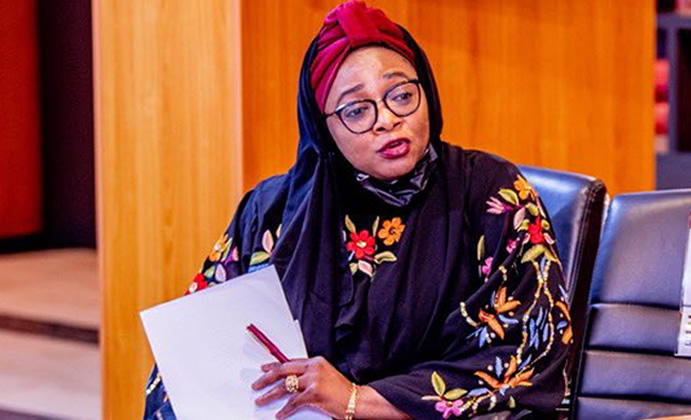
The Minister of Women Affairs, Imaan Ibrahim, has described Sexual and Gender-Based Violence (SGBV) as one of the most troubling issues confronting families and communities across the country.
The Minister made the remark while addressing journalists on Saturday, after a special prayer session at the NASFAT Mosque, held as part of activities marking the 2025 16 Days of Activism Against Gender-Based Violence, themed “Unite Against Technology-Facilitated Gender-Based Violence (TF-GBV).”
Suleiman noted that the 16-day global campaign, which began on November 25 and will run until December 10, includes a series of advocacy engagements aimed at awakening national consciousness against abuse in all its forms.
“We are here today to pray and appeal to the conscience of Nigerians,” she said. “Sexual and gender-based violence is one of the issues that deeply troubles us as a society. Every day, communities report as many as 10 cases of violence, and tragically, eight out of those involve minors. This is alarming and demands collective action.”
She added that this year’s theme reinforces “zero tolerance” for violence against women, girls, men, and boys, noting that abuse has evolved beyond physical spaces.
“Women, children, and even men are now being targeted online through extortion, exploitation, and other forms of digital abuse,” she said. “This campaign is about amplifying awareness and encouraging Nigerians to stand firmly against every form of violence, whether physical, emotional, or technology-driven.”
The Minister disclosed that activities will continue throughout the period, including another prayer session in churches on Sunday to further appeal to moral responsibility across all religious communities.
“As the lead social protection ministry, we have introduced several reforms, from strengthening the legal framework to enhancing economic empowerment,” she said. “Mr. President’s Renewed Hope Agenda has prioritised the Family Cohesion and Advancement Programme because the family unit is central to raising children who become protectors, not perpetrators.”
She stressed that most cases of abuse are committed by people known to the victims.
“It’s not strangers or invisible forces,” she said. “These are individuals within our neighbourhoods, and this underscores the need for a stronger family and community-based approach.”
The Minister added that Nigeria is working toward its first-ever national family agenda protocol, developed in partnership with stakeholders and religious bodies.
“We’ve written to religious institutions because no faith endorses violence,” she said. “We must unite around moral teachings to reject abuse in every form.”
The Chief Missioner of NASFAT, Onike Morufu Abdul-Azeez, also spoke at the event, lamenting the high rate of violations both offline and online.
“Women are being abused everywhere,” he said. “Often, this happens because some men misunderstand or misinterpret Islamic teachings. Today’s sermon was devoted to correcting those misconceptions using the Qur’an and the hadith of the Prophet Muhammad, reaffirming Islam’s true stance on safeguarding women and girls.”
Sexual and Gender-Based Violence remains a serious challenge in Nigeria, encompassing physical assault, rape, forced marriage, and harmful traditional practices such as female genital mutilation. While women and girls are the most affected, men and boys also experience abuse.
Health experts warn that SGBV is not only a human rights violation but also a global public health emergency with far-reaching, long-term consequences for survivors.