


636
By Oscar Okhifo
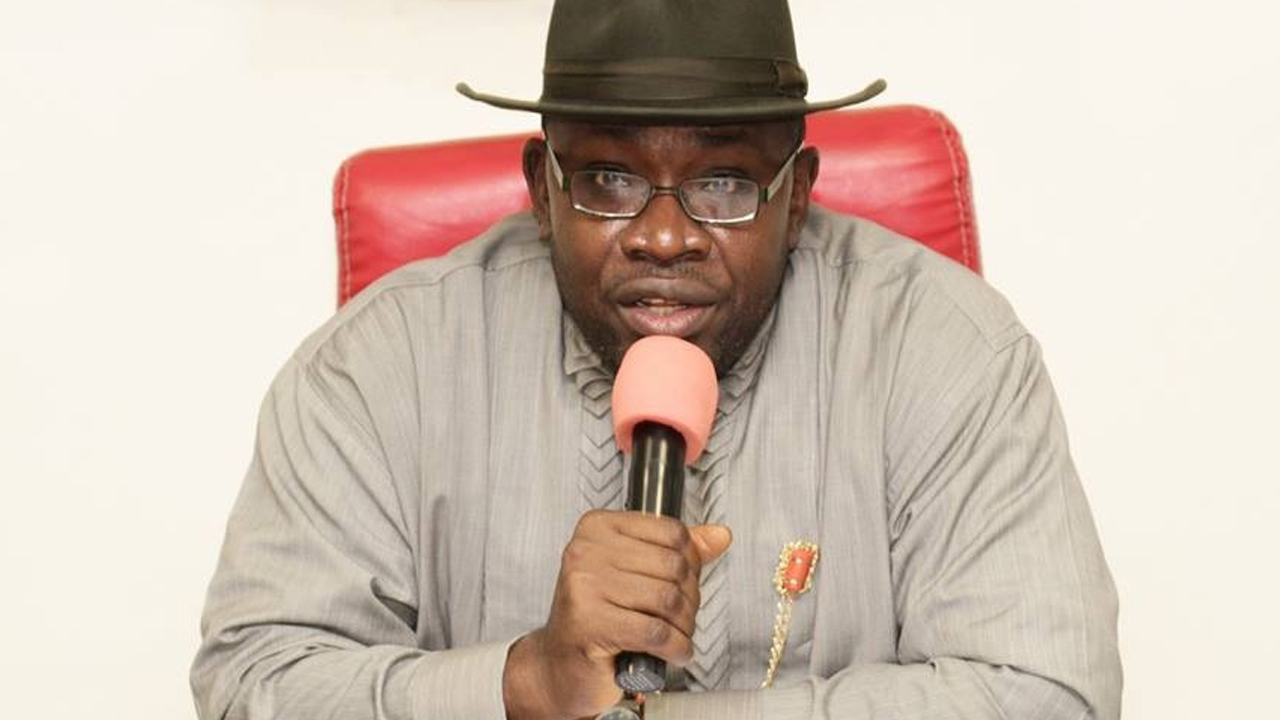
Senator Henry Dickson, representing Bayelsa West, has expressed disappointment over the Senate’s refusal to fully adopt the clause on mandatory electronic transmission of election results from polling units, amid growing public anger over the decision.
In a statement posted on his Facebook page following an interview on ARISE Television, the Bayelsa senator said he received news of the Senate’s position while he was in Bayelsa mourning the death of his brother, a former Deputy Governor.
“I felt deeply disappointed when, while I was in Bayelsa mourning the demise of my brother, I heard that the Senate refused to pass the clause on mandatory electronic transmission of election results from polling stations,” he said.
According to him, the clause was the product of nearly two years of legislative work and had already been passed by the House of Representatives in the agreed form.
“This was what we had been working on for the past two years, and the House of Representatives passed exactly what we agreed on,” Dickson stated, thanking Speaker Tajudeen Abbas, the Chairman of the House Committee, and other members “for doing the right thing.”
The former Bayelsa governor said he shared in the frustration expressed by many Nigerians.
“I saw the protests, the agitations, and the anger by Nigerians, and I share in them,” he said, recalling that in the 9th Senate lawmakers “even took a division of the Senate on this issue.”
Public reaction to the Senate’s decision has been widespread. During a related discussion on Channels Television, anchor Seun Okinbaloye asked Senate Spokesman, Senator Yemi Adaramodu (Ekiti), whether he was aware that many Nigerians were miffed by the Senate’s refusal to heed calls for full mandatory electronic transmission.
Responding, Adaramodu dismissed claims of widespread discontent.
“It is not true. We are patriots who see beyond the immediate. We can’t stop protesters. The placards exist to be carried. The streets are there to be occupied. It is their rights to protest. What we have done is in the interest of Nigeria and Nigerians,” he said.
Despite the spokesman’s position, the issue has continued to generate intense debate across social and political platforms, with many Nigerians expressing disappointment in the current Senate.
Dickson disclosed that after returning from mourning and attending the emergency session, he confronted members of the Senate leadership, who later brought a motion for rescission.
“They assured me that we would work on how to correct it, and, true to their words, they brought a motion for rescission,” he said, noting that the motion was moved by Senate Chief Whip, Senator Tahir Monguno.
However, he explained that the Senate version included a proviso validating results not electronically transmitted due to network failure in certain areas.
“Let me be clear: INEC had told us that they have the capacity to transmit election results nationwide, and we believe them,” he said.
Dickson described the outcome as a product of legislative negotiation.
“In parliament, you don’t get all you want at the time you want. The parliamentary system involves lobbying, negotiations, consensus-building, and making incremental progress,” he said.
“What happened today was not a loss to democracy; it was incremental progress. It was not what we fought for or prepared for, but it is still something we can work with while hoping to improve on it later.”
Clarifying the role of the INEC Result Viewing (IREV) portal, Dickson said: “IREV was introduced to give Nigerians and the general public access to a transparent INEC portal, providing an indication of votes from the primary voting centres. It does not collate election results, nor is it proof of any election win, but it shows results in real time.”
He emphasised that manipulation often occurs at collation centres rather than polling units.
“Where results are changed and democracy faces its greatest assault is at the collation centres, the Ward Collation Centres and the Local Government Collation Centres,” he said.
According to him, once polling unit results are uploaded in real time, candidates and parties can independently collate outcomes and detect discrepancies, limiting interference at higher collation levels.
Although he disagreed with the proviso in the Senate version, he described network failure as an exception rather than the rule.
“Laws are made for general rules, not exceptions. The proviso only addresses rare cases where there is network failure,” he said.
He further stressed that electronic transmission was feasible nationwide.
“Anywhere someone can make calls, send or receive money electronically, INEC can also upload and transmit election results electronically. This is not a decision Presiding Officers can make arbitrarily,” he said.
Despite his reservations, Dickson urged Nigerians not to lose faith in the democratic process.
“This was the best we could get under the circumstances, and it is not too bad. It is something we can work with while hoping to improve on it later,” he said.
He concluded with a call to action: “Sensitise and mobilise. Don’t give up on our democracy.”