


706
By Lizzy Chirkpi
The Nigerian Senate has summoned the Nigerian Bulk Electricity Trading (NBET) Plc over the failure to release ₦858 billion approved in the 2025 budget to address the nation’s electricity tariff shortfall, raising fresh concerns about the worsening financial condition of the power sector.
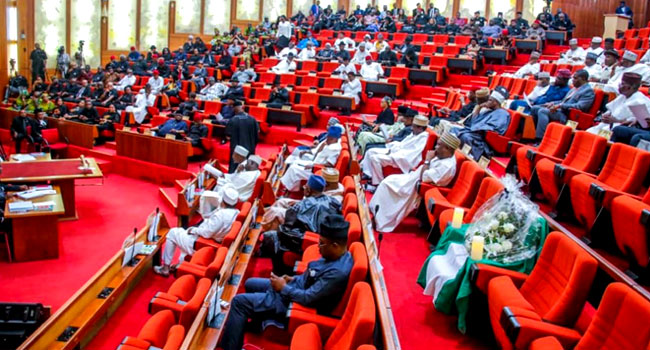
Lawmakers raised the issue during NBET’s 2025 budget performance review and defence of its 2026 appropriation before the Senate Committee on Finance, chaired by Senator Muhammad Sani Musa.
NBET’s Acting Managing Director, Johnson Akinnawo, told the committee that although the agency’s recurrent expenses for 2025 were funded through regulatory earnings—covering personnel costs and overheads the electricity market continues to suffer from non–cost-reflective tariffs.
He explained that the Federal Government had earmarked ₦858 billion in capital funding to bridge the widening gap between actual power generation costs and the tariffs approved for distribution companies (DisCos), as well as to settle outstanding obligations to generation companies (GenCos). However, only ₦60 million has so far been released.
According to Akinnawo, the amount released could not be utilised due to procurement bottlenecks, effectively leaving the intervention funds inaccessible.
“The gap between generation costs and the allowed tariffs is substantial. Without sustained government intervention, the market cannot remain stable,” he said, warning that NBET’s indebtedness to GenCos continues to rise as a result of the funding shortfall.
NBET, which operates as a bulk power purchaser within Nigeria’s electricity value chain—buying electricity from GenCos and reselling to DisCos while providing payment guarantees—has struggled to fulfil its stabilising role due to inadequate capitalization.
Expressing concern over mounting liabilities in the sector, Senator Sani Musa asked whether the National Assembly should recommend a review of the existing tariff regime or explore alternative financing options to close the deficit.
“Should the committee consider recommending a review of the tariff regime or explore alternative funding mechanisms to address this shortfall?” the senator queried.
Lawmakers also sought clarification on NBET’s plans to secure additional capitalization to strengthen its operations and restore confidence in the market.
In response, Akinnawo acknowledged that poor capitalization remains a core structural challenge. He disclosed that NBET’s management is engaging the Budget Office and the Ministry of Finance over the delayed release of the appropriated funds.
He warned that without adequate financial backing, NBET’s ability to function as a stabilising intermediary would remain severely constrained, with ripple effects on power generation and electricity supply nationwide.
Following the session, Senator Musa directed NBET to submit a comprehensive funding strategy and reform roadmap outlining how it intends to address the sector’s structural weaknesses.
The committee is expected to review the submission as part of deliberations on the 2026 budget, as legislative scrutiny of Nigeria’s struggling power industry intensifies.