


1.2K
By Tracy Moses
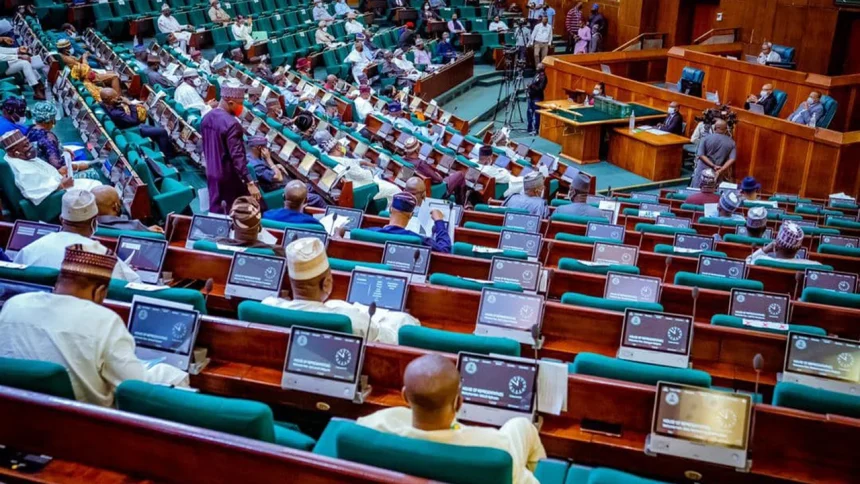
The House of Representatives Ad-Hoc Committee probing the controversial $460 million Closed Circuit Television (CCTV) surveillance project in the Federal Capital Territory has directed that further payments to ZTE Corporation be suspended pending satisfactory explanations on the execution of the contract.
The committee reached the decision on Tuesday following what it described as inconsistencies and a lack of clarity in the company’s submissions regarding the scope, locations, and current status of the project.
Lawmakers also mandated the firm to return with comprehensive documentation, including detailed records of equipment supplied and installed, specific project locations, and the identities and contact details of the 456 Nigerians it claimed were trained to operate and manage the system.
The resolution was adopted after a motion moved by the member representing Bursari/Geidam/Yunusari Federal Constituency, Ali Shettima, and seconded by Ekiti lawmaker, Kolawale Akinlayo, during an investigative hearing at the National Assembly.
In his opening remarks, Chairman of the Committee, Donald Ojogo, stressed that the probe was not aimed at witch-hunting any individual or organisation.
“I want ZTE to know that this is a friendly conversation that is not meant to witch-hunt anybody. We are in search of answers to questions Nigerians are asking, and we urge the company to speak to the documents before us,” he said.
Responding on behalf of the company, its Secretary, Irene Momoh, stated that the firm supplied and installed CCTV equipment in Abuja and Lagos, adding that the project was completed between 2011 and 2012.
However, when questioned about the current functionality of the cameras, Momoh admitted uncertainty.
“To the best of our knowledge, the items were supplied and installed in 2011/2012, but I cannot ascertain if they are currently working,” he said.
The response drew sharp reactions from lawmakers, who queried why a project of such magnitude lacked a sustainable maintenance framework.
Momoh explained that while there was an initial agreement to maintain the system for three months, the company extended support to six months before handing over.
“What happened was that the government did not commit to further funding to keep this operation running,” he added.
Members of the committee, however, disputed the company’s claims regarding the project’s coverage and delivery.
Citing documents from the Federal Ministry of Police Affairs, Edo lawmaker, Iyawe Esosa, challenged the assertion that installations were limited to Abuja and Lagos.
“The document submitted shows several locations in Edo State where these items are purportedly located. I live in Benin City, and I can tell you that these items are not found anywhere,” he said.
Similarly, Akinlayo dismissed claims of installations in Ekiti State, insisting that no CCTV infrastructure exists in the listed locations.
“I am from Ekiti State. All the places listed as beneficiaries, including Ado-Ekiti, do not have these things. I can tell you that no camera was installed anywhere in the South-West, apart from Lagos,” he said.
Tensions rose further when Momoh attributed gaps in his responses to the fact that he only assumed office in 2023 and that many officials involved in the original contract were no longer with the company. Lawmakers accused him of evading responsibility and threatened to report him to the Nigerian Bar Association for possible disciplinary action.
Meanwhile, a representative of the Central Bank of Nigeria, Josiah Okike, advised the committee to channel its directive through the Office of the Accountant-General of the Federation for proper implementation. He disclosed that as of March 2026, the company was due to receive $15.37 million as part of the loan repayment arrangement.
The committee subsequently resolved to invite the firm for further questioning and insisted on documentary proof of project handover, including details of the government agencies that took custody of the system.
The CCTV project was initiated under the administration of former President Goodluck Jonathan as part of efforts to strengthen urban security through modern surveillance infrastructure.
Awarded to ZTE Corporation and financed through a loan agreement with the Chinese government, the project was designed to deploy thousands of cameras across Abuja, Lagos, and other major cities, alongside command-and-control centres to support law enforcement.
Although the initiative was widely touted as a major step toward tackling insecurity, including terrorism, kidnapping, and urban crime, it has since been mired in controversy. Years after its reported completion, concerns persist over its visibility and effectiveness, with little evidence of functional surveillance infrastructure in many of the locations listed.
Successive administrations have also faced criticism over poor maintenance, inadequate funding, limited technical capacity, and alleged irregularities surrounding the contract.
The ongoing probe by the House of Representatives marks the latest effort by lawmakers to unravel what many have described as a significant public investment with little or no measurable impact on national security.