


747
By Tracy Moses
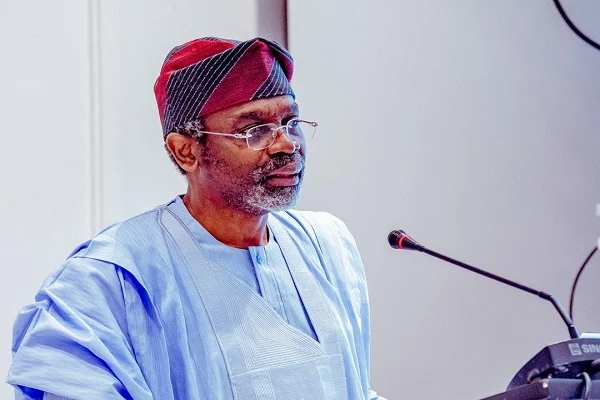
The Chief of Staff to President Bola Tinubu and former Speaker of the House of Representatives, Femi Gbajabiamila, on Monday warned that Nigeria risks global irrelevance if it fails to make sustained and strategic investments in education.
Gbajabiamila gave the warning in Abuja at the 2026 International Day for Education Conference themed, “Re-imagining the Future of Education in Nigeria: Collaborative Solutions for a Brighter Tomorrow,” convened by the Speaker of the House of Representatives, Tajudeen Abbas.
Delivering his goodwill message, he stressed that in an increasingly knowledge-driven global economy, no nation can compete effectively without prioritising human capital development.
“Education is the bridge between potential and productivity; between aspiration and achievement,” he said.
“Any country that neglects education in today’s world risks being left behind.”
Gbajabiamila emphasised that access to quality education must be based on merit and potential rather than privilege, noting that economic hardship should never deny capable Nigerians the opportunity to pursue higher learning.
Recalling his tenure as Speaker of the 9th House of Representatives, he highlighted his sponsorship of the Students’ Loans Bill, which he said was designed to eliminate financial barriers to tertiary education.
According to him, President Bola Tinubu assented to the bill within the first three months of the administration, leading to the establishment of the Nigerian Education Loan Fund. He noted that the Fund has since disbursed billions of naira to eligible students nationwide.
The former Speaker described the initiative as strong evidence that education occupies a strategic position within the administration’s Renewed Hope Agenda.
“As Chief of Staff to the President, you can always count on my support. Education will remain central to the Renewed Hope Agenda. Nigeria’s brightest tomorrow will be built in the classrooms we strengthen today,” he added.
Gbajabiamila also commended the 10th House of Representatives for intensifying oversight of tertiary education funding, advancing student welfare initiatives, and promoting reforms aimed at improving transparency and accountability across institutions.
Earlier, the Special Adviser to the Speaker on International Cooperation and Educational Development, Abisoye Da Rocha-Afodu, noted that the International Day of Education was proclaimed by the United Nations General Assembly in 2018 to recognise education as a fundamental human right.
She lamented that Nigeria currently has over 20 million out-of-school children, the highest number globally, alongside persistent infrastructure deficits, poor teacher welfare, outdated curricula and limited access to technology.
According to her, the conference was convened to assemble lawmakers, policymakers, development partners and other stakeholders to identify practical and sustainable solutions to these challenges.
Also speaking, Chairman of the House Committee on Federal Polytechnic and Higher Technical Education, Fuad Laguda, said funding constraints continue to undermine the capacity of polytechnics and technical institutions to deliver industry-relevant skills.
Laguda stressed that any country serious about sustainable development must prioritise education, adding that Nigeria must align its demographic potential with bold investments and policy discipline to strengthen its global standing.
The conference formed part of broader efforts to reposition Nigeria’s education sector as a foundation for economic reform, youth employment, innovation and long-term national competitiveness.