


725
By Tracy Moses
The African Democratic Congress (ADC) Caucus in the House of Representatives has demanded the removal and prosecution of the Chairman of the Independent National Electoral Commission (INEC), Professor Joash Amupitan, over alleged bias, warning that his continued stay in office could undermine the credibility of the 2027 general elections.
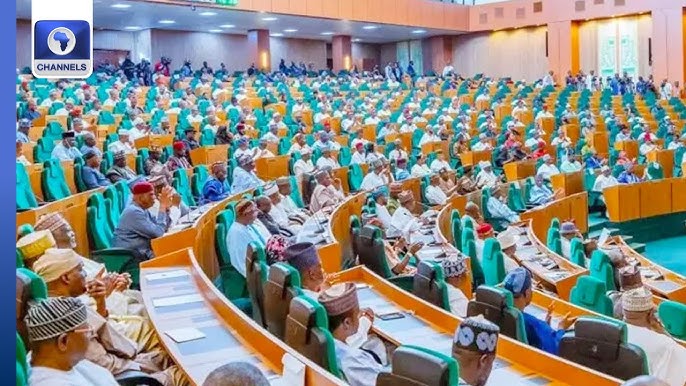
Briefing journalists on Monday, at the National Assembly following its inaugural meeting held on Sunday, April 12, 2026, the caucus said its position was reached after a review of political developments in the country and growing concerns over the state of Nigeria’s democratic institutions.
The lawmakers described the situation as “an existential threat to our democracy,” raising alarm over what they termed the declining neutrality of the electoral umpire and the perceived compromise within the judiciary.
According to the caucus, “the impartiality and neutrality of the Chairman of the Independent National Electoral Commission… to oversee a free, fair, and credible 2027 general elections” has become questionable, citing “recent public statements and actions… deemed to be compromising, partisan, and conflicted.”
They pointed to allegations linking the INEC chairman to partisan expressions on social media, noting that “he previously made a partisan statement on his personal X account… [and] expressed support for the ruling All Progressives Congress (APC).” The caucus further stated that he had been accused of posting content alleging Christian genocide in Nigeria.
While INEC has denied that Professor Amupitan owns the X account in question, the lawmakers insisted that “digital forensic analysis and other online investigations… suggest that the account is indeed his,” adding that the development “has raised concerns regarding his transparency, integrity, and trustworthiness,” especially given “the critical nature of the office he holds.”
On the strength of these concerns, the caucus declared that “in light of these inconsistencies… [we] hereby call for the removal of Prof. Amupitan from office and advocate for his prosecution,” stressing that such action is necessary “to safeguard the nation against an avoidable descent into undemocratic practices.”
The lawmakers also accused INEC of interfering in the internal affairs of the ADC, particularly in relation to the party’s leadership dispute. They alleged that the commission “has abdicated its responsibility as an impartial arbiter and instead intervened in the party’s internal affairs,” adding that it appeared to be “recognizing an illegitimate leadership faction” contrary to the leadership of Senator David Mark.
Further raising concerns, the caucus alleged a troubling nexus between elements within INEC and the judiciary. It claimed that “the Commission, in collusion with certain elements within the judiciary, is actively working to undermine the aspirations of the ADC,” warning that such actions could prevent the party from fielding candidates in the forthcoming elections.
The lawmakers disclosed that “credible information at our disposal suggest that certain individuals within the judiciary and INEC are collaborating to influence the outcome of a case” scheduled for April 14, 2026, describing the development as a serious threat to judicial independence and democratic fairness.
Citing provisions of the Electoral Act 2026, the caucus maintained that “no court in Nigeria shall entertain jurisdiction over any suit or matter pertaining to the internal affairs of a political party,” insisting that any deviation from this provision would amount to a breach of the law. It added that “that’s what INEC is enabling by its actions and pronouncements concerning the internal affairs of the ADC.”
In response, the caucus announced plans to escalate the matter to the National Judicial Council, stating that “we have concluded plans… to submit a petition before the NJC” to investigate “politically exposed judicial officers” and recommend appropriate sanctions, including possible removal from the bench.
The lawmakers emphasized that their actions were driven by the need to safeguard democratic institutions, noting that “we are compelled to act in response to the existential threat to our democracy,” especially at a time when “critical segments of society… [are] losing faith in the judiciary and electoral authorities.”
They also lamented what they described as a decline in judicial standards, recalling that even during the military era, the judiciary “boasted esteemed jurists… who delivered discerning judgments despite the authoritarian regime,” warning that such figures “would be deeply disturbed… by the current trend of questionable judgments, contradictory interim decisions, and overt judicial overreach.”
Echoing concerns raised by the Nigerian Bar Association (NBA), the caucus criticized the growing perception of judicial compromise, particularly the practice of political patronage. Quoting the NBA president, the lawmakers said such actions “demean the judges” and “demean the judiciary,” stressing the need for proper institutional funding to preserve judicial independence.
The caucus concluded by insisting that “INEC must not only be independent in name but also demonstrate impartiality, transparency, credibility, and trustworthiness,” warning that “current public perception suggests a disconnect from these ideals.”