


1.4K
By Godswill Michael
Rising global commodity prices and persistent domestic cost pressures may push Nigeria’s headline inflation rate to 16.42 per cent in 2026, according to the latest inflation forecast by the Financial Markets Dealers Association (FMDA).
In its April 2026 inflation outlook report, the association projected that inflation on a month-on-month basis would rise by 2.78 per cent, although lower than the 4.18 per cent recorded in March, driven largely by rising food and energy prices.
The headline inflation stood at 15.38 per cent in March 2026.
The report stated that “headline inflation is projected to rise further to around 16.42 percent, reflecting the combined effect of elevated food prices, higher transportation and production costs, as well as lingering pass-through from the March fuel price shock.”
According to the FMDA, global commodity prices remained elevated in April due to higher energy costs and renewed geopolitical tensions in the Middle East.
It noted that Brent crude oil prices rose sharply to $120.4 per barrel in April from $103.7 per barrel in March, while the World Bank Energy Index increased to 146.4 points from 130.6 points.
The report added that global food prices also sustained their upward trajectory during the month, with the Food and Agriculture Organisation Food Price Index increasing by 1.6 per cent to 130.7 points in April, marking the third consecutive monthly increase.
According to the report, the increase was driven by “higher cereal, vegetable oil and meat prices amid elevated energy costs and supply disruptions linked to the Strait of Hormuz crisis.”
The association further stated that the World Bank Food Index rose to 118.5 points in April from 116.7 points in March, while wheat prices increased to $282 per metric tonne from $276 per metric tonne and maize prices climbed to $214 per metric tonne from $212.7 per metric tonne, signalling sustained imported food inflation pressures.
On the domestic front, the report said food prices remained elevated in April, citing data from the World Bank food market survey.
“The food price index increased to 3.69 from 3.60 in March, reflecting continued increases across major staples,” the report stated.
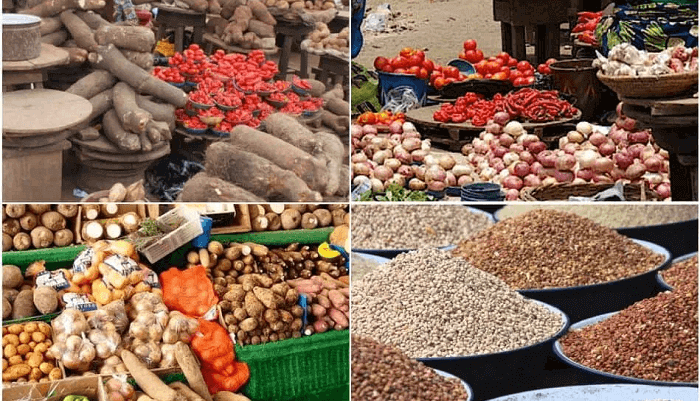
It added that yam prices rose by 3.98 per cent during the month, while watermelon, maize, millet and sorghum also posted moderate increases, indicating sustained food inflationary pressures.
Data contained in the report showed that the price of beans increased to 1,808.62 in April from 1,794.46 in March, while gari rose to 927.91 from 925.2 and maize increased to 1,144.6 from 1,134.41. Millet prices rose to 1,044.14 from 1,036.48, while sorghum climbed to 603.56 from 599.23.
Watermelon prices also increased to 862.13 from 848.27, while yam prices rose to 3,164.99 from 3,131.7 during the period. Rice was the only commodity among those tracked to record a decline, easing marginally to 2,203.11 from 2,205.98.
The FMDA also highlighted the impact of rising fuel prices on inflationary pressures.
According to the report, average Premium Motor Spirit prices increased to N1,322.50 in April from N1,208.38 in March, representing a 9.44 per cent increase.
However, it noted that the increase was lower than the 37.35 per cent spike recorded in March, suggesting that “while energy-related inflationary pressures persisted, the pace of fuel price acceleration softened.”
The report nevertheless noted that exchange rate movements provided some relief during the month.
It stated that the naira appreciated by 1.36 per cent on average to N1,361.22/$ in April from N1,379.98/$ in March, which “may help moderate imported inflation pressures and cushion part of the pass-through from higher global commodity prices.”
The association stated that although domestic food prices and energy costs remained elevated, moderation in fuel price increases and exchange rate appreciation could partly contain inflationary pressures in the near term.
The report also showed that inflationary pressures strengthened across major economies in April. Inflation in the United States rose to 3.8 per cent from 3.3 per cent, while the Euro Area recorded 3.0 per cent from 2.6 per cent, largely due to higher energy and production costs.
Across Africa, Kenya’s inflation accelerated to 5.6 per cent from 4.4 per cent, while Ghana’s inflation edged higher to 3.4 per cent from 3.2 per cent. The FMDA added that 72 per cent of tracked countries recorded higher inflation in April, compared to 67 per cent in March, underscoring broad-based global inflationary pressures.
Why this matters
Rising inflation could further erode household purchasing power, increase business operating costs and complicate monetary policy efforts by the Central Bank of Nigeria, particularly as food and transportation account for a large share of consumer spending in the country.
The report nevertheless noted that exchange rate movements provided some relief during the month. It stated that the naira appreciated by 1.36 per cent on average to N1,361.22/$ in April from N1,379.98/$ in March, which “may help moderate imported inflation pressures and cushion part of the pass-through from higher global commodity prices.”