


1.1K
By John Azu
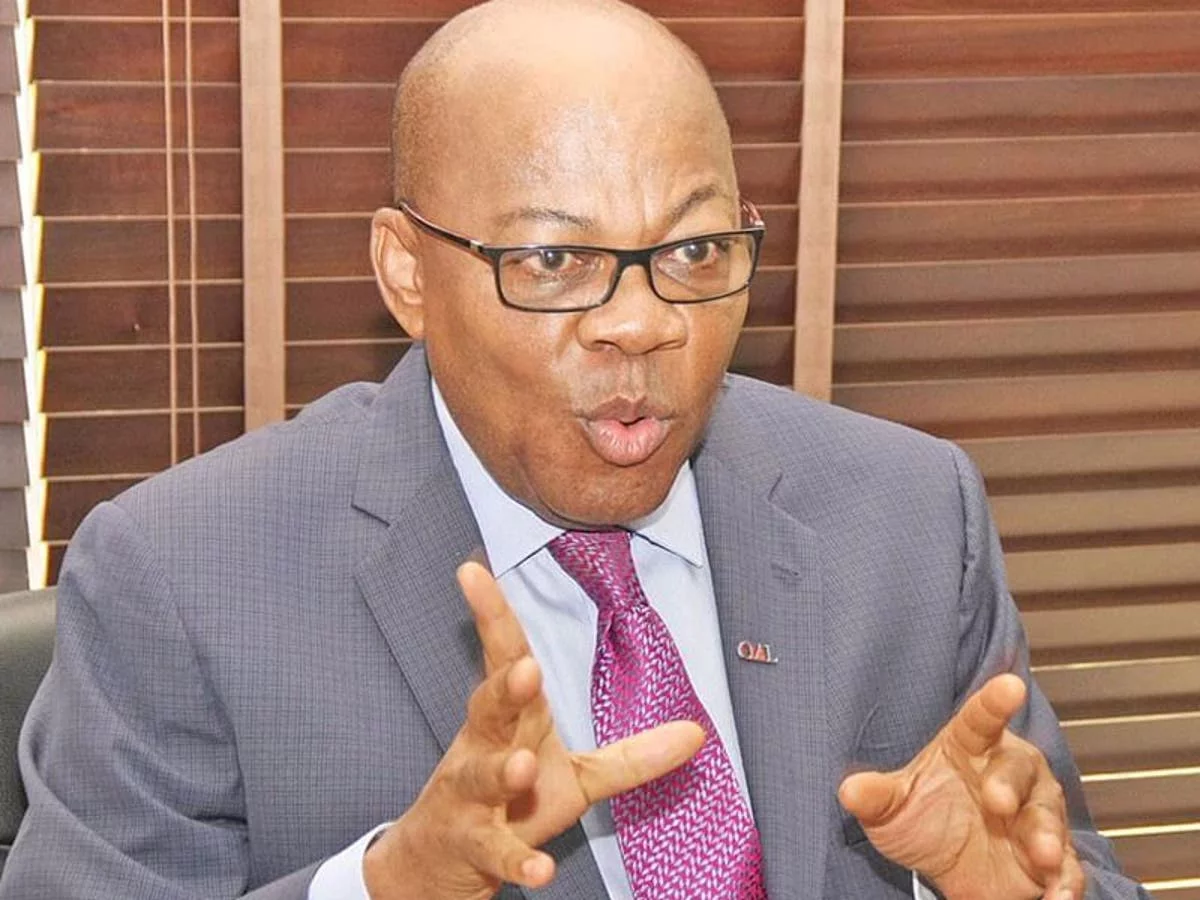
A Senior Advocate of Nigeria Olisa Agbakoba has questioned the whereabouts of N20 trillion federal revenue allegedly not paid into the national purse.
Agbakoba, disclosed this in a chat with Pointblank News on Thursday following his statement titled: “Where does our money go?” which was circulated on social media.
The civil rights activist said funds collectively earned as a country such as every kobo of oil revenue, customs duty, company tax, regulatory fee, and court fine should be remitted to the Federation Account under Section 162 of the Nigerian Constitution and ought to be used fund the roads, schools, hospitals, and police after it is shared among the federal government, the 36 states, and the 774 local governments according to a sharing formula.
He said in 2025 alone, according to the World Bank’s Nigeria Development Update, N14.94 trillion of federation revenue was “deducted” before it ever reached the Federation Account, adding that it represented 39 percent, nearly two-fifths of total earnings ‘gone before any state or LGA saw a single kobo.”
Continuing, Agbakoba said, in 2024, NNPCL, Nigeria’s biggest revenue generator, was supposed to remit N1.1 trillion to the Federation Account but remitted only N600 billion without the outstanding N500 billion.
There is currently an active Federal Accounts Allocation Committee (FAAC) investigation into allegations that NNPCL under-remitted $42.37 billion between 2011 and 2017, which he added that, at today’s exchange rate, is roughly N12.91 trillion, more than the entire 2024 federal budget.
While noting that there are several leakages Nigerians don’t know about apart from the listed shortfalls, the former President of the Nigeria Bar Association (NBA), who is also a maritime law expert, warned that the country was drowning in debt.
“Nigeria’s total public debt at the end of 2025 was N159.27 trillion (Debt Management Office, February 2026). In 2023, debt service consumed 78% of federal revenue. In 2024, it consumed 69%. The IMF and World Bank recommend countries keep debt service to 30–40% of revenue. We are nearly double that benchmark. Out of every N1 the federal government earned last year, almost 70 kobo went to paying back loans. That leaves 30 kobo for everything else: hospitals, schools, roads, police, military, civil service salaries, infrastructure, and security— for 220 million Nigerians,” he said.
‘And what are we borrowing for? In large part, we are borrowing to fund services that our own revenues — if they actually reached the Federation Account — should be funding. Let that sink in. We are borrowing money, at interest, to replace money we already earned but never collected properly.
“This is why fuel is expensive. This is why school fees doubled. This is why your salary buys less every month. This is why hospitals have no drugs. This is why universities are always on strike. This is not corruption in the abstract. This is a constitutional account that has been broken for 25 years.”
The lawyer noted that alerted that after 25 years of silence since 1999, administrative tricks had taken root, capitaising on the silence of Section 162 on oversight into the Federation Account on who is to keep the account, how quickly money must be remitted, who audits the account what happens when stolen from and whether the public is allowed to see the balance.
He added that The Treasury Single Account was introduced in 2015 by Dr. Okonjo-Iweala as Finance Minister, in a well-intentioned reform to consolidate government accounts, reduce leakage, and, which for a few years, it helped reduce the number of MDA bank accounts.
The senior lawyer similarly called for the cancellation of the country’s Petroleum Industry Act (PIA) for failing to meet expectations.