


937
By Oscar Okhifo
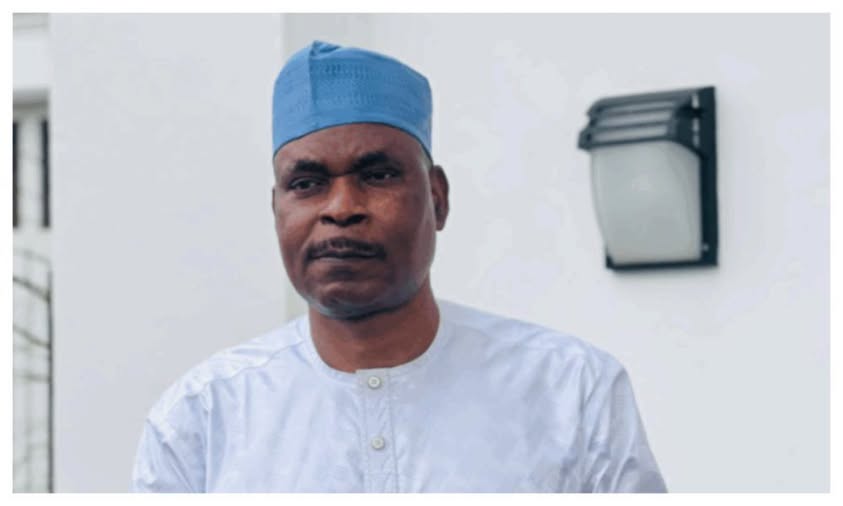
Former Inspector-General of Police, Mohammed Adamu, has exited the All Progressives Congress, citing dissatisfaction with the conduct of the Nasarawa governorship primary election.
Adamu announced his resignation on Monday in a letter submitted to APC officials in Makama Ward, Lafia, where he expressed disappointment over the outcome and conduct of the governorship primary election.
The former police chief had contested for the APC governorship ticket for the 2027 election but lost to Senator Ahmed Wadada, who emerged winner of the exercise.
Wadada secured 195,285 votes to defeat Adamu, who polled 39,675 votes in the primary election conducted across the state.
Reacting to the outcome, Adamu said the exercise fell short of the democratic standards and transparency expected of a ruling political party.
He further stated that developments surrounding the primary election had made it impossible for him to continue his political activities within the APC.
Before his resignation, he had rejected the outcome of the primary election, insisting that the exercise was marred by irregularities and failed to meet acceptable standards in several parts of the state.
He maintained that the process was compromised in multiple local government areas, raising concerns over fairness and internal democracy within the party.
In his words: “After wide consultations with supporters, political associates and family members, I have decided to withdraw my membership to pursue my political aspirations through another platform.”
Meanwhile, reactions have continued to trail the conduct of several APC primary elections across the country, with allegations of inconsistencies in vote counting and complaints of irregularities in some states.
Political observers and media analysts have also expressed concern over what they describe as troubling patterns emerging from the primaries in states such as Edo, Delta, Ebonyi, Lagos, Oyo and others, warning that such disputes could signal deeper tensions ahead of the 2027 general elections.
In Oyo State, former minister of Power Adebayo Adelabu, who is also a governorship aspirant, raised concerns over the figures declared in the primary election, alleging that the announced results were higher than the total number of registered APC members in the state.
The controversy also generated reactions on social media, where a user mocked the outcome, writing:
“This is beautiful nemesis. As power minister, Adelabu gave Nigeria darkness and watched while Nigerians were slammed with estimated billing. Now, his party has slammed him with estimated figures in Oyo primaries. This is sweet nemesis.”
With the rising wave of complaints trailing the APC primary elections across several states, concerns have continued to mount over alleged irregularities backed by claims described by some stakeholders as “verifiable evidence.”
Political observers are now questioning whether the ruling party will be able to contain the fallout and manage the growing dissatisfaction among aspirants and delegates.
Analysts say it remains uncertain whether the aggrieved members will be pacified through internal party mechanisms or follow the path of defection already taken by figures such as former Inspector-General of Police, Mohammed Adamu.
Others opined that some dissatisfied members may remain in the party and act as enemies within, operating covertly as internal pressure blocs ahead of the 2027 general elections.
For now, party leaders are yet to fully address the breadth of the complaints, leaving open questions over cohesion, loyalty, and future realignments within the All Progressives Congress.
Time, analysts say, will ultimately determine whether the APC can contain the growing tensions or face deeper internal fractures ahead of the 2027 polls.