


By Lizzy Chirkpi
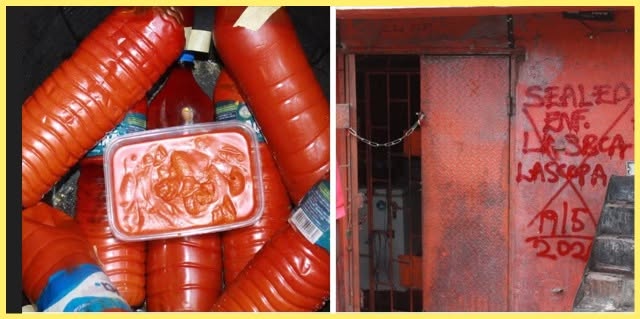
The Lagos State Government has raised the alarm over the circulation of adulterated palm oil in markets across the state, warning residents to exercise caution when purchasing the cooking oil.
The warning was issued by the Lagos State Consumer Protection Agency (LASCOPA) amid concerns over increasingly sophisticated methods of palm oil adulteration.
The agency said it was intensifying surveillance of markets across the state as part of efforts to protect consumers from unsafe and substandard products.
The disclosure followed a technical presentation at the Lagos State Food Safety Conference and Exhibition 2026 by a Senior Lecturer in the Department of Food Technology, Auchi Polytechnic, Dr Nurah Oseni.
Presenting a paper titled, “Palm Oil Adulteration: Emerging Risks, Detection Strategies and Regulatory Control,” Oseni explained that palm oil was particularly vulnerable to adulteration because of its high trading volume, consumers’ perception that deep-red colour indicates quality, price differences and informal trading practices.
She said, “Palm oil is particularly vulnerable to adulteration because of its high trading volume, consumers’ association of deep-red colour with quality, price differences, informal market practices, and challenges in detecting sophisticated adulterants.”
According to her, emerging adulteration methods include the use of potentially carcinogenic Sudan and Azo dyes to artificially enhance the colour of palm oil.
She also raised concerns over the practice of mixing palm oil with recovered or recycled oils, including spent cooking oil, as well as the use of combinations of adulterants designed to evade basic quality checks.
Oseni further identified falsified product labels and batch records as emerging forms of digital and traceability fraud within the supply chain.
She called for stronger surveillance and more sophisticated detection mechanisms to tackle the growing challenge.
While advising consumers to carry out basic visual checks when purchasing palm oil, the lecturer cautioned that appearance alone could not conclusively determine whether the product had been adulterated.
She explained that palm oil could separate into layers, with the lower layer generally appearing orange to reddish-yellow rather than uniformly deep red.
However, she stressed that consumers should not rely solely on visual observations to determine the safety or authenticity of the product.
Oseni advocated a tiered detection system involving risk-based screening, rapid physicochemical and spectroscopic tests, and confirmatory laboratory analysis.
She said the procedures should be supported by proper sampling and chain-of-custody processes to ensure reliable results.
The lecturer also proposed a five-step surveillance framework for Lagos: “Risk Map, Sample, Screen, Confirm and Act.”
She recommended that the framework be supported by an adulteration intelligence database, with processors, traders, laboratories, regulators, researchers and consumers assigned coordinated responsibilities in tackling the problem.
Meanwhile, the General Manager and Chief Executive Officer of LASCOPA, Afolabi Solebo, reaffirmed the agency’s commitment to protecting Lagos residents from unsafe and substandard products.
Solebo urged residents to remain vigilant and report suspected cases of adulterated palm oil, as well as traders involved in questionable practices.
He said, “We urge Lagosians to shine their eyes and report suspected adulterated palm oil and unscrupulous traders through the Agency’s official channels.”
The LASCOPA boss added that the agency would intensify market surveillance across the state.
The latest warning comes months after LASCOPA raised concerns over adulterated palm oil in Lagos markets and took enforcement action against a trader.
The agency had subsequently advised consumers to patronise trusted vendors and watch out for unusual colour, offensive odour, excessive thickness, sediments and other suspicious characteristics.