

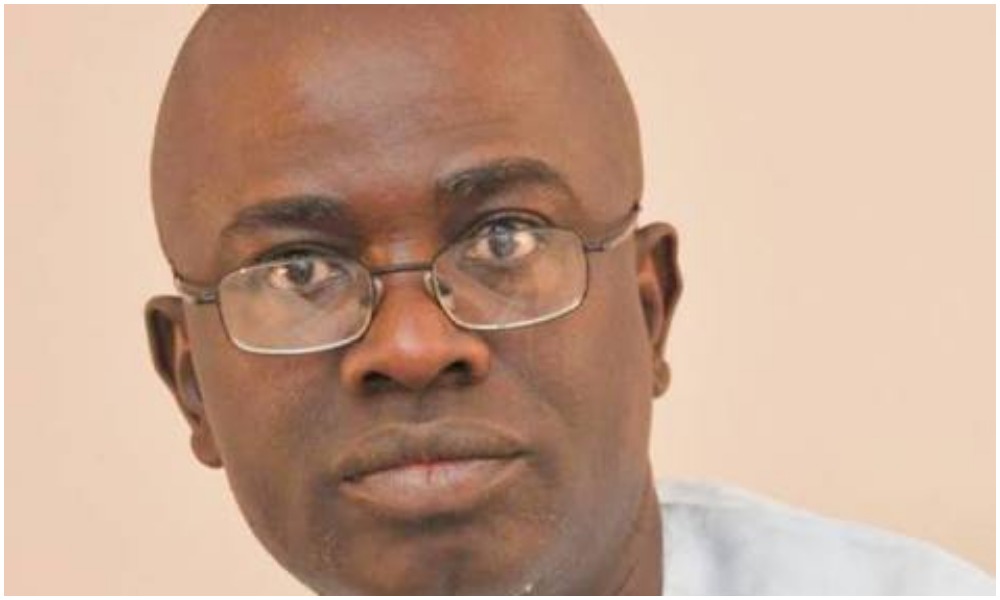

My attention has just been drawn to an attempt in a section of the social
media to credit President Goodluck Jonathan with what he did not say about
my book, ‘Against The Run of Play’, in order to discredit me.
Yesterday, President Jonathan said: “I have just read Segun Adeniyi’s new
book, ‘Against the Run of Play’ which has so far enjoyed tremendous
reviews in the media. My take on it is that the book as presented,
contains many distorted claims on the 2015 presidential election by many
of the respondents. There will obviously be more books like that on this
subject by concerned Nigerians.
However, I believe that at the right time, the main characters in the
election including myself will come out with a true account of what
transpired either in major interviews or books.”
The respondents President Jonathan was referring to are the people who
spoke to me and whose claims he apparently disputes or disagrees with.
This should be clear enough to those who did not choose to read his
statement with a tendentious accent. But apparently, it is not.
President Jonathan did not say I distorted his views and the fact that
others may have presented him in ways he doesn’t like cannot be taken as
an indictment of me or of my work.
For the record, after my first conversation with President Jonathan, I
asked for his email address and promised to send him the raw text of our
conversation which he could then amend as appropriate. I sent it to him
that very day. When I went for a second meeting, I took along a printed
copy which we both went through line-by-line. Whatever he wanted to be
removed, reworked or rephrased was done while in some areas he provided
further context to what he said.
Incidentally, a few hours after our second conversation, President
Jonathan called me that he felt uncomfortable about a certain response he
gave to a particular issue. He told me what to do and I reflected it
immediately. I went into all that length because he is a man for whom I
have tremendous respect and my intention was/is not to embarrass him or
anybody. I just wanted his side of the story told in a way he is
comfortable with.
I went through this same process with former President Olusegun Obasanjo,
former Senate President David Mark, APC National Leader, Asiwaju Bola
Tinubu, Governor Nasir el-Rufai of Kaduna State, former NGF Chairman and
current Transportation Minister, Mr Chibuike Rotimi Amaechi, former Niger
State Governor, Dr. Muazu Babangida Aliyu and a few other principal actors
who all have in their emails the raw text of our conversations.
The reason I did that was so I would not misquote, misrepresent or distort
the views of any of the people who spoke to me on trust.
My intention was not to ambush or set up anyone. This is why I gave them
the opportunity to go over what they told me again before putting it in
print. Fortunately, none of them has come out to say I distorted their
views. Besides, I left out so many things in my book so as to avoid
unnecessary controversies. For instance, President Obasanjo made some
strong remarks about former Vice President Atiku Abubakar which I decided
to remove even after he (Obasanjo) had approved it for publication. I did
the same to some of the things others told me that I believed could raise
unnecessary dust or distract from the story at hand.
Therefore, I did not distort President Jonathan’s view and he did not say
I did. Now that he has reaffirmed what he told me that he is writing his
own account, I will enjoin Nigerians to wait for his book. I hope others
will join him in writing their own accounts so that we can have the
complete story of the 2015 presidential election. The more accounts and
the more perspectives we have, the better for our education and learning.
In the same vein, I will also implore all the key actors in the major
historical junctures of our national life to documenting their experiences
for the present and for posterity.
Meanwhile, I am aware that hackers have succeeded in breaking the code to
the online edition of my book and are already circulating the book online.
I have received it from different sources, even on WhatsApp.
Though sad, it is a familiar story for me. In the case of my earlier book,
‘Power, Politics, and Death’, it actually went viral on the day of the
presentation. So, that I enjoyed three days of grace this time is a bonus.
While I feel pained losing the revenue that could have accrued to me from
online sales, I wrote the book because I believe it is an important story
that should be documented and widely read. I have a feeling this book will
be widely read, though at my expense and that of my publishers.
But I am comforted by the fact that we are succeeding in dispelling the
myth that Nigerians do not read. Nigerians do read. It is our task to
write on what will interest them and present and package such in ways they
will find appealing.
That said, however, I am more worried for people in creative arts and
sciences, especially those in Nollywood, who are practically at the mercy
of hackers and pirates. The authorities should do more to protect their
works from the antics of people who reap where they do not sow.
When creative people in both the arts and sciences cannot be guaranteed
the legitimate benefits of their sweat and investments, they lose the
incentive to take the risk to create and innovate. And when that happens,
the whole society loses.
Protecting intellectual property is therefore good for all of us, not just
for the artistes and the inventors. We will all be the better for it.
World Bank Says It Can’t Find Database On Abacha Stolen Loots
The World Bank has told Socio-Economic Rights and Accountability Project
(SERAP) that it “cannot locate any additional information on the projects
executed with recovered stolen public funds by the late General Sani
Abacha.”
According to the response sent last week to SERAP, the World Bank Access
to Information Appeal Committee said, “In response to your request under
case number AI4288 (related to your initial request case number AI3982),
we wish to inform you that we have thoroughly searched our records and
databases but have not been able to locate any additional information that
is responsive to your request beyond what we have already shared with you.
Therefore, we are unable to fulfill your request.”
It would be recalled that the World Bank last year asked for more time to
release details on the spending of recovered loot by Abacha. This followed
the bank’s decision to refer “portion of appeal by SERAP to the Bank
Archives Unit for processing for public access. The Bank’s request for
more time followed the appeal SERAP lodged with the Bank on 5 February
2016 on the ground that the Bank’s decision on its initial request did not
reveal “important portions of the information requested on how Abacha loot
was spent.”
But dissatisfied with the failure of the Bank to locate additional
information, SERAP has now sent an open letter to the Bank’s president Dr.
Jim Yong Kim requesting him to use his “good offices and leadership
position to urgently address the public perception that the World Bank is
seeking to distance itself from responsibility over alleged mismanagement
in the spending of recovered Abacha loot.”
Specifically, the organization asked Dr Kim to “establish a Special
Inspection Panel on Nigeria to visit locations across the country to
verify whether or not the projects reportedly executed by the Nigerian
government with the funds were actually executed.”
In the letter dated 28 April 2017 and signed by SERAP deputy director
Timothy Adewale the organization expressed concern that “the apparent lack
of transparency and accountability in the spending of recovered Abacha
loot and the fact that the Bank has now come to the conclusion that it has
no more information to provide on the status of the projects reportedly
executed with the funds have impacted negatively on the communities across
the country who are victims of corruption.”
The organization argued that, “Using technicalities under the Bank’s
Access to Information Policy to refuse to answer outstanding questions on
the projects reportedly executed with recovered Abacha loot would leave
communities across the country that have been negatively affected by the
mismanagement of the funds without any effective remedies.”
The letter read in part: “Getting to the root of how Abacha loot was spent
would demonstrate that the World Bank is willing to put people first in
the implementation of its development and governance policies and
mandates, as well as remove any suspicion of the Bank’s complicity in the
alleged mismanagement of the recovered public funds.”
“There would be an acute risk that the Bank’s on-going and future role in
supervising and monitoring of spending of recovered stolen public funds
would be questioned and may be legally challenged for lacking transparency
and accountability.”
“SERAP believes that given its supervisory and monitoring roles in the
spending of the recovered Abacha loot, the World Bank ought to do much
more to clarify outstanding questions regarding the status of projects
reportedly executed with the funds. It is vital that the Bank is able to
show that it is up to the task whenever it takes up the responsibility of
supervising and monitoring the spending of recovered funds in Nigeria and
elsewhere across the world.”
“SERAP also believes that the Bank ought to have classified the execution
of the projects by the Nigerian government as high or substantial risk
especially given the prevalent of corruption in the country, and exercised
due diligence including by keeping proper records on the conditions of
projects supervised and monitored by the Bank.”
“Any failure to take decisive action to uncover what exactly happened to
the projects reportedly executed by recovered Abacha loot which the Bank
volunteered to supervise and monitor would shed a bad light on the World
Bank, undermine its goal of alleviating poverty, and may mark the demise
of transparency and accountability at the Bank.”
“The proposed inspection panel on Nigeria should be able to ask
appropriate questions from the authorities and engage with the communities
affected by the alleged mismanagement of the recovered funds. This process
would help to enhance compliance on the ground with the Bank’s safeguards
and thereby bolstering the Bank’s accountability under its policies.”
“The panel should also undertake a full investigation into whether there
has been a serious failure by the Bank supervisors and monitors to observe
its operational policies and procedures regarding the execution of
projects with recovered Abacha loot; the role played by any government
officials including in the Ministry of Finance, and the material adverse
effects on communities across the country.”
“Communities that have been affected by the apparent mismanagement of
recovered Abacha loot should receive from the Bank proper and adequate
compensation as well as community-based development benefits such as
education, sanitation systems, health care, and community services
(particularly for the elderly, mothers and children), access to clean
water, access to livelihoods, and other locally determined remedial
measures. SERAP considers this is a basic corrective justice, and it is
the bare minimum required in the circumstances.”
“SERAP also urges you to adopt and implement a Transparency Charter with
respect to your ongoing and future supervisory and monitoring duties on
the spending of recently recovered Abacha loot in order to ensure the
integrity of the process of project execution. SERAP believes that the
Bank’s goals of promoting transparency, accountability and the rule of law
in countries would gain more credibility and respect if the Bank can lead
by example particularly in its supervisory and monitoring role of spending
of recovered stolen public funds.”
“SERAP hopes that the World Bank would act as requested. However, take
notice that should the Bank fail and/or neglect to take the steps
recommended, the Registered Trustees of SERAP would pursue appropriate
international and national legal actions to ensure transparency and
accountability in this matter.” SERAP said that the proposed panel should
find out:
1. Why 2 rather 8 health centers were completed as disclosed by the
report produced by the Bank. The location of the 2 completed projects
should be disclosed. If it is true that 174 health centers were built with
the Abacha loot and commissioned by the government and to disclose the
locations of the centers;
2. If payments were made to contractors who reportedly executed 10 of
the 18 power projects pertained to physical electrical installations, and
disclose the names of those contractors. If it is true that recovered
Abacha funds were used to provide additional financing for the Universal
Basic Education (UBE) program in the amount of NGN24.25 bn to support
basic education throughout the country, and to disclose the number and
location of schools which benefited from these funds at the time;
3. If it is true that 13 road projects were completed including 3 of
the largest road and bridge projects in each geo-political zone with the
funds, and to disclose the locations of individual projects, including the
largest roads and bridges completed