


By Bayo Davids
Former Head of State, Yakubu Gowon, has revealed that the political inclinations of the late Col. Victor Banjo ultimately destroyed his military career and led to his death during the Nigerian Civil War.
Gowon made the disclosure in his newly unveiled autobiography, “My Life of Duty and Allegiance,” presented in Abuja on Tuesday.
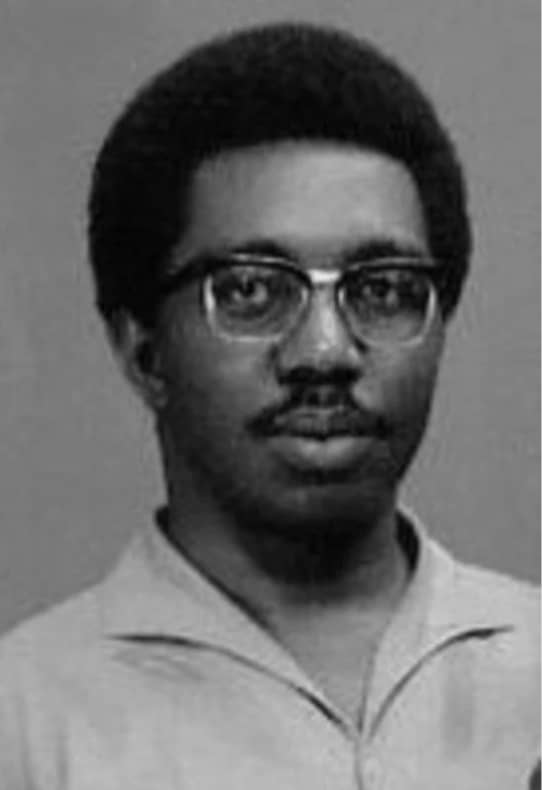
Victor Banjo remains one of the most controversial and fascinating figures of the Nigerian/Biafran Civil War. Widely regarded as the first university graduate to enlist in the Nigerian Army, Banjo studied Mechanical Engineering before joining the military alongside other educated officers such as Chukwuemeka Ojukwu, Emmanuel Ifeajuna, Ahmadu Ali, Austen Peters and Adewale Ademoyega.
In the book, Gowon recounted how Banjo and Ojukwu became deeply involved in political discussions at a time Nigeria was facing severe instability in the First Republic. According to him, the two officers explored ways to resolve the political crisis caused by the inability of leading nationalist figures — Nnamdi Azikiwe, Obafemi Awolowo and Abubakar Tafawa Balewa — to work together.
“Political historians have copiously documented the cause and course of how Zik and Balewa, who represented the East and the North respectively, could not make the alliance between their respective parties work. It did not matter much that their arch-rival, Chief Obafemi Awolowo (1909-1987) of the Western Region was in prison in Calabar and, notionally, had severely limited political influence.
“But it is safe to say that the discussions, which I later gathered started between Ojukwu and Banjo, centred on seeking ways to intervene to break the logjam. This fact alone indicated the extent to which the relationship between Zik and Balewa had deteriorated.
“The two military officers (Ojukwu and Banjo) reasoned that if the military did not intervene, one way or the other, particularly in favouring Zik in the unfolding political drama, we might eventually be blamed for whatever happened to the young Nigeria.”
Gowon said he was approached by Ojukwu, Banjo and another senior officer, David Ejoor, to support what appeared to be a broad-based military intervention involving officers from the country’s major regions.
According to him, he immediately became uncomfortable with the discussions because they contradicted military ethics and constitutional order.
“I paid a bit more attention to the argument Ojukwu marshalled. I had always known him to be politically savvy. The same, too, could be said of Banjo, whose high-level political sophistication coloured his perspectives, ruined his military career and eventually cost him his life in the hands of his compatriot, Ojukwu.
“Both men appeared too eager to join the political fray.”
Gowon explained that his inclusion in the discussions was intended to give the proposed intervention a national character.
“On a deeper reflection, it occurred to me that the basis of the invitation that Ojukwu had cheerfully extended to me was premised on the need to create the picture of a broad-based, ‘national’ military action that was supported by elements from the nation’s four Regions: Ojukwu from the East, Banjo from the West, Ejoor from the Mid-West and I from the North.
“The concurrence of a Northerner was needed to close the loop. To them, I represented the missing link of the jigsaw puzzle, hence the welcoming invitation to me to join in.
“From all indications, they had reviewed the issues at stake and had concluded that their interests, whatever these were, would be best served by military intervention on the side of the President so that Zik could take effective control of government.”
The former Head of State said he rejected the idea because the military was trained to remain loyal to the constitutional government rather than participate in political struggles.
“I did not feel comfortable with the subject of their discussion and strongly disagreed with their conclusion for the simple reason that both ran contrary to known military traditions, particularly in respect of the role of the military in society. I questioned their loyalty and military discipline.”
He added: “We were all trained to be officers in a disciplined Army that was loyal and supportive of the political leadership, that is, the government of the day irrespective of the political party in control. Certainly, we were not trained to be ambitious enough to try to supplant the will of the people.
“The way I understood it and without any argument, our loyalty was to the government of the day as constitutionally stipulated and as embodied by the Head of State.
“For me, therefore, any intervention on behalf of Zik, who we all respected but knew was a ceremonial President, was questionable because it would have amounted to a military-aided civilian take-over of government. Was this their intention or was it a camouflage for a military coup?”
Gowon said he warned the officers against embarking on any unconstitutional action with these words, “God helps anyone that starts any trouble.”
Banjo would later become a key figure during the Nigerian Civil War after defecting to the Biafran side led by Ojukwu following the 1966 coups and the breakdown of relations between the Federal Government and the Eastern Region.
In 1967, Banjo led Biafran troops during the invasion of Nigeria’s Mid-West Region, a campaign that initially recorded rapid success and brought Biafran forces close to Lagos before they were eventually repelled by federal troops.
However, tensions later emerged between Banjo and the Biafran leadership. He was accused of plotting to overthrow or eliminate Ojukwu alongside other officers, including Majors Emmanuel Ifeajuna, Philip Alale and Sam Agbam. Following a military tribunal, Banjo was found guilty and executed in September 1967.
His death remains one of the most debated episodes of the civil war, with historians divided over whether he was truly involved in a coup plot or became a victim of deepening mistrust within the Biafran leadership.