


1.2K
By Tracy Moses
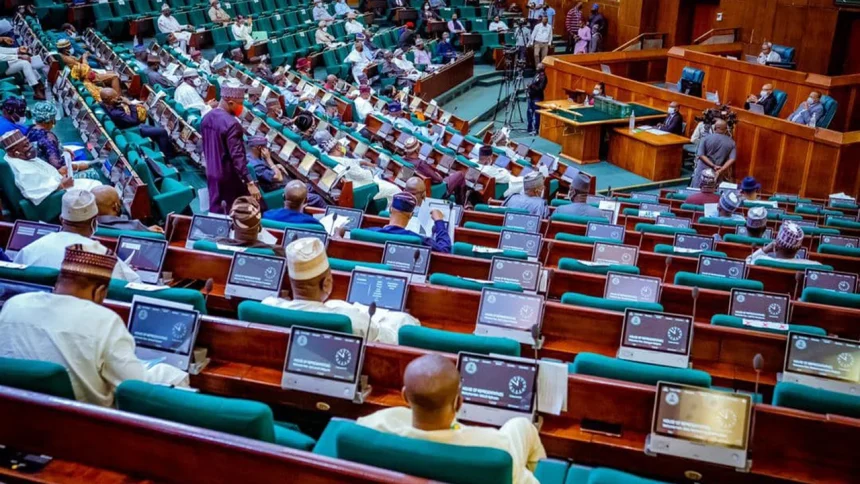
The House of Representatives on Tuesday called on President Bola Tinubu to immediately deploy a comprehensive and aggressive security strategy to dismantle bandit networks, end the recurring abduction of schoolchildren and restore public confidence in the nation’s security architecture.
The resolution followed the adoption of a motion of urgent public importance sponsored by the member representing Arochukwu/Ohafia Federal Constituency of Abia State, Ibe Osonwa, during plenary.
Presenting the motion, titled “A Call for Immediate Executive Action on the Surge in Banditry, the Daily Abduction of Schoolchildren, and the Perilous Security Situation in Nigerian Schools and Places of Worship,” Osonwa expressed deep concern over the worsening wave of kidnappings, bandit attacks and assaults on vulnerable communities across the country.
The lawmaker reminded the Federal Government of its constitutional responsibility to safeguard lives and property, citing Section 14(2)(b) of the 1999 Constitution (as amended), which states that “the security and welfare of the people shall be the primary purpose of government.”
He lamented the growing pattern of attacks on educational institutions, warning that the continued abduction of students was undermining access to education and worsening Nigeria’s out-of-school children crisis.
According to him, “the abduction of schoolchildren across several parts of the country has disrupted education and deepened Nigeria’s out-of-school children crisis.”
He added that “thousands of children have been forced out of classrooms due to fear of attacks, while many families continue to grapple with the trauma of kidnappings and prolonged captivity of loved ones.”
Osonwa further decried what he described as the systematic targeting of schools and places of worship by criminal groups, noting that institutions traditionally regarded as safe spaces had increasingly become vulnerable to attacks.
He warned that worshippers across the country now face the risk of abductions, killings and other forms of violence while observing religious activities, a development he said threatens citizens’ constitutional rights to freedom of thought, conscience and religion.
The lawmaker also highlighted the economic toll of the security crisis, arguing that persistent attacks have disrupted livelihoods, displaced farming communities and forced many families into poverty.
According to him, “many businesses have shut down, farming communities have been deserted and families plunged into poverty as they struggle to raise ransom payments for abducted relatives.”
Osonwa expressed concern that despite substantial budgetary allocations to defence and security agencies over the years, the nation’s response to insecurity appeared largely reactive and insufficient to effectively confront criminal elements.
He warned that the inability to decisively defeat bandits and terrorist groups was creating the perception that the government was gradually losing control of parts of the country.
Following deliberations, the House condemned in strong terms the continued banditry, mass abductions and attacks on schools and places of worship across Nigeria.
The lawmakers resolved to transmit what they described as “an urgent and solemn appeal” to President Tinubu, reminding him of his constitutional obligation as Commander-in-Chief of the Armed Forces to protect the lives and property of Nigerians.
The House specifically urged the President to order the immediate deployment of “an aggressive, unrelenting and comprehensive security strategy” aimed at dismantling bandits’ hideouts, securing vulnerable schools and worship centres, and ensuring the unconditional release of citizens being held captive by criminal groups.
In one of its most strongly worded resolutions on the country’s security situation, the House stated that if the administration fails to halt the deteriorating security conditions and restore public confidence within a clearly defined timeframe, the nation’s service chiefs should “honourably resign from office, having failed to fulfil the primary purpose of government as mandated by the Constitution.”
The House also mandated its Committees on Defence, National Security and Intelligence, and Army to intensify oversight of the implementation of the resolutions and report back within two weeks for further legislative action.
Nigeria continues to grapple with multiple security threats, including banditry, terrorism, kidnapping for ransom and communal violence, particularly in parts of the North-West, North-Central and North-East. In recent years, mass abductions of students from schools in Kaduna, Niger, Zamfara and other states have attracted national and international attention, prompting repeated calls for stronger measures to protect educational institutions and vulnerable communities.