


By Oscar Okhifo
The Economic and Financial Crimes Commission (EFCC) has urged Christian and Muslim leaders to use their influence to challenge the growing practice of celebrating unexplained wealth, saying corruption must be confronted before it reaches the stage of investigation and prosecution.
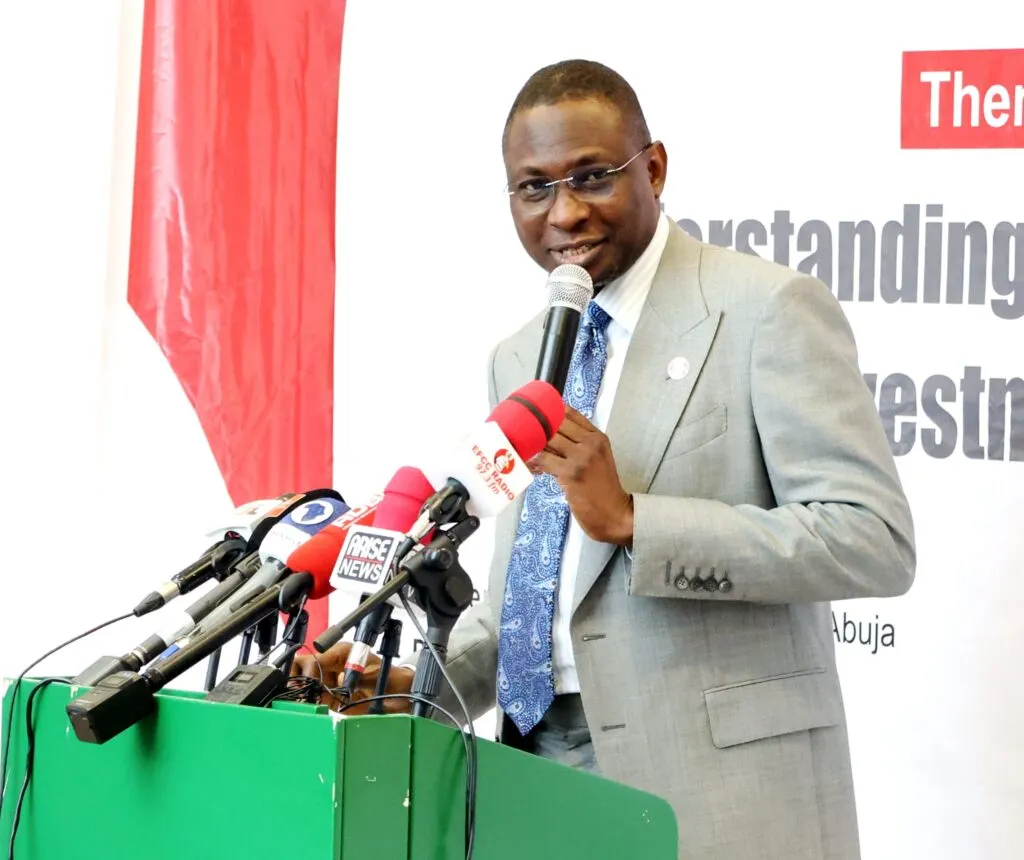
The EFCC Chairman, Ola Olukoyede, made the appeal on Wednesday in Abuja while speaking at the second 2026 Council Meeting of the Nigeria Inter-Religious Council (NIREC), where the commission unveiled an Anti-Corruption Interfaith Manual for Christian and Muslim religious leaders.
Olukoyede said law enforcement agencies could not win the fight against corruption alone, stressing that religious institutions had an important role to play in shaping the values and character of Nigerians and preventing corrupt practices.
He said while the EFCC was empowered to investigate and prosecute financial crimes, religious leaders could help address the social and moral environment that enables people to acquire and celebrate wealth without questioning its source.
“The EFCC can investigate a person’s conduct. Faith communities can influence that person’s character. We can prosecute fraud. Religious teaching can cultivate honesty.
“We can confiscate illicit wealth. Churches and mosques can challenge the values that make society worship wealth without questioning its source.”
The EFCC chairman urged religious leaders to use their pulpits and platforms to encourage Nigerians to value honest labour and integrity rather than confer recognition and honour on individuals solely because of their wealth.
He questioned the message being sent to younger Nigerians when people with unexplained wealth were celebrated without anyone asking how such wealth was acquired.
Olukoyede also warned religious institutions against accepting huge donations or allowing questionable wealth to be used for religious projects without examining the source of the funds.
He cited the example of a public servant allegedly spending far beyond his known earnings to construct a multimillion-naira religious facility.
“If a public servant says he has built a mosque that is worth more than his earnings in the next 500 years, and you go there to dedicate it, you are dedicating the proceeds of crime,” he said.
He similarly cautioned religious leaders against accepting enormous donations without asking questions about their origin.
“If he says he is giving you N550 million and you don’t ask questions, and you say, ‘God bless you,’ you are blessing the proceeds of crime,” Olukoyede said.
The EFCC boss further urged churches, mosques and other faith-based organisations to establish proper financial controls, particularly where their leaders also operate private businesses.
He said there was nothing wrong with religious leaders engaging in legitimate businesses, but stressed that personal businesses and funds belonging to religious organisations must remain separate.
“Don’t mix the money from the purse of your organisation with that of your own personal money. Don’t do that. When money is paid to your organisation, don’t divert it to your business. That is criminal,” he said.
Olukoyede specifically mentioned tithes, offerings, zakat and other funds contributed by worshippers, saying such money should not be diverted to the private businesses or personal interests of religious leaders.
He called on religious organisations to develop compliance systems that clearly distinguish institutional funds from the personal finances of their founders, clerics and officials.
The EFCC chairman also expressed concern over the number of people bearing religious titles who have appeared in the commission’s case files in connection with financial crimes.
He said some suspects continued to be addressed as pastors, imams, bishops and reverends even after being convicted and sent to prison.
“I have advocated for review of the title we give to men of God. Maybe, if it is possible for us to remove that title, pastor and imam,” he said.
According to Olukoyede, religious titles should not be allowed to shield anyone from accountability or influence the handling of financial crime investigations.
He recalled an encounter with a suspect who appeared before him and began introducing himself through several religious titles.
“I said, wait there. Don’t bring that one here. Did you misappropriate money or not?” he recounted.
The EFCC chairman said the suspect was subsequently faced with five charges, stressing that the commission would not treat financial crimes differently because of the religious identity of an accused person.
“So if you think you’re a Christian or you’re a pastor here and you commit financial crime, I will be your enemy. I won’t be your friend,” he said.
Olukoyede also recalled previous investigations involving Christian and Muslim pilgrimage organisations, saying the discoveries made by investigators were disturbing.
According to him, an investigation into pilgrimage-related activities revealed that almost 75 per cent of government funds released to sponsor pilgrims had allegedly been stolen by officials involved in the programme.
He said some officials were also alleged to have established companies in countries where pilgrims were taken, raising concerns about possible conflicts of interest.
Olukoyede argued that the anti-corruption message must begin with religious and other community leaders themselves, saying followers were more likely to emulate leaders who demonstrated integrity in their own conduct.
“If as leaders we do the right thing, the followers will emulate us,” he said.
The EFCC chairman maintained that corruption should not be viewed through the prism of religion, ethnicity or community, stressing that the consequences of financial crimes affect Nigerians regardless of their faith.
He said when public resources were stolen, the consequences were borne by everyone through poorly equipped hospitals, bad roads, unemployment and other failures in public services.
He therefore urged Christian and Muslim leaders to make greater use of the newly launched interfaith manual in their sermons, teachings and engagements with their followers.
The manual was developed through the EFCC’s Interfaith Anti-Corruption Advisory Committee and contains Christian and Islamic teachings aimed at strengthening ethical conduct and discouraging corruption.
The Executive Secretary of NIREC, Prof. Cornelius Afebu Omonokhua, said the manual was designed to assist religious leaders in communicating anti-corruption messages and promoting peaceful coexistence.
He said religious teachers who engage in corrupt practices undermine the credibility of the faith they profess, adding that the material was intended to address corruption as well as the misuse of religious preaching to justify questionable conduct.
Also speaking, the Sultan of Sokoto and Co-Chairman of NIREC, Alhaji Muhammadu Sa’ad Abubakar III, called for a united religious response to corruption.
The Sultan said no cleric, religious leader or influential person should be shielded from the law when found culpable, stressing that corruption remained unacceptable regardless of the status of the person involved.
“You cannot steal money and then send people to Jerusalem and Mecca with corrupt money, and then you think God will accept your deeds. No,” he said.
Abubakar also urged religious leaders not to intervene when their members or colleagues were facing legitimate legal proceedings.
“If he is facing the law, don’t tell me he is the pastor of so-and-so church, he is the chief monk of so-and-so national mosque. We don’t want to hear that,” he said.
He urged Nigerians to support efforts to tackle corruption and encouraged religious leaders to continue using their influence to promote accountability, justice and peaceful coexistence.
The meeting was attended by prominent Christian and Muslim leaders, including the President of the Christian Association of Nigeria, Rev. Daniel Okoh; the Sultan of Sokoto; the Emir of Zazzau, Alhaji Ahmed Nuhu Bamalli; and the Shehu of Borno, Abubakar Umar El-Kanemi.
Representing President Bola Tinubu, Secretary to the Government of the Federation, George Akume, also called for greater cooperation among government, religious and community leaders in addressing insecurity, criminality and other challenges confronting the country.
Over time, concerns have been raised about whether religious institutions have been forceful enough in preaching against unexplained wealth and the dangerous philosophy that “the end justifies the means.”
Moralists have also expressed concern over what they describe as the erosion of values traditionally imparted at home, with children increasingly growing up in an environment where material success can overshadow the means by which it was achieved.
The EFCC’s renewed engagement with churches and mosques could, if followed by practical action, help shift the anti-corruption campaign beyond arrests and prosecutions to the deeper task of reshaping the values that influence individual conduct.
Religious institutions, given their reach and influence, have an important role to play by making integrity, accountability and honest labour central to their teachings.
Importantly, such a campaign should also recognise that giving to religious institutions must be voluntary and within the means of worshippers. No one should be pressured, coerced or made to feel spiritually inadequate because of an inability to give money or make a particular financial contribution.
The message should therefore be clear: wealth is not wrong, but the source and means of acquiring it matter.
Religious institutions cannot effectively preach against corruption while celebrating unexplained affluence or placing undue financial pressure on followers.
If the EFCC’s call is matched by genuine introspection and action within churches, mosques, homes and the wider society, it could help move the anti-corruption fight beyond arrests and prosecutions to the more fundamental task of rebuilding the values that shape conduct in the first place.
Religious institutions must lead the way.