


1.1K
By Godswill Michael
The Federal Government on Monday inaugurated a Technical Working Group (TWG) on Agricultural Produce Residue Standards as part of efforts to curb the persistent rejection of Nigerian agricultural exports in international markets.
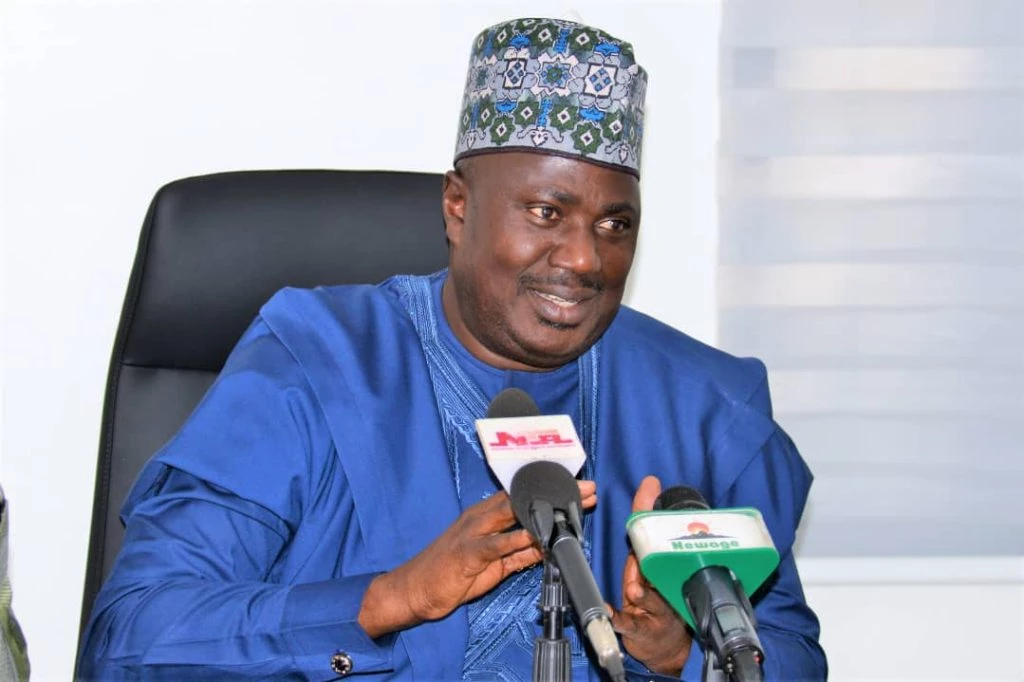
Speaking at the inauguration ceremony in Abuja, the Minister of State for Agriculture and Food Security, Sen. Aliyu Abdullahi, described the move as a decisive step toward restoring confidence in Nigeria’s export commodities and improving compliance with global food safety standards.
He said the initiative represents “another significant milestone in the Federal Government’s commitment to ensuring food safety and strengthening Nigeria’s competitiveness in regional and international agricultural markets.”
Abdullahi noted that repeated export rejections, largely due to non-compliance with Maximum Residue Limits (MRLs) and other sanitary and phytosanitary requirements, have cost the country valuable revenue and weakened market trust.
“Over the years, Nigeria has recorded several cases of export rejections of agricultural commodities due to non-compliance with Maximum Residue Limits and other sanitary and phytosanitary requirements,” he said, adding that the trend has led to “economic losses, reduced market confidence, and missed opportunities for farmers, exporters, and agribusinesses.”
According to the minister, rising concerns over pesticide residues and contaminants now require “a coordinated, science-based, and multi-sectoral response,” which informed the establishment of the TWG.
He noted that the task force will bring together experts from government agencies, academia, research institutions, the private sector, and development partners to develop practical and sustainable solutions to Nigeria’s residue management challenges.
Abdullahi charged members of the group to produce “practical, implementable, and sustainable solutions” that will strengthen national food control systems, improve compliance with safe pesticide use, and enhance access to premium export markets.
He added that the work of the TWG is expected to safeguard public health, improve the quality of Nigerian agricultural produce, increase export earnings, and reduce post-harvest losses linked to market restrictions.
In a welcome address, the Permanent Secretary in the ministry, Dr. Marcus Ogunbiyi, represented by the Director of the Federal Department of Agriculture, Mr. Bukar Musa, underscored the importance of agriculture to Nigeria’s economy, describing it as “a critical pillar” for food security, employment, foreign exchange earnings, and rural development.
He warned, however, that the increasing rejection of Nigerian exports “poses a serious challenge to our export aspirations and threatens the livelihoods of our farmers and agribusiness operators.”
Ogunbiyi described the inauguration as “the beginning of a critical journey towards establishing a robust agricultural produce residue management framework for Nigeria,” noting that the diversity of expertise within the TWG would be crucial to its success.
Responding on behalf of the group, its chairman, Prof. Lateef Oladimeji San, said the inauguration marks “a significant step” toward strengthening Nigeria’s agricultural quality assurance systems and ensuring that exported produce meets global standards.
He said the TWG would review existing regulations, harmonise national guidelines with international benchmarks, and strengthen laboratory capacity for monitoring and enforcement.
Nigeria has, in recent years, faced mounting scrutiny in international markets over the quality and safety of its agricultural exports. Several consignments, particularly of food crops, have been rejected in Europe and other destinations due to excessive pesticide residues and failure to meet established safety thresholds.
These rejections have not only resulted in direct financial losses but have also damaged the reputation of Nigerian produce, limiting access to high-value markets and affecting the livelihoods of farmers and exporters.
Stakeholders have long called for stronger regulatory coordination, improved farmer education on pesticide use, and better testing infrastructure to ensure compliance with international standards.
The newly inaugurated TWG is expected to address these gaps by reviewing existing policies, identifying institutional and operational weaknesses, and recommending reforms within two months aimed at aligning Nigeria’s agricultural production systems with global best practices.
By Godswill Michael
The Federal Government on Monday inaugurated a Technical Working Group (TWG) on Agricultural Produce Residue Standards as part of efforts to curb the persistent rejection of Nigerian agricultural exports in international markets.
Speaking at the inauguration ceremony in Abuja, the Minister of State for Agriculture and Food Security, Sen. Aliyu Abdullahi, described the move as a decisive step toward restoring confidence in Nigeria’s export commodities and improving compliance with global food safety standards.
He said the initiative represents “another significant milestone in the Federal Government’s commitment to ensuring food safety and strengthening Nigeria’s competitiveness in regional and international agricultural markets.”
Abdullahi noted that repeated export rejections, largely due to non-compliance with Maximum Residue Limits (MRLs) and other sanitary and phytosanitary requirements, have cost the country valuable revenue and weakened market trust.
“Over the years, Nigeria has recorded several cases of export rejections of agricultural commodities due to non-compliance with Maximum Residue Limits and other sanitary and phytosanitary requirements,” he said, adding that the trend has led to “economic losses, reduced market confidence, and missed opportunities for farmers, exporters, and agribusinesses.”
According to the minister, rising concerns over pesticide residues and contaminants now require “a coordinated, science-based, and multi-sectoral response,” which informed the establishment of the TWG.
He noted that the task force will bring together experts from government agencies, academia, research institutions, the private sector, and development partners to develop practical and sustainable solutions to Nigeria’s residue management challenges.
Abdullahi charged members of the group to produce “practical, implementable, and sustainable solutions” that will strengthen national food control systems, improve compliance with safe pesticide use, and enhance access to premium export markets.
He added that the work of the TWG is expected to safeguard public health, improve the quality of Nigerian agricultural produce, increase export earnings, and reduce post-harvest losses linked to market restrictions.
In a welcome address, the Permanent Secretary in the ministry, Dr. Marcus Ogunbiyi, represented by the Director of the Federal Department of Agriculture, Mr. Bukar Musa, underscored the importance of agriculture to Nigeria’s economy, describing it as “a critical pillar” for food security, employment, foreign exchange earnings, and rural development.
He warned, however, that the increasing rejection of Nigerian exports “poses a serious challenge to our export aspirations and threatens the livelihoods of our farmers and agribusiness operators.”
Ogunbiyi described the inauguration as “the beginning of a critical journey towards establishing a robust agricultural produce residue management framework for Nigeria,” noting that the diversity of expertise within the TWG would be crucial to its success.
Responding on behalf of the group, its chairman, Prof. Lateef Oladimeji San, said the inauguration marks “a significant step” toward strengthening Nigeria’s agricultural quality assurance systems and ensuring that exported produce meets global standards.
He said the TWG would review existing regulations, harmonise national guidelines with international benchmarks, and strengthen laboratory capacity for monitoring and enforcement.
Nigeria has, in recent years, faced mounting scrutiny in international markets over the quality and safety of its agricultural exports. Several consignments, particularly of food crops, have been rejected in Europe and other destinations due to excessive pesticide residues and failure to meet established safety thresholds.
These rejections have not only resulted in direct financial losses but have also damaged the reputation of Nigerian produce, limiting access to high-value markets and affecting the livelihoods of farmers and exporters.
Stakeholders have long called for stronger regulatory coordination, improved farmer education on pesticide use, and better testing infrastructure to ensure compliance with international standards.
The newly inaugurated TWG is expected to address these gaps by reviewing existing policies, identifying institutional and operational weaknesses, and recommending reforms within two months aimed at aligning Nigeria’s agricultural production systems with global best practices.