


407
By Oscar Okhifo
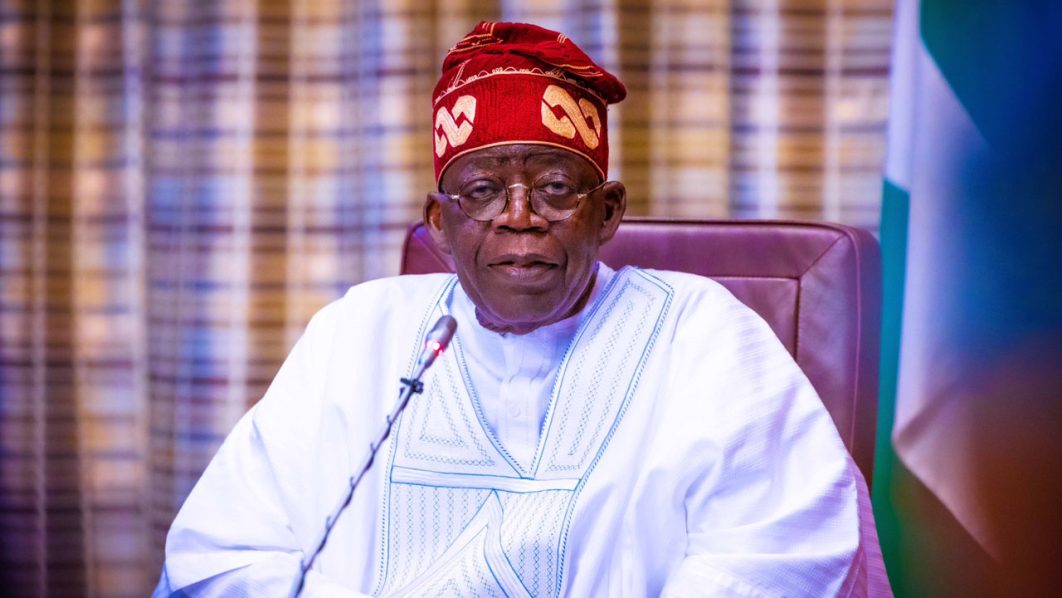
President Bola Tinubu has reiterated his administration’s commitment to working closely with Northern traditional rulers to tackle insecurity, promote national unity and accelerate socio-economic development, describing the country’s royal institutions as indispensable partners in governance and peacebuilding.
The President’s position was conveyed on Monday by the Minister of Information and National Orientation, Mohammed Idris, at the 8th Executive Committee Meeting of the Northern Traditional Rulers’ Council (NTRC) in Dutse, Jigawa State, where monarchs and key stakeholders gathered to deliberate on strategies for fostering peace and development across the North.
Idris said the Tinubu administration recognises the strategic influence of traditional institutions at the grassroots and remains committed to strengthening engagement with them in advancing peace, security, national cohesion and inclusive development across the country.
“The administration of President Bola Ahmed Tinubu fully recognises the strategic role of traditional institutions and remains committed to deepening engagement with traditional rulers in advancing peace, security, national cohesion and development,” the minister said.
The minister also lauded the Northern Traditional Rulers’ Council, under the leadership of the Sultan of Sokoto, Alhaji Muhammad Sa’ad Abubakar, for its sustained efforts in fostering peace, strengthening unity and supporting development initiatives across Northern Nigeria.
Addressing the meeting’s theme, “Peace, Unity and Development of the North,” Idris emphasised that enduring development can only flourish in an environment of peace and cohesion, urging all stakeholders to remain committed to preserving both for the collective good of the region and the nation.
“Without peace, development becomes difficult; without unity, progress cannot be sustained. The pursuit of both must remain our collective responsibility,” he stated.
The minister described traditional rulers as indispensable partners in governance because of their close relationship with local communities and their capacity to mobilise citizens around national objectives.
“Across generations, our traditional rulers have served as custodians of culture and values, mediators in times of conflict, and trusted bridges between government and the people. Your proximity to the grassroots and your moral authority make you indispensable partners in governance, peacebuilding and community mobilisation,” he added.
On security, Idris said the Tinubu administration has strengthened coordination among the Armed Forces, intelligence agencies and other security institutions, resulting in significant gains against criminal and terrorist groups across parts of the country.
While acknowledging that security challenges persist, he said the government was sustaining military operations, improving intelligence gathering and enhancing inter-agency collaboration while also addressing the socio-economic factors driving insecurity.
“Lasting peace cannot be achieved through security operations alone. We must also address poverty, unemployment, social exclusion and the lack of economic opportunities that often fuel insecurity,” he said.
The minister highlighted several economic initiatives of the Federal Government aimed at creating jobs and improving livelihoods, including interventions in agriculture, livestock development, solid minerals, infrastructure, education financing, consumer credit and support for small businesses.
He described the establishment of the Federal Ministry of Livestock Development as a landmark initiative that would modernist and revolutionize livestock production, boost productivity, support pastoral and farming communities and reduce conflicts over natural resources.
“The ministry represents a strategic intervention in a sector with enormous potential for job creation, food security, export earnings and national economic growth,” Idris said.
The minister also spotlighted the Federal Government’s four Legacy Highway Projects which are the Lagos-Calabar Coastal Highway, Sokoto-Badagry Super Highway, Calabar-Abuja Super Highway and the Akwanga-Jos-Bauchi-Gombe Road Corridor, describing them as transformative investments that would enhance national integration and stimulate economic growth.
“These highways will improve connectivity, reduce transportation costs, expand access to markets, create jobs and support the movement of agricultural produce and other goods. Beyond their economic value, they are investments in national unity,” he noted.
The minister said the Renewed Hope Agenda is designed to expand economic opportunities for Nigerians through people-oriented initiatives such as the Nigerian Education Loan Fund (NELFUND), the Nigerian Consumer Credit Corporation (CREDICORP) and targeted interventions for Micro, Small and Medium Enterprises (MSMEs), aimed at improving livelihoods and driving inclusive growth.
He stressed that the success of government policies depends largely on public understanding and participation, urging traditional rulers to continue serving as trusted advocates for national development by educating their communities and countering false narratives.
“In an age characterised by the rapid spread of misinformation and disinformation, traditional rulers remain among the most trusted leaders in our society. Your continued support in promoting truth, dialogue, tolerance and responsible citizenship is essential to our collective progress,” Idris said.
The minister expressed optimism that the deliberations of the council would produce practical recommendations capable of strengthening peace, consolidating unity and accelerating development across Northern Nigeria and the country at large.
He also conveyed the Federal Government’s condolences to the Government and people of Katsina State, the traditional institution and the family of the late retired Major General Rabe Abubakar, describing his death as a painful national loss and a reminder of the need to intensify efforts against insecurity.
The meeting attracted traditional rulers, senior government officials and other stakeholders from across Northern Nigeria to deliberate on strategies for promoting lasting peace, unity and sustainable development in the region.