


907
By Tracy Moses
The House of Representatives has called on the Federal Government to urgently address the rising cost of aviation fuel, warning that the continuous surge is placing domestic airlines under severe operational strain.
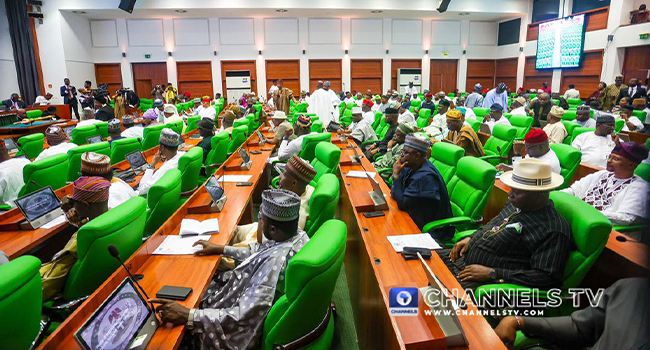
The resolution followed the adoption of a motion of urgent public importance moved during Tuesday’s plenary by Mr Paschal Agbodike, who represents Ihiala Federal Constituency of Anambra State.
Presenting the motion, Agbodike said Aviation Turbine Kerosene (ATK), commonly referred to as aviation fuel, remains the most significant cost component in airline operations in Nigeria.
He explained that the product accounts for between 40 and 60 per cent of total operating expenses, making it a major determinant of fare pricing and airline sustainability.
According to him, “airline operators are struggling for survival while also trying to maintain service quality in collaboration with the Nigeria Civil Aviation Authority.”
He warned that the continued rise in prices has already begun to affect operations across the sector.
“The House is concerned that many domestic airlines have been forced to reduce flight frequencies or ground aircraft entirely, leading to reduced capacity,” he said. “The high cost of jet fuel, coupled with the impact of the foreign exchange liquidity crisis on the purchase of aircraft parts, has placed immense pressure on the balance sheets of Nigerian carriers.”
Agbodike further cautioned that if urgent steps are not taken, the aviation sector could face a deeper crisis.
“We are concerned that continued instability in jet fuel pricing, if not urgently addressed, could lead to the collapse of major domestic airlines, with devastating consequences for the national economy, employment, and regional integration,” he added.
The motion received overwhelming support from lawmakers during the plenary presided over by Deputy Speaker Benjamin Kalu.
Following its adoption, the House urged the Federal Government, through the Ministry of Petroleum Resources and the Nigerian National Petroleum Company Limited, to establish a price-stabilisation framework to ensure more predictable and affordable aviation fuel pricing.
It also mandated its Committees on Aviation, Petroleum Resources (Downstream), and Finance to investigate the persistent hike in jet fuel prices and report back within two weeks.
In addition, lawmakers called on the Minister of Aviation and Aerospace Development, Festus Keyamo, to present an emergency roadmap outlining concrete measures to reduce aviation fuel costs within the same timeframe.
The House further urged the Central Bank of Nigeria to prioritise foreign exchange allocation to airline operators, especially for the importation of aircraft parts necessary for safe and efficient operations.
The rising cost of aviation fuel has been attributed to a combination of global and domestic factors. International crude oil volatility, driven by geopolitical tensions and supply constraints, has pushed up refined product prices worldwide.
Locally, Nigeria’s dependence on imported refined petroleum products, combined with limited domestic refining capacity, has left the sector vulnerable to external shocks.
The removal of fuel subsidies and broader deregulation of the downstream petroleum sector have also contributed to price fluctuations.
Compounding the situation is the foreign exchange crisis, as airlines purchase aviation fuel in dollars while earning revenue in naira. The persistent depreciation of the naira has therefore significantly increased operating costs.
Industry operators have reported that aviation fuel prices have, at times, exceeded ₦1,200 per litre, forcing airlines to raise fares, reduce routes, and in some cases suspend operations.
Stakeholders warn that without urgent intervention, the continued pressure on the sector could undermine air transport, with broader implications for trade, mobility, and economic growth.