


By Lizzy Chirkpi
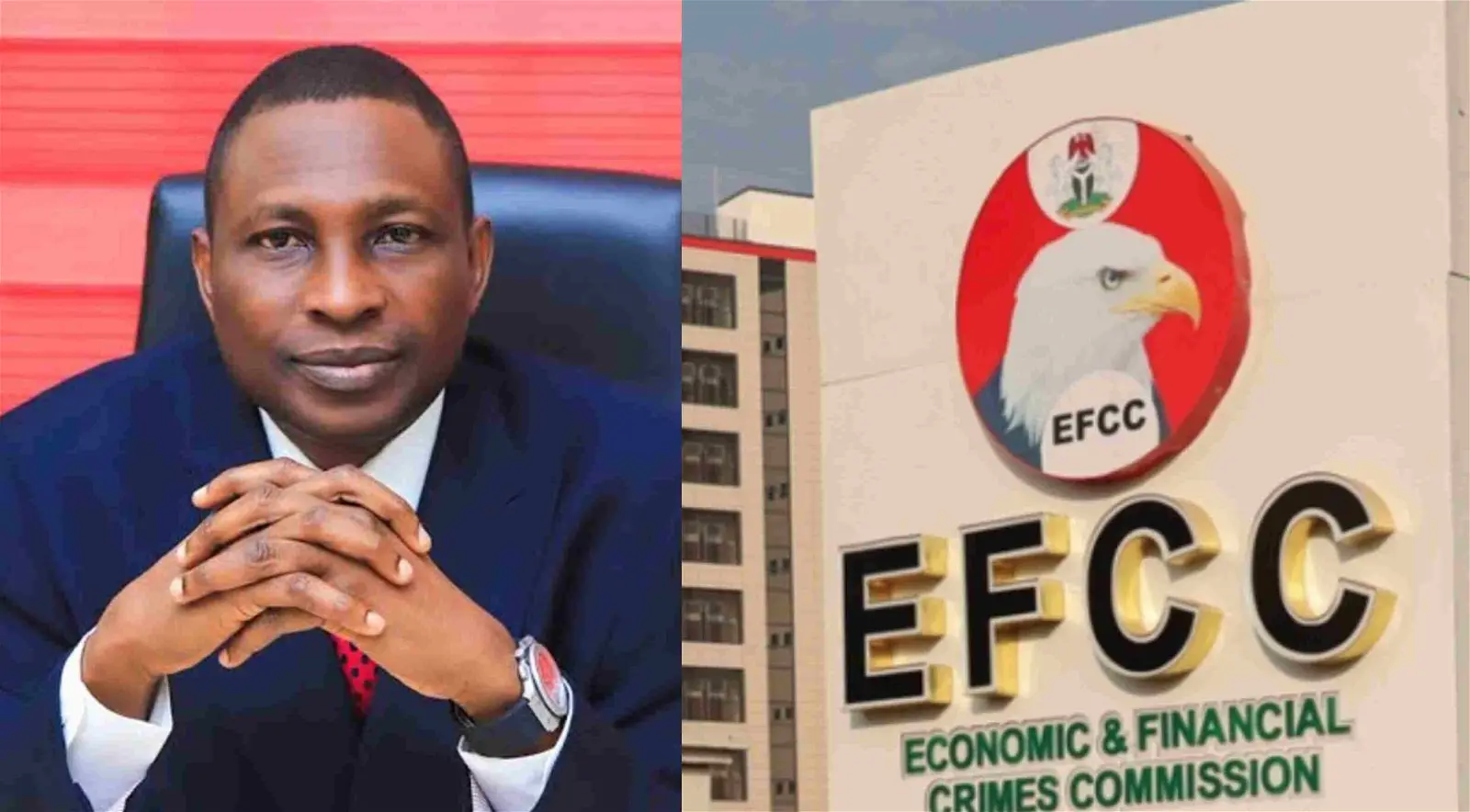
The Economic and Financial Crimes Commission (EFCC) says it recovered more than ₦1.23 trillion, $684.48 million, £373,905 and €9.34 million, and secured 10,872 convictions in less than three years under the leadership of its Executive Chairman, Ola Olukoyede.
Olukoyede disclosed this on Monday, August 31, 2026, at a media briefing in Abuja, where he presented the commission’s performance since assuming office in October 2023.
According to him, the recoveries — comprising ₦1,233,612,040,411.11, $684,478,457.32, £373,905.78 and €9,343,803.66 — covered the period from October 1, 2023, to June 30, 2026.
He said approximately ₦397.26 billion, representing 33 per cent of the naira recoveries, was recovered directly for the Federal Government, while ₦836.34 billion was recovered on behalf of ministries, departments and agencies, state revenue authorities, corporate organisations, individuals and foreign victims.
Giving a breakdown of the commission’s enforcement activities, Olukoyede said the EFCC received 49,673 petitions, investigated 39,615 cases and filed 14,476 cases in court during the period under review.
The commission secured 10,872 convictions, representing about 75 per cent of the cases filed, he said.
According to the chairman, the convictions covered cybercrime, advance-fee fraud, bank fraud, money laundering, procurement fraud, economic governance offences, tax-related crimes, illegal mining, foreign exchange violations and other financial crimes.
The commission also secured 1,370 convictions from 1,889 cases filed in the first half of 2026, reflecting what Olukoyede described as the sustained pace of its prosecution efforts.
Beyond prosecution, the EFCC said ₦661.32 billion and $492.37 million from recovered funds had been released to beneficiaries, including government agencies, individuals, corporate organisations and state revenue authorities.
Olukoyede said the commission’s responsibility went beyond confiscating the proceeds of crime, stressing that it was increasingly focused on ensuring that recovered assets and funds were “put to productive use” for the benefit of Nigerians.
As part of this approach, he disclosed that the Federal Government had approved ₦1 billion from EFCC recoveries, with 50 per cent allocated to the Nigerian Consumer Credit Corporation and the remaining half to the Nigerian Education Loan Fund (NELFUND).
He further disclosed that the commission was developing a fraud-risk platform for NELFUND to monitor the utilisation of funds disbursed to beneficiaries.
The EFCC also secured the forfeiture of 10,053 tangible assets through interim and final court orders between October 2023 and July 2026.
The assets included 8,198 electronic items, 1,177 real estate assets, 370 automobiles and 251 plots of land, as well as schools, factories, hotels, oil rigs, barges, machinery and aircraft.
The commission also secured the forfeiture of 102 tonnes of solid minerals, while proceeds from the disposal of assets covered by final forfeiture orders amounted to about ₦12.07 billion, which was paid into government coffers.
One of the most prominent cases involved the forfeiture of NOK University, which was subsequently converted by the Federal Government into the Federal University of Applied Sciences, Kachia, Kaduna State.
Olukoyede said the institution had enrolled 1,909 students as of December 2025, describing the development as an example of how recovered assets could be transformed into public value.
The commission has also expanded its operations into areas including foreign exchange, illegal mining, virtual assets and terrorist financing.
Olukoyede disclosed that 234 Bureau de Change-related cases were under investigation, with more than 70 convictions recorded.
He added that specialised enforcement against money laundering, unlicensed BDC operations, illegal mining, virtual assets and terrorist financing had produced 920 cases and 212 convictions.
The EFCC chairman said the expansion was necessary because “economic and financial crimes are constantly evolving”, requiring the commission to continually adapt its investigative and enforcement strategies.
The commission has also pursued funds owed to government institutions.
Earlier in August, it announced the recovery of more than ₦115 billion in outstanding statutory levies owed to the Niger Delta Development Commission (NDDC) by oil companies.
The recovery comprised ₦76.883 billion and $81.076 million following investigations into 43 oil companies over unpaid three per cent NDDC levies.
The EFCC said ₦73.373 billion and $67.070 million recovered by the commission had been released to the NDDC.
Olukoyede also linked the commission’s anti-money laundering efforts to Nigeria’s removal from the Financial Action Task Force (FATF) grey list in October 2025, saying the development reflected improvements in the country’s anti-money laundering and counter-terrorist financing regime.
On internal reforms, the chairman said the commission had introduced new operational guidelines, strengthened its ethics framework and digitalised about 60 per cent of its processes.
More than 40 EFCC personnel were also dismissed over allegations of corruption and financial malpractice during his tenure.
Olukoyede said his administration had been guided by three major objectives: “refocusing the mandate of the EFCC, deploying anti-corruption enforcement to stimulate economic growth, and strengthening the rule of law while improving Nigeria’s international image and attracting foreign investment.”
Reflecting on his tenure, he described the period as one of “work, commitment and passionate engagement” in the fight against economic and financial crimes.
He acknowledged the contributions of the judiciary, security agencies, regulators and international law-enforcement partners to the commission’s achievements.
Special Adviser to the President on Information and Strategy, Bayo Onanuga, who attended the briefing, also commended the commission’s performance.
“The achievements are there, and it is just for us to help the EFCC blow its trumpet,” Onanuga said.
For the commission, however, the ultimate measure of success is not simply the number of arrests or convictions, but what happens to the proceeds recovered from criminal activities.
With more than ₦1.23 trillion recovered, 10,872 convictions secured and more than 10,000 assets forfeited, the EFCC says it is increasingly focused on returning recovered criminal proceeds to victims, restoring funds to government and converting forfeited assets into productive public resources, while strengthening systems capable of preventing financial crimes from recurring.