


1.2K
By Lizzy Chirkpi
Tax and financial experts have raised an alarm over the massive revenue losses suffered by African countries through illicit financial flows (IFFs), revealing that the continent loses an estimated $89 billion annually to tax evasion, profit shifting and other harmful financial practices.
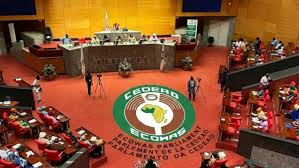
The warning was issued on Tuesday during an interactive session between members of the Economic Community of West African States Parliament, the West African Tax Administration Forum and the Tax Justice Network Africa at the ongoing 2026 First Ordinary Session in Abuja.
The session focused on strategies for strengthening domestic resource mobilisation and advancing tax harmonisation across the ECOWAS region.
According to the experts, illicit financial flows driven largely by multinational corporations and weak tax systems continue to deprive African nations of critical resources needed for development.
“Africa has a prevalent problem of illicit financial flows, and at least 65 per cent of these could be categorised as commercially-driven,” the experts stated.
“The main practices that could lead to IFFs are tax evasion, tax avoidance, tax misinvoicing and other harmful tax practices. These harmful practices haemorrhage the available resources that can be used for development of the continent.”
They noted that beyond the estimated $89 billion lost yearly, Africa also faces a domestic resource mobilisation gap of about $194 billion annually.
The experts stressed that tax harmonisation within the ECOWAS sub-region remained critical to blocking loopholes exploited by corporations and criminal financial networks.
“Tax harmonisation is the fiscal backbone of ECOWAS integration. Without it, the region will continue to lose revenue through loopholes, smuggling, opacity and profit shifting,” they warned.
Speaking during the session, Dr. Nita Belemaobgo, Research Manager at WATAF, said regional collaboration and data-driven reforms were necessary to improve transparency and accountability in tax administration across West Africa.
She explained that WATAF’s goal was to support ECOWAS in implementing tax directives aimed at aligning fiscal policies among member states.
Danicius Sengbeh, WATAF’s Communications and Information Technology Manager, emphasised the importance of parliamentary oversight in tackling tax leakages and improving revenue generation.
According to him, the issue goes beyond taxation and directly affects governance and economic sovereignty in the region.
“This engagement is about sovereignty, fairness, accountability and West Africa’s future,” he said.
Also speaking, Dr. Zandile Ndebele of TJNA urged lawmakers across the region to enact legislation that would ensure African citizens benefited more directly from their countries’ natural resources and internally generated revenues.
“It’s possible to introduce legislation for domestic beneficiation to gain more resources and revenues, apart from gaining from just taxes,” she said while addressing the theme: “Addressing Tax-Related Illicit Financial Flows through Legislative Frameworks and Transparency.”
The experts further urged African governments to strengthen laws guiding the extractive sector, monitor tax incentives granted to multinational companies and improve transparency in mining agreements.
Solomon Adoga of TJNA warned that Africa must aggressively protect its taxing rights to reduce dependence on foreign support and external borrowing.
“We must look at where we are losing revenue as Africans. We don’t need to be reliant on other countries outside Africa,” he said.
They also called for stronger regional cooperation, information sharing, digital modernisation of tax systems and coordinated implementation of tax reforms across ECOWAS member states.
The experts commended countries such as Nigeria, Ghana and Ivory Coast for pushing stronger advocacy around fair tax rights and revenue allocation on the continent.