


467
Godswill Michael
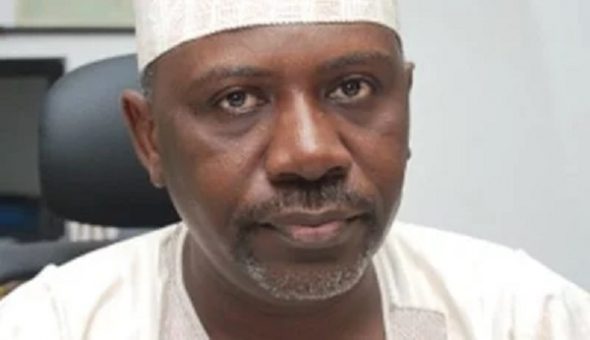
Former Head of the Civil Service of the Federation (HoSF), Alhaji Bukar Goni, on Tuesday revealed how interagency contest within the federal bureaucracy prevented the inclusion of a rail component in the Second Niger Bridge project, describing the incident as a classic example of poor collaboration among government institutions.
Goni made the disclosure while delivering a lecture at the Nigeria Public Service Lecture Series and Awards held in Abuja to commemorate the United Nations Public Service Day. The event was organised by the Bureau of Public Service Reforms (BPSR) under the theme, “Transforming Public Institutions: Advancing Innovation, Participation and Inclusion.”
According to him, bureaucratic resistance and lack of cooperation among ministries have continued to undermine national development efforts and effective public service delivery.
Recounting his experience as Permanent Secretary in the Federal Ministry of Works, Goni said plans were once made to redesign the Second Niger Bridge to accommodate a future railway line, but the effort was frustrated by the response from the then Ministry of Transport.
“When everything was set for the Second Niger Bridge to go to the Federal Executive Council for approval, an Assistant Director in the Bridges Department suggested that we write to the Ministry of Transport to indicate whether, within the next 50 to 100 years, they intended to have a rail line crossing the River Niger in that area.
“He wanted the bridge design adjusted to accommodate a rail line. But the response we got from the Ministry of Transport was, ‘What does the Ministry of Works have to do with railway construction?’ That was how the matter died. We eventually completed the Second Niger Bridge without a rail line,” he said.
The former HoSF also cited another instance involving plans to determine the appropriate height of a bridge over the River Niger.
He explained that the Ministry of Works had written to the Ministry of Water Resources and relevant inland waterways authorities seeking information on proposed dredging activities and the types of vessels expected to navigate the waterway.
“We wanted to know the depth of the dredging and the kind of vessels that would ply the waterway so we could determine the appropriate bridge height,” he said.
“The response again was, ‘What does the Ministry of Water Resources have to do with the Ministry of Works?’”
Goni warned that such institutional silos continue to hamper development and urged the Bureau of Public Service Reforms and the Office of the Head of Service to address the challenge through stronger coordination mechanisms.
Drawing parallels with the security sector, he argued that poor collaboration among public institutions weakens national outcomes.
“The Nigerian Army and the Nigerian Air Force are not working together, and they will never win that way,” he said, stressing the need for a whole-of-government approach to governance and service delivery.
The Second Niger Bridge, officially named the Muhammadu Buhari Second Niger Bridge, was commissioned by former President Muhammadu Buhari on May 23, 2023. The 1.6-kilometre bridge links Asaba in Delta State to Onitsha in Anambra State and serves as a critical transport corridor connecting the South-East with other parts of the country.
Opened to traffic in December 2022 before its formal commissioning, the bridge was conceived to ease congestion on the ageing Niger Bridge and improve regional connectivity.
Director-General of the Bureau of Public Service Reforms (BPSR), Dasuki Arabi, said the lecture series was taking place at a time when citizens were demanding a faster, more transparent and responsive public service.
Arabi said reforms over the past 21 years had focused on addressing institutional weaknesses, fragmented processes and limited citizen engagement that undermine trust in government.
“We have worked very hard as a service to solve institutional problems, legacy systems, fragmented processes, limited citizen engagement and persistent inequalities that undermine trust in public service,” he said.
According to him, innovation, participation and inclusion remain critical pillars for transforming governance and improving service delivery.
“Transformational reforms must lift everyone, including women, youth, persons with disabilities and marginalised communities,” Arabi said.
“Inclusion is both an ethical imperative and a practical necessity. Services that exclude large segments of the population fail to achieve national development goals,” he added.
He highlighted government initiatives such as the Treasury Single Account (TSA), Integrated Personnel and Payroll Information System (IPPIS), digital public financial management reforms and one-stop service centres as evidence of progress in modernising the public service.
Representing the Head of the Civil Service of the Federation, Mrs Didi Esther Walson-Jack, Permanent Secretary, Common Services Office, Dr Danjuma Usman Kalba, urged public servants to remain committed to innovation and measurable results.
“The public servant must continue to perform, innovate and deliver measurable results.
“These reforms are meant to ensure that citizens feel the impact of government. Citizens experience government through our actions, the speed of our responses, the quality of our decisions and the transparency of our processes,” he said.
He described the lecture series as an opportunity for ministries, departments and agencies to reflect on the future of public service and recommit to reform efforts that improve citizens’ lives.
Also speaking, Governor Inuwa Yahaya of Gombe State, represented by the state’s Head of Civil Service, Professor Mu’azu Usman Shehu, said reforms initiated at the federal level would only achieve lasting impact if replicated across states.
“No reform at the centre can solve the country’s challenges without being cascaded to the subnational level,” he said.
Shehu noted that Gombe State established its Bureau of Public Service Reforms to strengthen governance and improve efficiency, citing the introduction of biometric attendance systems to eliminate ghost workers and the digitalisation of key government services.
“There must be much more intensive collaboration among states to strengthen these reforms,” he added.