

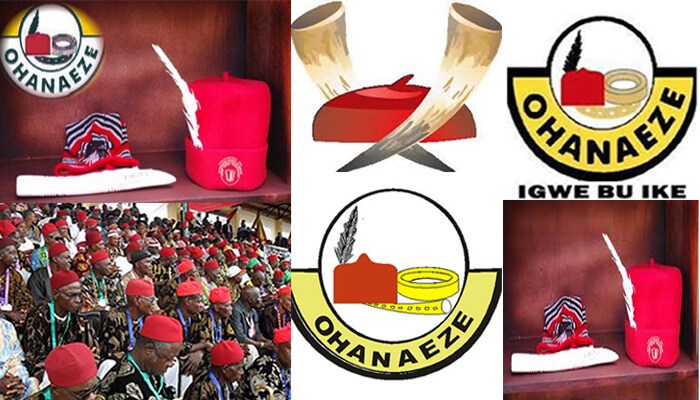

A Comprehensive Pre-Publication Review of Agbeze Ireke Kalu Onuma’s ‘OHANAEZE @ 50: The Burden of Memory, The Politics of Relevance’
By Njoku Uche, writing from Umuahia, Abia State | August 2026
- The Crucible of Memory: Re-reading the Post-Civil War Igbo Condition
Fifty years is an epoch in the life of any civic or cultural institution. When that institution is Ohanaeze Ndigbo—an apex body forged in the smoldering ash of defeat, displacement, and systemic disenfranchisement following the Nigerian Civil War—half a century demands far more than commemorative banquets or nostalgic applause. It demands an unsparing, intellectual post-mortem. It demands a book that can look into the mirror of history without blinking.
In OHANAEZE @ 50: The Burden of Memory, The Politics of Relevance (A Critical Biographical Reflection of an Igbo Institution), Agbeze Ireke Kalu Onuma (widely known as AI-KO) delivers precisely that: a monumental, 600-plus page masterwork that is simultaneously an intimate insider memoir, an archival excavation, and a rigorous strategic roadmap for regional renaissance. Published by Green & Cherished Ltd., this book arrives not as a ceremonial eulogy, but as an urgent intellectual intervention at a definitive crossroads in Nigerian history.
Writing from Umuahia—the historic capital of the short-lived Republic of Biafra and the cultural bedrock of post-war reconstruction—one cannot read Onuma’s opening chapters without feeling the raw weight of historical memory. The author painstakingly reconstructs the fragile early 1970s, when founding icons and pioneers like Dr. Akanu Ibiam, Chief Jerome Udoji, Dr. M. I. Okpara, Dr. Kingsley Ozumba Mbadiwe, and Chief Dennis Osadebay dared to assemble an initial leadership nucleus to re-unite a traumatized, scattered people. Onuma demonstrates that Ohanaeze was never an accidental creation; it was an architecture of existential survival, designed to give voice to an amputated nation within an uneasy federation.
- The Insider’s Vantage: Twenty-Six Years at the Institutional Coalface
What immediately elevates OHANAEZE @ 50 above conventional academic treatises or hagiographical memoirs is the author’s singular vantage point. Agbeze Onuma did not observe Ohanaeze from the detached comfort of university faculty lounges or foreign diaspora forums. He lived inside its machinery for over twenty-six years.
From his formative years as Personal Assistant to the formidable President-General, Justice Eze Ozobu (Rtd), to his strategic contributions within the Ohanaeze Political Committee and his executive stewardship as Administrative Secretary of Ndigbo Lagos, Onuma witnessed the high drama, the ideological collisions, and the backroom negotiations that made and unmade Igbo consensus. He saw how decisions were brokered in Enugu, how tensions flared during national constitutional conferences, and how the diaspora in Lagos negotiated power, commerce, and security.
Because Onuma holds the institutional ledger in his hands, his narrative carries an undeniable moral authority. Yet, admirably, he refuses the posture of an embittered critic or a defensive apologist. Instead, he adopts what can best be described as a meditative, diagnostic realism. He documents institutional gains with rigorous precision, but he dissects institutional failures—compromised leadership, political subversion, factional splits, and the tragic alienation of the youth—with surgical courage.
III. The Biographical Method: History Told Through the Architects of Power
A structural triumph of the book is its biographical methodology. Recognizing that institutions are not abstract monoliths but the lived expressions of human willpower, philosophy, and fallibility, Onuma structures his examination around the key personalities who shaped Ohanaeze’s journey across successive epochs.
Through vivid, richly textured biographical portraits, we encounter the visionary stoicism of Akanu Ibiam, the administrative brilliance of Jerome Udoji, the legal tenure of Eze Ozobu, the diplomatic poise of Ralph Uwechue, the corporate and legal oratory of Joe Irukwu, and the urbane, pan-Igbo statesmanship of John Nnia Nwodo, alongside the complex tenures of late leaders like Prof. George Obiozor and Chief Emmanuel Iwuanyanwu.
By mapping the trajectory of Ohanaeze through these distinct generational archetypes, Onuma reveals how the socio-cultural body constantly oscillated between two competing imperatives: the pressure to act as a partisan political springboard for elites seeking federal patronage, and the noble mandate to serve as an uncompromising cultural vanguard defending the collective welfare, security, and enterprise of the ordinary Igbo citizen.
- The Burden of Memory vs. The Politics of Relevance
The dialectic established in the book’s title—The Burden of Memory versus The Politics of Relevance—serves as the intellectual engine of the entire treatise. Onuma argues that Ndigbo have too often remained hostages to the burden of historical memory: nursing legitimate historical wounds, recounting marginalization, and mourning lost opportunities, while failing to build the modern institutional instruments required to enforce contemporary relevance.
The book poses uncomfortable but vital questions: In an era defined by artificial intelligence, global financial networks, borderless logistics, and youth-led digital entrepreneurship, can an apex socio-cultural organization built on 20th-century paradigms remain relevant? How does Ohanaeze transition from a reactive, press-statement-issuing body to a proactive, think-tank-driven development engine capable of orchestrating South-East regional economic integration?
It is here that Onuma’s strategic acumen comes to the fore. Drawing on fifteen years of structured research, he outlines actionable blueprints for regional infrastructure, transport corridors, energy sovereignty, educational reform, and the harnessing of Igbo Town Unions (such as the historic Abiriba Communal Improvement Union) as the true grassroots bedrock for socio-cultural governance.
- Royal Commendations and National Resonance
It is no surprise that OHANAEZE @ 50 has already drawn high praise from the most revered custodians of Igbo heritage. In his written commendation contained in the preliminary pages, His Majesty, Nnaemeka Alfred Ugochukwu Achebe, CFR, mni (Agbogidi), The Obi of Onitsha, writes with profound insight:
“I read this study as an Igbo person and a keeper of our shared memory. It is a work that does not flinch from hard questions: it names our wounds, measures our gains, and refuses the easy consolations of myth… If Ohanaeze is to remain the iroko that finds water and puts out new leaves, then let this study be one of the tools by which we dig deeper, draw truer, and grow together.”
When a 600-plus page manuscript earns the unreserved blessing of traditional royalty, elder statesmen like Elder (Dr.) Uma O. Eleazu, OON, and eminent scholars like Prof. Okey Anueyiagu, it ceases to be a mere book—it becomes an official national document and a primary reference text for generations to come.
- Conclusion: A Masterwork for a Generation at the Crossroads
As we look forward to the flagship public presentation and launch of this masterwork on Tuesday, 22nd September 2026 at Dover Hotel Ikeja, Lagos, under the Chairmanship of Elder U. K. Eke, MFR, with Abia State Governor H.E. Dr. Alex Otti as Chief Host and the Obi of Onitsha as Royal Father of the Day, one conclusion is inescapable:
Agbeze Ireke Kalu Onuma has rendered an immortal service to Ndigbo and the Nigerian nation. OHANAEZE @ 50 is a work of immense intellectual stamina, deep cultural pride, and patriotic foresight. It belongs on the desks of governors, ministers, lawmakers, traditional rulers, university lecturers, students, and every conscious citizen who understands that a nation that forgets its past cannot engineer its future.
From the historic hills of Umuahia to the bustling markets of Aba, Onitsha, Enugu, Lagos, and the far-flung diaspora, this 600-plus page book will provoke debate, heal fractured memories, and provide the intellectual compass for our collective renewal. It is, without a doubt, the defining African socio-political publication of the decade.
Circulated ahead of the Public Presentation & Book Launch on September 22, 2026, at Dover Hotel, Ikeja, Lagos.