


By Oscar Okhifo
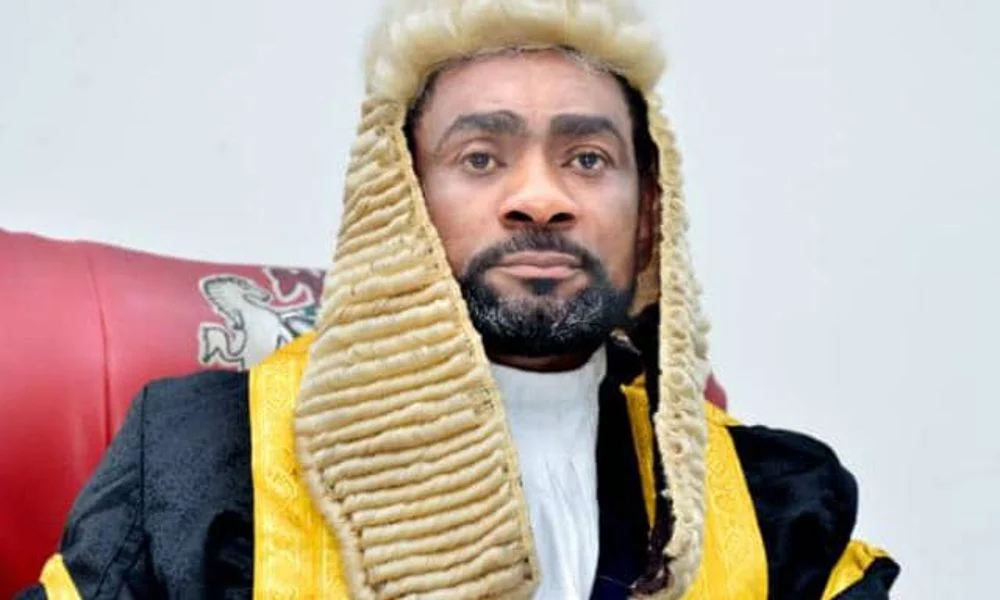
The impeachment of the former Speaker of the Edo State House of Assembly, Hon. Blessing Agbebaku, has exposed fresh divisions within the ruling All Progressives Congress (APC), amid allegations of a growing power struggle involving Governor Monday Okpebholo, Edo North Senator Adams Oshiomhole and state APC chairman Jarret Tenebe.
Agbebaku, who represents Owan West Constituency, announced his resignation as Speaker on August 17, saying he was stepping down in the interest of peace and the progress of the state.
Hon. Yekini Idaiye, representing Akoko-Edo Constituency I, subsequently emerged as Speaker, while the House also reshuffled its principal officers.
However, when the Assembly reconvened on Monday, lawmakers rejected Agbebaku’s resignation and proceeded to impeach him.
Idaiye said Agbebaku’s resignation had not been formally presented and documented by the House, adding that an impeachment notice signed by 17 of the 24 lawmakers had been presented during plenary.
The motion, moved by Majority Leader Sunny Ojiezele and seconded by Ahmed Waziri, representing Etsako Central Constituency, was subsequently adopted.
The House also directed Agbebaku to return government property in his possession.
Agbebaku has rejected the Assembly’s position, maintaining that he voluntarily resigned on August 17 and that documentary and video evidence exists to support his claim.
However, the development has raised questions about the political forces behind the leadership change and its implications for the Edo APC ahead of the 2027 elections.
A senior aide to Governor Okpebholo, who spoke on condition of anonymity, alleged that the governor’s camp had become uncomfortable with Agbebaku’s leadership, particularly over disagreements concerning proposed borrowing by the state government to fund infrastructure projects.
According to the aide, Agbebaku and some lawmakers opposed some of the administration’s loan requests because of concerns over the state’s existing debt burden.
The aide also cited the Assembly’s rejection of a nominee for a government agency as another source of tension, alleging that the nominee had attracted petitions over alleged financial misconduct.
The allegations could not be independently verified.
The governor’s aide further alleged that Agbebaku carried political baggage from the 2024 governorship election, claiming that the former Speaker had made comments during the campaign that were perceived as hostile to the eventual winner.
The aide alleged that Agbebaku had been heard discouraging constituents from supporting a candidate he referred to as a “push and start man”, although he did not openly endorse another candidate.
The allegation could not be independently confirmed.
Oshiomhole, Tenebe and Emerging Power Bloc
An associate of Senator Adams Oshiomhole, who also spoke anonymously, offered a different perspective, alleging that Oshiomhole had backed Agbebaku’s emergence as Speaker despite reservations within the governor’s camp.
The associate claimed that tensions between Agbebaku and Governor Okpebholo had persisted since the election campaign and later extended into the workings of the Assembly.
He also linked the current situation to an evolving power relationship between Governor Okpebholo and APC chairman Jarret Tenebe.
According to him, Tenebe, who previously served in an acting capacity before becoming substantive state chairman, has increasingly aligned with the governor, creating a new political centre within the party.
The associate alleged that this had weakened Tenebe’s relationship with Oshiomhole and contributed to the emergence of competing political camps within the Edo APC.
“The crisis has been handled. The Assembly is calm now, but no assurance that things won’t go south again,” he said.
The claims concerning the political relationship between Okpebholo, Oshiomhole and Tenebe could not be independently verified.
Efforts to obtain reactions from Oshiomhole and other persons mentioned in the allegations were unsuccessful as of press time.
Edo’s Troubled Assembly History
The latest crisis comes against the backdrop of Edo’s long history of political battles over control of the state legislature.
During Oshiomhole’s tenure as governor, the House of Assembly witnessed intense confrontations between rival political camps, including physical clashes among lawmakers.
The state also experienced a prolonged Assembly crisis during the administration of former Governor Godwin Obaseki, following the controversial inauguration of the legislature in 2019, when some elected lawmakers were excluded from the process.
Those earlier disputes were closely linked to wider political battles between governors and rival factions within the APC.
Against that background, the latest leadership crisis has renewed concerns about the stability of the Assembly and the possibility that internal party disagreements could spill into the legislature.
For now, Idaiye occupies the Speaker’s seat and the Assembly appears to have regained its footing.
But the political tensions surrounding Agbebaku’s removal remain unresolved, with the competing interests of the governor’s camp, Oshiomhole’s faction and Tenebe likely to shape the Edo APC’s internal politics as the 2027 elections approach.
The immediate leadership dispute may have been settled, but whether the underlying political tensions have been resolved remains an open question.