


By Lizzy Chirkpi
The Nigerian Ports Authority (NPA) and the Nigeria Police Force have launched a joint effort to eliminate illegal checkpoints and unauthorised roadblocks along the Apapa and Tin Can Island port corridors in Lagos, a move aimed at reducing congestion, curbing extortion, and improving cargo movement to and from the nation’s busiest seaports.
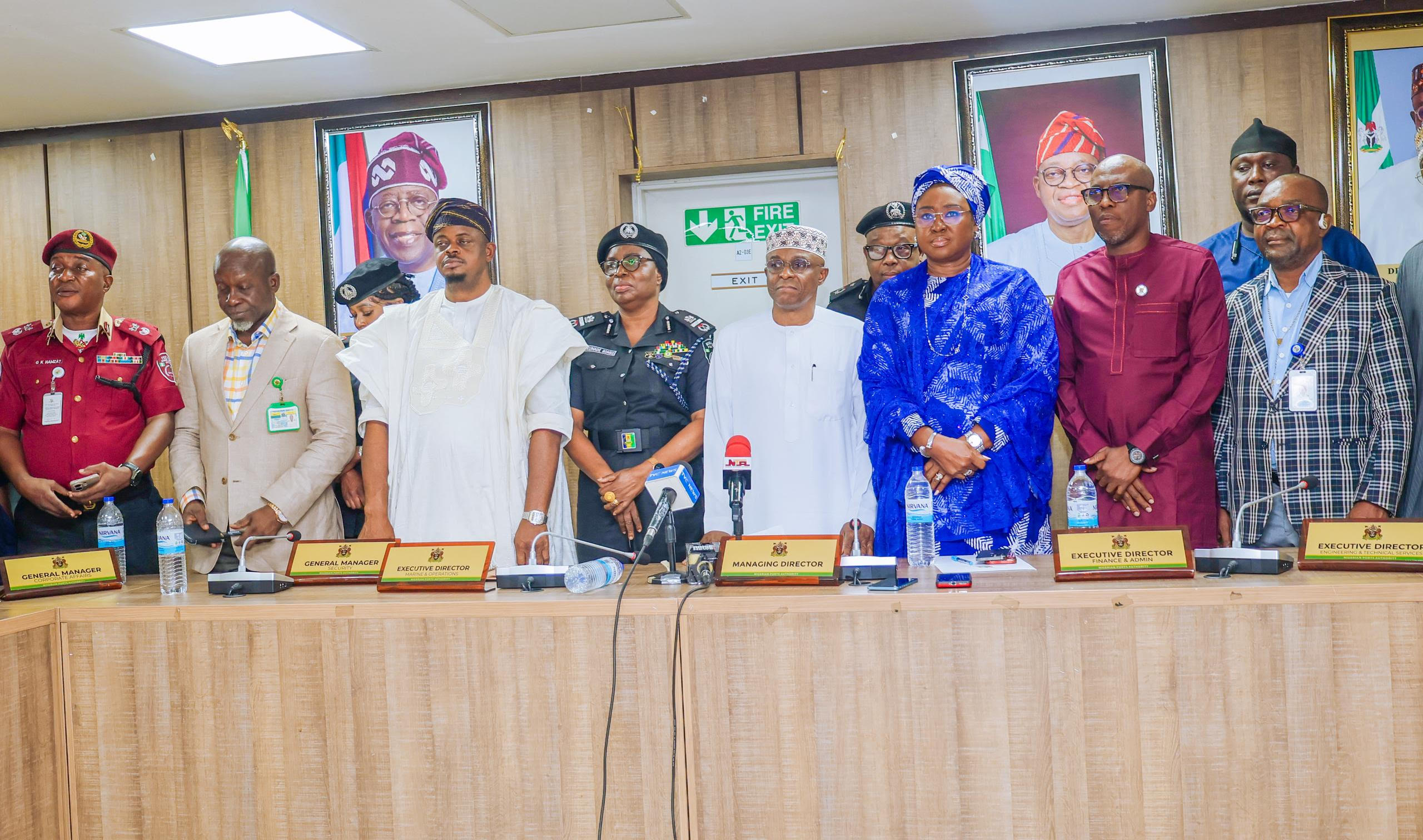
The initiative emerged from a high-level stakeholders’ meeting involving security agencies, freight forwarders, transport unions, and government officials, who gathered to address persistent challenges affecting access to the ports.
Speaking after the meeting, Managing Director of the NPA, Dr. Abubakar Dantsoho, said investigations had uncovered widespread extortion points, jurisdictional conflicts among security agencies, and other operational bottlenecks that continue to hamper the efficient movement of goods.
“We have problems along the port corridor in Apapa and Tin Can Island. Now, we have established that there are issues around extortion along the corridor. That is outside the port,” Dantsoho said.
According to him, some of the challenges extend beyond the immediate port environment, affecting key logistics routes around Berger and Mile 2.
Dantsoho also identified overlapping responsibilities between the Maritime Police Command and the Lagos State Police Command as a major source of operational inefficiencies.
“The second issue is the issue of overlap, jurisdictional overlap. In our system, what is established is that there is a police command for the port system, Maritime Police, and then there is also the Lagos State Police Command. So, in some instances, there are clashes, overlaps,” he said.
He noted that one of the key outcomes of the meeting was a clear commitment from both police commands that they do not authorise checkpoints or roadblocks along the port access corridors.
“We have achieved a great lot of success in our discussions. The AIG Maritime Police has clearly stated that they do not send anybody to go and form roadblocks or checkpoints on the corridor. Equally, the Lagos Police Command has said the same thing,” he stated.
Dantsoho described the agreement as a significant breakthrough that could help eliminate avoidable delays and improve the competitiveness of Nigeria’s port system.
“Our emphasis will be that we are going to function, and then function better in our practices, so we can do better than our neighboring countries,” he said.
Highlighting recent gains in port operations, the NPA boss said Nigeria’s seaports had earned international recognition for operational improvements.
“Our port system inside the ports have recently been confirmed as one of the most improved in the world by the World Bank,” Dantsoho said.
Expressing optimism about the outcome of the engagement, he said the agreements reached would contribute significantly to easing congestion and improving efficiency along the port corridors.
“I want to thank you for coming to support us. We have achieved a great success from this meeting. The discussions were of high quality, and the outcome, I believe, is also high quality,” he added.
Also speaking, the Assistant Inspector-General of Police in charge of Maritime, Okunade Ronke, dismissed allegations that police officers had been officially deployed to checkpoints along the port access roads.
“We have never posted officers to any checkpoint around the port environment,” she said.
Ronke warned that any officer claiming to be acting on behalf of the Maritime Police or Zone 2 Command while engaging in extortion was operating outside official directives and should be reported for disciplinary action.
She further disclosed that stakeholders had agreed to establish a joint task force comprising representatives of the Lagos State Government, the NPA, the Police, and other relevant agencies to strengthen traffic management, eliminate extortion, and improve security along the Apapa and Tin Can Island corridors.
According to her, the collaborative framework is expected to streamline enforcement activities and address long-standing jurisdictional disputes that have hindered smooth operations in the area.
Stakeholders, including representatives of the Association of Maritime Truck Owners (AMATO), welcomed the initiative, describing it as a critical step toward ending extortion, harassment, and disruptions that have negatively affected cargo evacuation and port logistics.
Participants also agreed to set up a broader committee involving government agencies, freight forwarders, and transport operators to develop a sustainable monitoring and enforcement framework.
At the conclusion of the meeting, stakeholders expressed confidence that the coordinated approach would enhance security, reduce traffic congestion, and improve the overall efficiency of operations along the Lagos port corridors.